
Property damage to a business location can disrupt operations, threaten revenue streams, and create significant financial uncertainty. Whether the cause is a burst pipe, severe weather, vandalism, or fire, knowing exactly how to file an insurance claim is critical to securing timely repairs and minimizing downtime. The claims process involves specific documentation, communication protocols, and strategic decisions that differ significantly from personal auto or homeowners claims. This guide outlines the essential steps to navigate property damage events effectively, ensuring you have a clear path toward recovery while avoiding common pitfalls that could jeopardize your coverage.
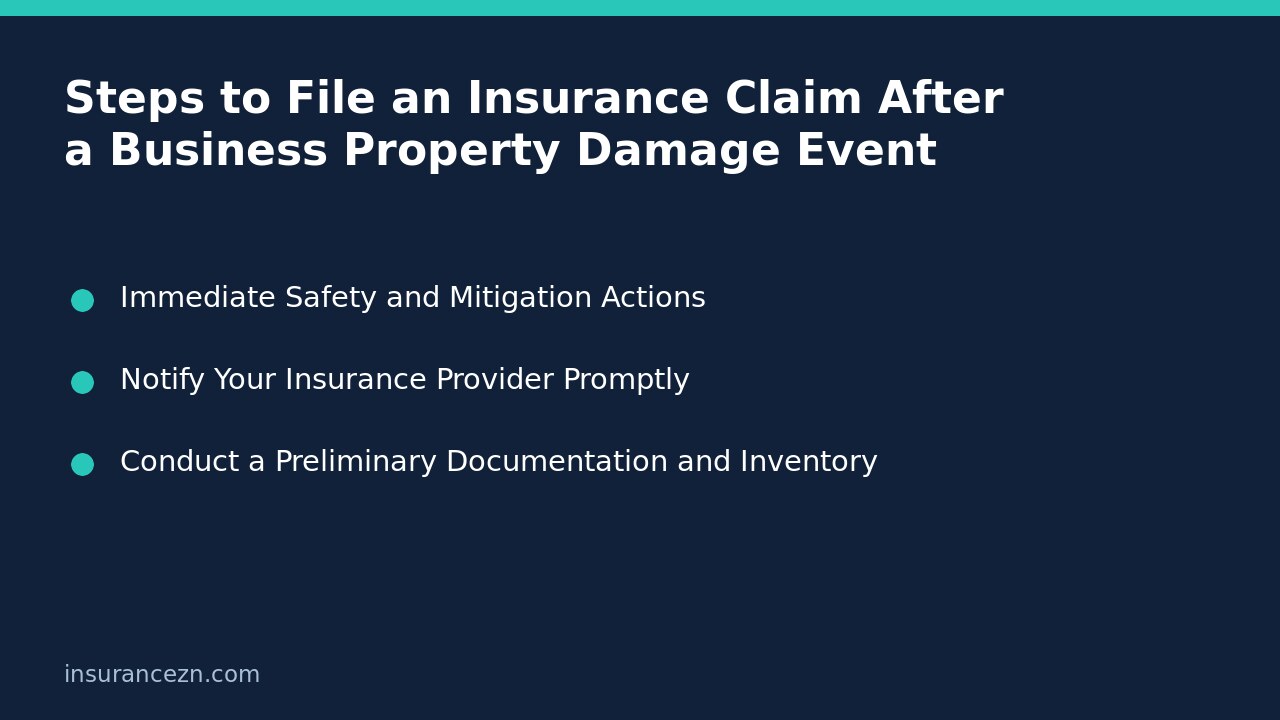
Immediate Safety and Mitigation Actions
The very first step after discovering property damage is ensuring the safety of employees, customers, and assets. Before contacting your insurer, take immediate action to prevent further loss. Most commercial policies include “duty to mitigate” clauses, which require policyholders to take reasonable steps to stop the damage from spreading. For example, if a roof has been breached by hail, you must tarp the area immediately to protect inventory inside. If water is leaking from a plumbing failure, shut off the main valve.
Document these mitigation efforts as soon as possible. Take photos of the temporary repairs and keep receipts for any materials purchased (e.g., plywood, tarps, sandbags). Insurers often reimburse these extra expenses if they are reasonable and necessary to prevent additional damage. However, do not hire your own contractor immediately if you have a preferred vendor list in your policy; check your contract first to ensure compliance with policy terms regarding who can perform repairs.
Notify Your Insurance Provider Promptly
Time is of the essence when notifying your insurance carrier. While many policies state that a claim can be made at any time, delays can complicate the investigation and potentially lead to disputes over coverage. Locate your commercial property insurance policy number and contact your agent or the claims department listed on your declarations page.
When you call, provide a concise summary of the event. Mention the date and time of the incident, the type of damage observed, and any immediate actions taken. Do not wait for an adjuster to ask about mitigation steps; volunteer this information immediately. In some jurisdictions, there are statutory deadlines for reporting claims after specific events like floods or earthquakes, so verifying your state’s requirements is prudent. If you have a mobile app provided by your insurer, consider submitting the initial notice through that platform as well to create a timestamped digital record.
Conduct a Preliminary Documentation and Inventory
Before an adjuster arrives, gather as much evidence as possible without altering the scene unnecessarily. Take high-resolution photographs and videos of the damage from multiple angles. Capture wide shots showing the extent of the destruction and close-ups of specific details like water lines, broken windows, or structural cracks. If the damage is widespread, map out the affected areas with a simple floor plan sketch.
Simultaneously, begin compiling an inventory of damaged items. For business property, this often includes equipment, inventory stock, furniture, and leasehold improvements. Use your existing asset registers if available. Note the serial numbers, purchase dates, and original values of high-value items. If items were destroyed in a fire or flood, try to locate receipts, credit card statements, or warranty cards that prove ownership and value. This documentation is vital for proving the loss amount during the settlement phase.
The Adjuster’s Investigation and Scope of Loss
Once your insurer assigns an adjuster, they will arrive to inspect the damage. Their goal is to verify the cause of the loss (to ensure it falls within your policy’s covered perils) and to determine the extent of the damage. Cooperate fully but remain objective. Allow the adjuster access to all affected areas, including storage units or off-site locations if your policy covers them.
During this meeting, present your preliminary documentation. Explain the business interruption implications if operations have halted. The adjuster will likely issue a “Scope of Loss” report, which details what they believe is damaged and the estimated cost to repair it. Review this document carefully before signing anything. If you disagree with the valuation or the scope of repairs, do not sign off immediately; instead, request time to consult with your preferred contractor or independent loss assessor. You have the right to a second opinion on the damage assessment in many jurisdictions.
Submitting the Proof of Loss and Supporting Documentation
Following the adjuster’s report, you must formally submit a “Proof of Loss” (POL). This is a legal document required by most commercial policies that itemizes every dollar of your claim. It typically lists property types, their insured value, the damaged amount, and supporting evidence like photos, inventories, and repair estimates.
Attach all mitigation receipts, inventory lists, and correspondence with contractors to this submission. Ensure that the narrative explains the cause-and-effect chain clearly: “Event X caused Damage Y, resulting in Cost Z.” If your business uses specialized equipment or has unique leasehold improvements, provide technical specifications or professional appraisals to support their valuation. Submitting a complete, organized POL helps prevent delays and reduces the likelihood of the claim being underpaid due to missing data.
Handling Denials, Disputes, and Settlement
Not all claims are accepted immediately. Insurers may deny coverage if they determine the damage resulted from an excluded peril (such as wear and tear or intentional acts) or if there was a breach of policy conditions. If you receive a denial letter, read it thoroughly to understand the specific reason for rejection.
If the denial seems unjustified, review your policy language regarding exclusions and subrogation. You may need to provide additional evidence or legal counsel to contest the decision. For disputes over the settlement amount, negotiation is the standard first step. Provide new cost estimates from licensed contractors if the insurer’s initial offer is insufficient. If negotiations fail, you can escalate the matter through your state’s Department of Insurance or pursue mediation/arbitration as outlined in your policy. Always act within the deadlines specified in your denial letter to preserve your rights.
Real-World Example: The Retail Store Flood Scenario
Consider a retail clothing store where a sudden pipe burst floods the ground floor. Within hours, the manager calls the insurer and shuts off the water valve (mitigation). They photograph the soaked merchandise and wet flooring while waiting for the adjuster. The inventory list is generated using their POS system export. The adjuster arrives two days later, noting that some high-end suits are ruined beyond repair, while others can be dried. The insurer offers a settlement based only on the dryable items, excluding the ruined suits due to mold concerns raised early in the process. The store owner counters with photos of the suits’ original condition before water contact and independent restoration estimates. Through this documented exchange, the claim is settled fairly, covering both replacement costs for lost stock and repair costs for the building structure.
Checklist for Filing a Property Damage Claim
To ensure no critical step is missed, use this quick reference list during an emergency:
* [ ] Ensure safety; evacuate if necessary and call emergency services.
* [ ] Mitigate further damage (tarps, shut-offs) and save all receipts.
* [ ] Locate policy number and contact the insurance provider immediately.
* [ ] Photograph and video the scene from multiple angles.
* [ ] Create a detailed inventory of damaged property with serial numbers.
* [ ] Obtain preliminary repair estimates from licensed contractors.
* [ ] Review the Scope of Loss report before signing.
* [ ] Submit the Proof of Loss form with all supporting documents.
* [ ] Follow up regularly with the claims adjuster until closure.
By following these structured steps, business owners can navigate the complexities of property damage claims with confidence. Proper preparation not only speeds up the settlement process but also ensures that your business receives the full financial protection it paid for through its premiums.