
The expectation of receiving life insurance benefits quickly after the death of a loved one is often shattered by administrative hurdles. While most legitimate claims are processed within 30 to 60 days, delays can stretch this timeline significantly, causing financial strain for grieving families. Understanding the specific triggers for these hold-ups and taking proactive steps before a claim arises is essential for ensuring timely payouts. This guide details the primary causes of life insurance claim delays, from missing documentation to policy exclusions, and provides actionable strategies to navigate the claims process efficiently.
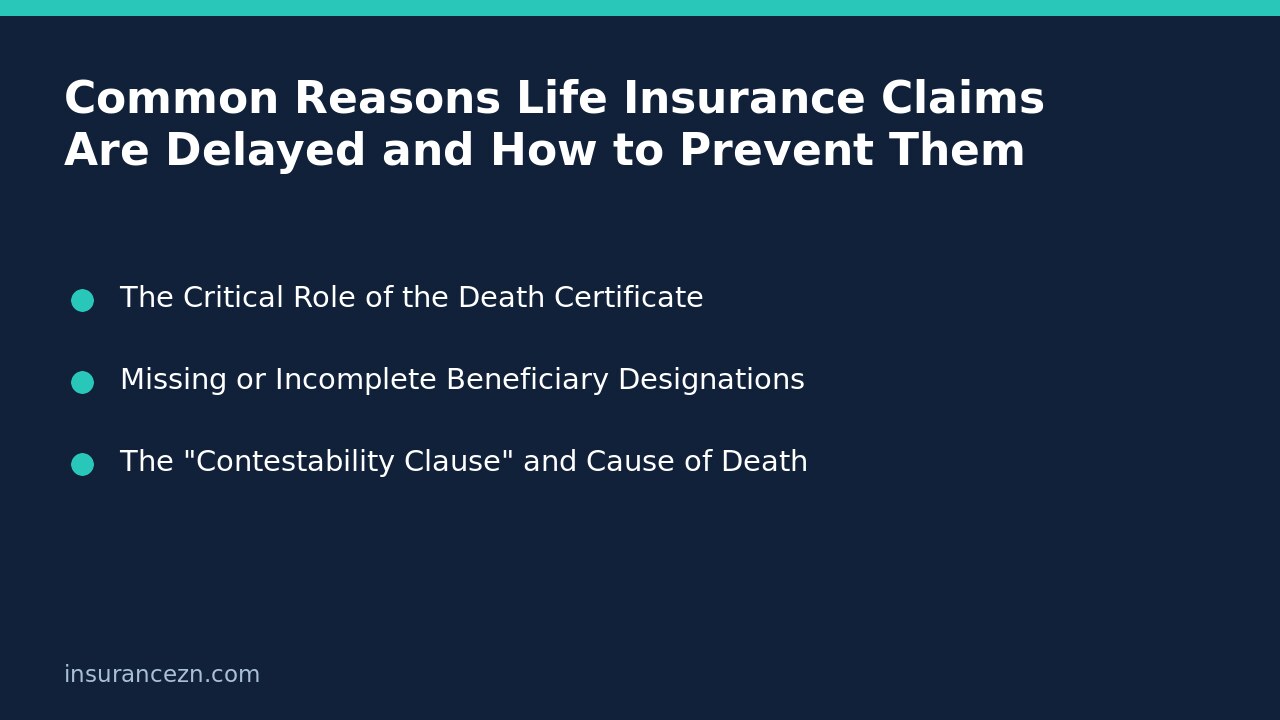
The Critical Role of the Death Certificate
The single most common reason for immediate claim delays is an incomplete or incorrect death certificate. Insurers require an official document issued by a government authority that verifies the cause and date of death. If the certifying physician fails to specify the exact cause, or if the original copy is lost during funeral arrangements, the claims adjuster cannot proceed with the review.
To prevent this, ensure the funeral home receives the correct form from the attending physician immediately after death. If a cremation is planned, the funeral director must obtain the “Certificate of Cremation” before releasing the body, as some states require this to issue the final death certificate. Always verify that the name on the death certificate matches the policyholder’s name exactly, including middle initials if listed on the policy. A mismatch can trigger a manual review process that adds weeks to the timeline.
Missing or Incomplete Beneficiary Designations
Another frequent source of delay involves ambiguity regarding who is entitled to the proceeds. Policies often list primary and secondary beneficiaries. If the primary beneficiary predeceased the insured and no contingent beneficiary was named, the claim must be transferred through probate court. This legal process can take months or even years depending on local jurisdiction rules.
Furthermore, if a beneficiary designation is outdated due to divorce, remarriage, or the birth of a child, the insurer may freeze the claim until proof of current status is provided. For instance, many policies have clauses stating that benefits for ex-spouses are voided upon divorce, but this only takes effect if explicitly stated in the policy or updated with the insurer. Families should review their beneficiary designations every few years and notify the insurance company of any changes immediately to avoid confusion during a claim.
The “Contestability Clause” and Cause of Death
Insurers have a right to investigate claims filed within the first two years of the policy’s inception, known as the contestability period. During this time, they may delay payment while investigating the accuracy of information provided on the application. Common issues arise if the insured concealed pre-existing conditions, engaged in dangerous hobbies not disclosed at underwriting, or had a history of substance abuse that was omitted.
If the cause of death is unnatural—such as an accident, suicide, or homicide—the insurer may pause the claim to verify the circumstances. Suicide claims are particularly scrutinized because most policies include a suicide exclusion clause that denies benefits if the death occurs within the first 12 to 24 months of coverage. In such cases, the insurer may request medical records, police reports, and witness statements before approving the payout. While this investigation is necessary for fraud prevention, it inevitably extends the processing time.
Administrative Errors and Missing Documentation
Beyond substantive issues, simple administrative oversights can stall a claim. These include lost original policies, unsigned claim forms, or missing identification documents for the claimant. Many families store their physical policy with other important papers, only to discover it is missing when they need it most. In the digital age, while many insurers offer online access to policies, relying solely on email confirmation without a hard copy can still lead to verification delays if the insurer’s system fails to retrieve the record correctly.
Additionally, if the claimant lacks proper identification or power of attorney documents (if the named beneficiary is unable to act), the insurer will halt processing until these legal authorities are established. This is a critical step for unmarried partners or non-blood relatives who may not have automatic inheritance rights without specific policy designations or legal documentation.
Policy Exclusions and Specific Circumstances
Certain scenarios inherently trigger longer review periods due to specific policy exclusions. For example, if the insured died while committing a crime, most policies will deny the claim entirely, though some jurisdictions allow for partial payouts under specific moral hazard laws. Similarly, deaths occurring during high-risk activities like skydiving or mountaineering may be subject to investigation if those activities were not disclosed or covered by the policy’s rider options.
Even in cases where the death is accidental, if the location of death was outside the country of residence and international travel was not declared, claims can face significant scrutiny regarding jurisdictional laws and policy validity. Insurers must adhere to the specific terms written at the time of underwriting, and any deviation from standard usage can result in a temporary hold while legal teams review the applicability of the contract.
Practical Steps to Accelerate Your Claim
To ensure your claim is processed without unnecessary delays, follow these practical steps before a tragedy strikes:
1. Digitize Documents: Scan your policy, beneficiary list, and contact information for the agent and store them securely in the cloud or on an encrypted drive.
2. Update Beneficiaries: Regularly update your beneficiary designations to reflect current family structures and legal statuses.
3. Designate a Trusted Contact: Name a trusted friend or attorney as a “claims contact” who knows where your policy is located and can gather necessary documents if you become incapacitated.
4. Review the Policy: Read the specific terms regarding exclusions, waiting periods, and required documentation so you are prepared to provide exactly what the insurer needs.
Conclusion
Life insurance claims are designed to be straightforward, but they require precision and preparation to avoid delays. The most effective way to prevent hold-ups is to maintain accurate records, keep beneficiary information up to date, and understand the specific terms of your policy regarding contestability and exclusions. By addressing common pitfalls like incomplete death certificates and outdated designations proactively, families can ensure that financial support reaches them swiftly when it is needed most. Remember that while insurance companies have strict protocols, clear communication and complete documentation are the keys to a smooth claims experience.