
Homeowners often feel trapped by rising insurance costs, wondering if they can afford to increase their coverage limits while keeping premiums manageable. The good news is that you have control over a significant portion of your monthly bill without compromising safety or legal compliance. Unlike illegal tactics such as misrepresenting the value of your home or hiding pre-existing damage, there are many legitimate strategies to reduce your rates. By understanding how insurers calculate risk and what discounts they offer, you can negotiate a more affordable policy that still protects your largest financial asset. This guide outlines specific, actionable steps to lower your home insurance premium legally, ensuring you maintain full coverage while saving money.
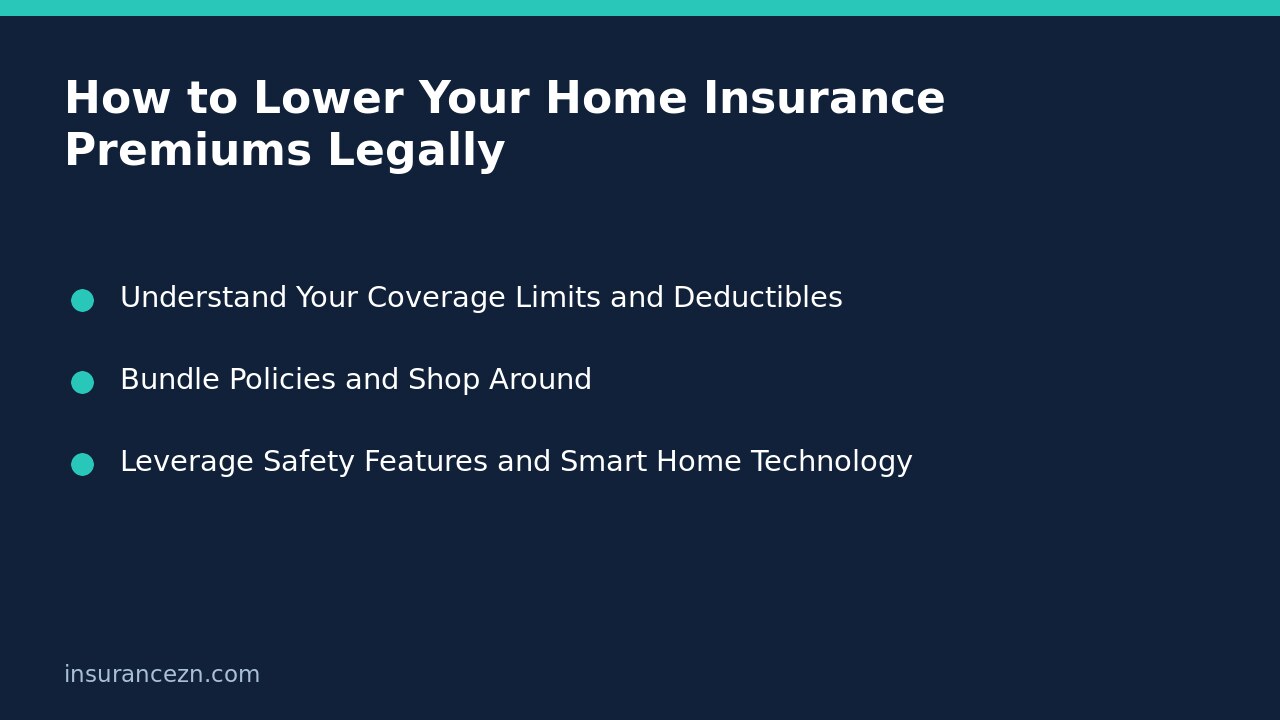
Understand Your Coverage Limits and Deductibles
One of the most effective ways to immediately reduce your premium is to adjust your deductible. The deductible is the amount you agree to pay out of pocket before your insurance company kicks in. There is a direct inverse relationship between your deductible and your monthly premium: the higher your deductible, the lower your premium. However, this must be done carefully. You should only increase your deductible if you have enough savings set aside to cover that cost in the event of a claim. For instance, if you currently pay a $500 deductible with a monthly premium of $120, raising your deductible to $1,000 or $2,000 might drop your premium to $90 or $70.
It is crucial not to raise your deductible beyond your emergency fund capacity. If a major claim occurs and you cannot afford the higher out-of-pocket expense, you will be forced to pay cash immediately, negating any long-term savings. Additionally, review your coverage limits. Ensure you are not over-insuring your personal property or dwelling. While it is safer to slightly over-insure than to under-insure, paying for coverage on items that do not exist or have already been replaced can be wasteful.
Bundle Policies and Shop Around
Insurance companies frequently offer multi-policy discounts when you bundle your home insurance with auto insurance or other lines like renters or umbrella policies. Insurers view bundled customers as lower risk because they are less likely to shop around for every single policy, leading to greater retention rates for the carrier. When negotiating with your current provider, ask specifically about this bundling option. If they do not offer it or the discount is minimal, consider shopping around.
When comparing quotes, ensure you are comparing “apples to apples.” Do not simply look at the price; compare the coverage limits, deductibles, and exclusions in each policy. A cheaper quote might come with significantly fewer protections. Use online comparison tools to get initial estimates, but always request detailed quotes from local agents who understand regional risks like flood zones or wildfire areas that national algorithms might miss.
Leverage Safety Features and Smart Home Technology
Insurers love risk mitigation. If your home has features that reduce the likelihood of a fire, theft, or water damage claim, you should receive a discount. Common examples include updated electrical wiring (copper vs. aluminum), storm shutters, impact-resistant roofing materials, and deadbolt locks. Many modern insurers also offer substantial discounts for installing smart home security systems. These devices often include smoke detectors, carbon monoxide monitors, water leak sensors, and motion-activated cameras that connect directly to your smartphone.
To qualify for these discounts, you may need to provide proof of installation or a professional inspection report. Some companies will even pay an inspector to visit your home to verify safety upgrades. Be sure to ask your agent which specific technologies trigger a discount in your state, as requirements vary. Upgrading from an old thermostat to a smart thermostat that monitors energy usage can sometimes qualify you for green energy discounts as well.
Ask About Loyalty and Claims-Free Discounts
Many insurance providers reward long-term customers with loyalty discounts. If you have been with the same carrier for five or more years without filing multiple claims, you may be eligible for a reduction in your rate. Similarly, a claims-free history is a strong indicator of low risk. However, be cautious about how you approach this. Do not file frivolous claims just to reset your record, as minor damages often cost the insurer less in payouts and administrative fees than the premium savings you would gain.
If you have recently filed a claim, ask if there is a waiting period before you can qualify for a claims-free discount again. Sometimes, paying an upfront fee known as a “loyalty fee” or a specific surcharge waiver can help restore discounted rates faster after a lapse in eligibility. Always inquire about the exact timeline for these discounts to avoid assuming you are entitled to them prematurely.
Review and Update Your Policy Annually
Life changes frequently, and your insurance policy should reflect those changes. If you have paid off your mortgage, refinanced with a lower loan amount, or sold valuable collectibles, your risk profile has changed. Contact your insurer to remove unnecessary add-ons or increase your coverage limits on items that are no longer at risk. For example, if you upgraded your roof last year but haven’t informed the insurer, they may still be charging you based on the old roof’s depreciation schedule.
Regularly auditing your policy ensures you aren’t paying for outdated information. Remove any riders for jewelry or art that you no longer own and update the address if you moved within the same neighborhood (sometimes this triggers a new underwriting review). This administrative diligence can uncover errors where you are overpaying for coverage that doesn’t match your current reality.
Real-World Example: The Miller Family’s Savings Plan
Consider the Miller family, who lived in a suburban home with an outdated electrical panel and no security system. Their annual premium was $1,800. They implemented three changes: they replaced their roof with impact-resistant shingles, installed a smart security hub with water leak sensors, and increased their deductible from $500 to $1,000. They also bundled their auto and home policies. Within six months of implementing these legal steps, their new premium dropped to $1,250 annually. This represented a savings of over $600 per year, or roughly $50 a month, while actually improving the safety of their home.
Checklist for Lowering Your Premiums
- [ ] Audit your deductible: Can you afford a higher out-of-pocket cost in an emergency? If yes, increase it.
- [ ] Check for safety features: Do you have storm shutters, updated wiring, or smart devices? Ask for discounts.
- [ ] Bundle policies: Combine home and auto insurance with the same carrier.
- [ ] Verify coverage limits: Ensure you aren’t over-insuring personal property.
- [ ] Update your profile: Remove old items from inventory and update address/loan status.
- [ ] Shop around: Get quotes from at least three different carriers to ensure competitive pricing.
Conclusion
Lowering your home insurance premiums legally is entirely possible and often requires a proactive approach rather than waiting for an insurer to initiate a discount. By adjusting your deductible, leveraging safety features, bundling policies, and regularly reviewing your coverage, you can significantly reduce your monthly costs without sacrificing essential protection. Remember that terms, availability, eligibility, laws, and prices depend on the specific insurer, your policy details, and local jurisdiction. Always consult with a licensed insurance agent to verify current rules and ensure that any changes comply with your state’s regulations. Taking these steps empowers you to maintain financial stability while securing a comprehensive safety net for your home and family.