
Under the Patient Protection and Affordable Care Act (ACA), preventive care is a cornerstone of modern health insurance in the United States. The law mandates that most non-grandfathered health plans must cover specific preventive services without charging you any copayments, deductibles, or coinsurance. This means that when you visit your doctor for approved screenings, vaccinations, and wellness visits, these services are fully paid for by your insurance company using a tier of benefits known as “in-network” rates. The primary goal is to encourage Americans to stay healthy through early detection and routine maintenance rather than waiting until an illness becomes severe and costly. However, understanding exactly what falls under this umbrella requires distinguishing between true preventive care and diagnostic services that are covered only after symptoms appear.
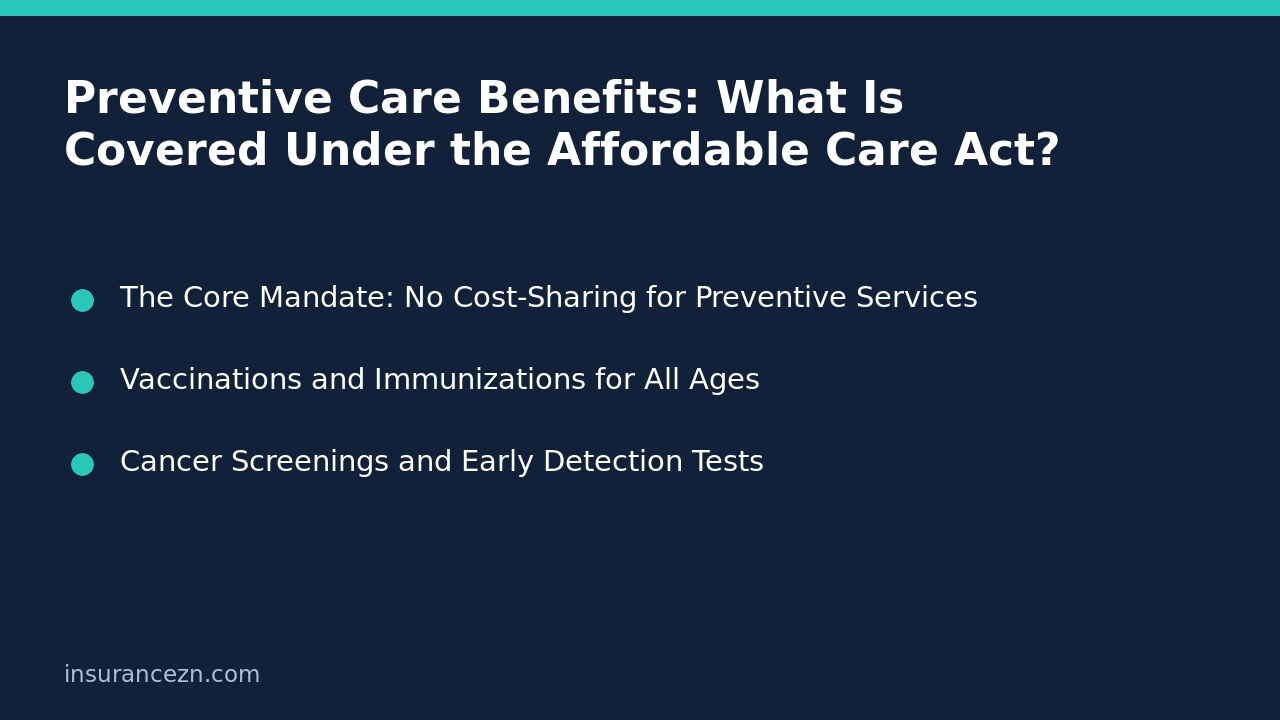
The Core Mandate: No Cost-Sharing for Preventive Services
The most critical aspect of the ACA regarding preventive care is the prohibition of cost-sharing. For a service to be considered fully covered, your insurance plan must not require you to pay anything out of pocket at the time of the visit. This applies to doctor visits, lab tests, and imaging specifically ordered for prevention purposes. If a provider performs these services within your plan’s network, you should see a balance bill of $0. It is important to note that this mandate applies only if the service is medically necessary and aligns with guidelines established by federal agencies such as the U.S. Preventive Services Task Force (USPSTF), the Advisory Committee on Immunization Practices (ACIP), and the Health Resources and Services Administration (HRSA).
Plans are required to cover these services for both adults and children, though the specific list of covered items differs slightly between the two groups. The federal government provides a comprehensive list of recommended preventive services that all compliant plans must follow. While some states have their own mandates that may expand coverage beyond federal requirements, no state can restrict coverage below the ACA standards. Therefore, if you have a qualifying health plan in any state, you are entitled to at least the baseline of federally mandated preventive care free of charge.
Vaccinations and Immunizations for All Ages
Vaccinations represent one of the most straightforward categories of preventive care under the ACA. Almost all non-grandfathered plans must cover recommended vaccines for children, adolescents, and adults without any cost-sharing. This includes routine childhood immunizations like MMR (measles, mumps, and rubella), DTaP (diphtheria, tetanus, and pertussis), and HPV vaccines. For adults, coverage extends to seasonal influenza shots, pneumococcal pneumonia vaccines, shingles vaccines, and Hepatitis A and B vaccines.
The list of covered adult vaccines often aligns with recommendations from the CDC’s Advisory Committee on Immunization Practices (ACIP). If your doctor recommends a vaccine that is not on the federal or state mandated list, your plan might charge you a copay or require you to meet your deductible. However, standard flu shots and Tdap boosters are universally covered. When visiting a pharmacy or doctor’s office for a shot, ensure you are using an in-network provider to guarantee that the vaccine itself—and any associated administration fee—is billed correctly to your insurance with no out-of-pocket cost to you.
Cancer Screenings and Early Detection Tests
Early detection of cancer is another pillar of ACA preventive care mandates. Plans must cover screening tests for breast, cervical, and colorectal cancers without cost-sharing, provided the patient meets specific age and gender criteria. For example, women generally have coverage for mammograms starting at age 40, though some state laws mandate coverage beginning at age 50 or earlier. Cervical cancer screenings (Pap smears) are covered for women aged 21 to 65. Colorectal cancer screening options include stool-based tests like FIT and visual exams like colonoscopies, typically recommended starting at age 45 for average-risk adults.
It is crucial to understand the difference between a screening and a diagnostic test in this context. A screening is performed when you are asymptomatic (showing no symptoms). If you experience bleeding, persistent pain, or unexplained weight loss, the visit shifts from preventive care to diagnostic care. In that scenario, you may be responsible for deductibles and copays. Furthermore, while colorectal cancer screenings are covered, the specific type of test might matter. Some plans prefer a colonoscopy over an annual FIT test, but under current federal rules, any USPSTF-recommended screening method must be covered equally. Always verify with your provider if you have risk factors like a family history of cancer, as these may require diagnostic workups that incur costs.
Women’s Health and Contraception Services
The ACA includes significant provisions for women’s health, ensuring access to contraception and reproductive health services. Most non-grandfathered plans must cover FDA-approved contraceptive methods, including pills, patches, rings, IUDs, implants, and sterilization procedures, without cost-sharing. This coverage applies regardless of whether the patient is insured through an employer or purchased individually on the Marketplace.
Beyond contraception, women’s wellness visits are fully covered. These annual visits allow for discussions regarding family planning, menopause symptoms, and other gender-specific health concerns. The law also mandates coverage for screening tests for osteoporosis in postmenopausal women and depression screening for all adults. While mental health parity laws ensure that mental health services are treated similarly to physical health services, the ACA specifically highlights the importance of addressing behavioral health through preventive measures like stress management counseling during annual wellness visits.
Annual Wellness Visits and Cardiovascular Health
For adults aged 40 and older, the ACA mandates coverage for cardiovascular risk assessment screenings without cost-sharing. These screenings evaluate blood pressure, cholesterol levels, and body mass index to assess the risk of heart disease and stroke. While simple blood pressure checks happen at every visit, the comprehensive annual wellness visit is a distinct preventive benefit designed to create a personalized prevention plan.
During this visit, doctors review your medical history, update your health records, and discuss lifestyle factors such as diet, exercise, and tobacco use. The law requires plans to cover these visits fully if they are conducted by an in-network provider. It is important to distinguish the “Annual Wellness Visit” from a standard physical exam. A standard physical often includes a head-to-toe check-up which may involve diagnostic elements subject to deductibles. The Annual Wellness Visit focuses strictly on prevention and planning for the future year. If your plan offers this specific benefit, it should be utilized before age 40 turns into mid-life to establish a baseline for long-term health management.
Common Pitfalls and How to Ensure Full Coverage
Despite the clear mandates of the ACA, patients frequently encounter situations where they are billed unexpectedly. A common mistake is assuming that any visit labeled “preventive” by a doctor will be free. If a provider orders a test or performs an exam that goes beyond the recommended guidelines—for instance, testing for thyroid disease in a patient with no symptoms—that service is considered diagnostic and subject to cost-sharing. Another frequent issue involves out-of-network providers. Even if the service is federally mandated, visiting a doctor who does not participate in your specific plan’s network can result in balance billing, where you pay the difference between what the provider charges and what the insurance company pays.
To avoid these pitfalls, always confirm that your primary care physician or specialist is in-network before scheduling an appointment. Additionally, review your Explanation of Benefits (EOB) after a visit to ensure that preventive services were coded correctly. If you receive a bill for a service that should have been covered under the ACA, gather your plan documents and contact the insurer’s member services department immediately. Providing proof that the service was performed by an in-network provider during a scheduled preventive visit can often resolve billing disputes.
Final Thoughts on Navigating Preventive Benefits
The Affordable Care Act has fundamentally changed how Americans access healthcare by making preventive care a right rather than a privilege contingent on ability to pay. By covering vaccinations, screenings, contraception, and wellness visits without cost-sharing, the law aims to reduce the burden of chronic disease and emergency room visits later in life. While the specifics can vary slightly based on state laws and individual plan details, the baseline protections are robust.
To maximize these benefits, patients should schedule their annual wellness visits and get their required vaccinations during well-child or adult check-ups before any symptoms arise. Keeping a record of which services have been covered under your specific plan’s guidelines will help you navigate potential billing issues. Ultimately, leveraging these preventive benefits is one of the most effective ways to maintain long-term health while keeping healthcare costs manageable.