
Selecting the right health insurance plan is one of the most critical financial decisions a household can make, yet the terminology often creates unnecessary confusion. In 2024, the primary distinction lies not just in monthly premiums, but in how you interact with healthcare providers and manage out-of-network costs. The three dominant network models—HMO (Health Maintenance Organization), PPO (Preferred Provider Organization), and EPO (Exclusive Provider Organization)—offer vastly different trade-offs between cost, flexibility, and administrative hassle. This guide provides a definitive, step-by-step checklist to help you navigate these options without getting lost in fine print or misleading marketing terms. Remember that specific deductibles, copays, and provider networks vary significantly by insurer, policy details, and state jurisdiction; always verify the current year’s data with your chosen carrier before enrolling.
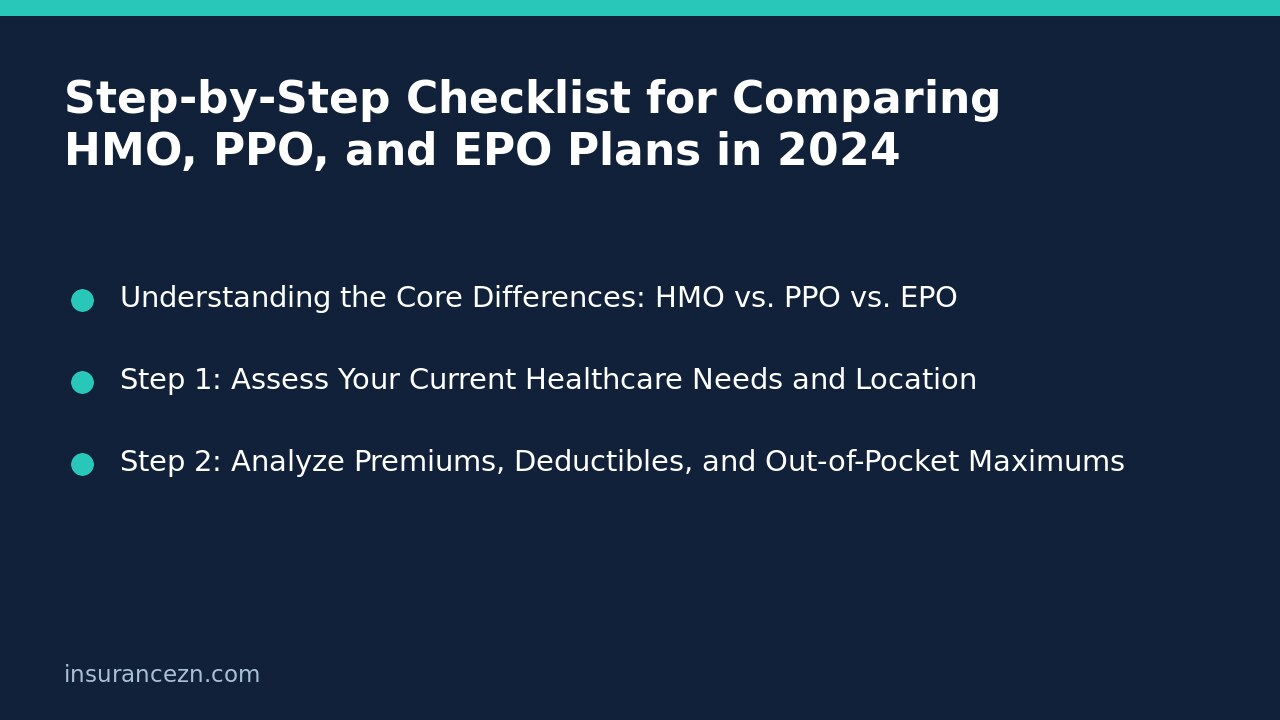
Understanding the Core Differences: HMO vs. PPO vs. EPO
Before diving into a comparison checklist, you must understand the fundamental mechanics of each model. An HMO typically requires you to choose a Primary Care Physician (PCP) who acts as a gatekeeper for all referrals to specialists. Crucially, HMO plans generally offer no coverage for services received outside their network, except in emergencies. This structure usually results in the lowest monthly premiums and out-of-pocket costs but demands strict adherence to the network rules.
A PPO offers significantly more freedom. You can visit any doctor or specialist without a referral, even if they are not in the plan’s network, though you will pay a higher cost for out-of-network care. PPO plans usually do not require you to select a PCP. While premiums and deductibles are higher than HMOs, the flexibility often justifies the expense for those who value choice or anticipate needing care outside their home region.
An EPO sits somewhere in the middle. Like an HMO, an EPO generally requires you to stay within its network to receive coverage (with rare exceptions for emergencies). However, unlike an HMO, an EPO typically does not require a PCP referral to see a specialist. This makes EPOs attractive for individuals who want the lower costs of an HMO but need the ability to see specialists directly without bureaucratic hurdles.
Step 1: Assess Your Current Healthcare Needs and Location
The first step in your comparison process is an honest audit of your personal health profile. Do you have chronic conditions requiring frequent specialist visits? Are you pregnant or planning a family soon? Do you live near a specific hospital system that the top insurance carriers do not cover well?
If you rely on a specific cardiologist or oncologist who practices solely within a local network, an HMO or EPO might be your only viable option if that provider is not part of their contract. Conversely, if you are healthy and prefer to see whichever specialist feels right without asking for permission, a PPO is likely the better fit. Always check the insurer’s provider directory online; do not assume a doctor is “in-network” based on general reputation. Verify their status specifically for the 2024 plan year, as networks change frequently.
Step 2: Analyze Premiums, Deductibles, and Out-of-Pocket Maximums
Once you have identified which model fits your lifestyle, move to the financial math. Look beyond the monthly premium. Compare the deductible (what you pay before insurance kicks in) and the out-of-pocket maximum (the absolute most you will pay in a year).
- HMOs often feature low premiums but may have higher copays for visits if you stay in-network.
- PPOs usually carry high premiums and high deductibles, but once you hit the deductible, they cover 80-90% of costs, even for out-of-network care (though at a lower rate).
- EPOs often offer a middle ground with moderate premiums and strict network adherence.
Create a spreadsheet to compare these figures side-by-side. Consider your worst-case scenario: If you have a major medical event, which plan caps your financial exposure the lowest? For many families in 2024, shifting from a high-premium PPO to a lower-premium EPO or HMO can save thousands of dollars annually, provided the network remains robust.
Step 3: Verify Network Participation for Specific Providers and Facilities
This is where most people make costly mistakes. A plan might appear to cover “all major hospitals,” but specific doctors you trust may be excluded. Use the insurer’s online tool to search for your current physicians and local urgent care centers. Pay close attention to the status listed (e.g., “Active,” “Terminated,” or “Out-of-Network”).
If you are considering an EPO, confirm that your preferred specialists are included in their exclusive network. If a specialist leaves the network during the open enrollment period, you could lose access to them entirely unless you switch plans. It is also wise to check if your local hospital system has a contract with the insurer. In some regions, major systems like Kaiser Permanente operate as both the provider and the insurer under an HMO model, which simplifies things but limits portability if you move or change jobs.
Step 4: Evaluate Referral Requirements and Prior Authorization Rules
Understand the administrative burden of each plan. With an HMO, seeing a specialist usually requires a referral from your PCP. If you skip this step, the claim will likely be denied, and you will be responsible for the full bill. Some HMOs also require “prior authorization” for expensive procedures like MRI scans or surgeries, meaning the insurer must approve the test before it happens.
PPOs generally eliminate the need for referrals, allowing you to walk into a specialist’s office immediately. However, they still often require prior authorization for major treatments. EPOs usually follow the HMO rule regarding referrals but may have more lenient rules depending on the specific carrier. Read the policy documents carefully; some plans claim “no referral needed” but add clauses that require it for certain specialties like dermatology or cardiology.
Step 5: Check for Telehealth and Digital Health Tools
In 2024, digital health integration is a key differentiator. Many modern PPOs and EPOs include robust telehealth benefits, allowing you to consult with doctors via video chat without leaving home. Some HMOs have integrated telehealth directly into their primary care apps. Compare the ease of access: Does the plan require you to use a specific app? Are there limits on the number of virtual visits per year? If you value convenience and remote monitoring, prioritize plans that offer seamless digital integration alongside your preferred network type.
Real-World Example: Choosing the Right Plan for Different Scenarios
To illustrate how these steps apply practically, consider three distinct profiles:
1. The Budget-Conscious Family: Parents with two young children who live near a large community hospital system. They choose an HMO because it offers the lowest premiums and predictable copays, provided their pediatrician and OB-GYN are in-network. They accept the restriction of no out-of-network care to keep costs down.
2. The Frequent Traveler: A professional who splits time between two cities and occasionally needs emergency care away from home. They select a PPO. Although the premium is higher, they can access any ER nationwide and see specialists in either city without worrying about network status, paying only a small penalty for out-of-network usage if necessary.
3. The Specialist-Focused Individual: A retiree who sees a specific orthopedic surgeon once a year but wants to avoid the hassle of getting referrals. They opt for an EPO. It provides the lower cost structure of an HMO with the ability to see specialists directly, assuming their chosen orthopedist is in the EPO network.
Common Mistakes to Avoid When Comparing Plans
Do not assume that a plan advertised as “comprehensive” covers everything. Always read the Summary of Benefits and Coverage (SBC). Watch out for plans that exclude common services like dental, vision, or mental health unless explicitly stated otherwise. Another frequent error is ignoring the “out-of-network” balance billing risks; even in PPOs, you could be billed for the difference between what the doctor charged and what the insurance negotiated. Finally, never sign up for a plan based solely on the lowest premium without checking if your current doctors are actually participating in that specific network for 2024.
Conclusion
Comparing HMO, PPO, and EPO plans requires balancing cost against flexibility. There is no single “best” plan; the optimal choice depends entirely on your personal medical needs, budget, and willingness to navigate administrative rules. By following this checklist—assessing needs, analyzing costs, verifying networks, reviewing referral rules, and checking digital tools—you can make an informed decision that protects your financial health. Always consult the specific policy documents for your state and insurer, as regulations and plan details evolve constantly throughout the year.