
Managing a commercial fleet introduces a layer of financial risk that personal auto insurance simply cannot address. A single accident involving a delivery truck, sales vehicle, or service van can result in catastrophic liability costs, physical damage repairs, and regulatory fines if the coverage structure is inadequate. Many business owners mistakenly believe that extending their personal policies to cover company vehicles is sufficient, but this approach leaves them exposed to severe gaps in protection. To build a robust risk management strategy, fleet managers must evaluate specific coverage types tailored to commercial operations. This guide outlines the essential components every fleet needs, helping you construct a checklist that ensures compliance and financial security.
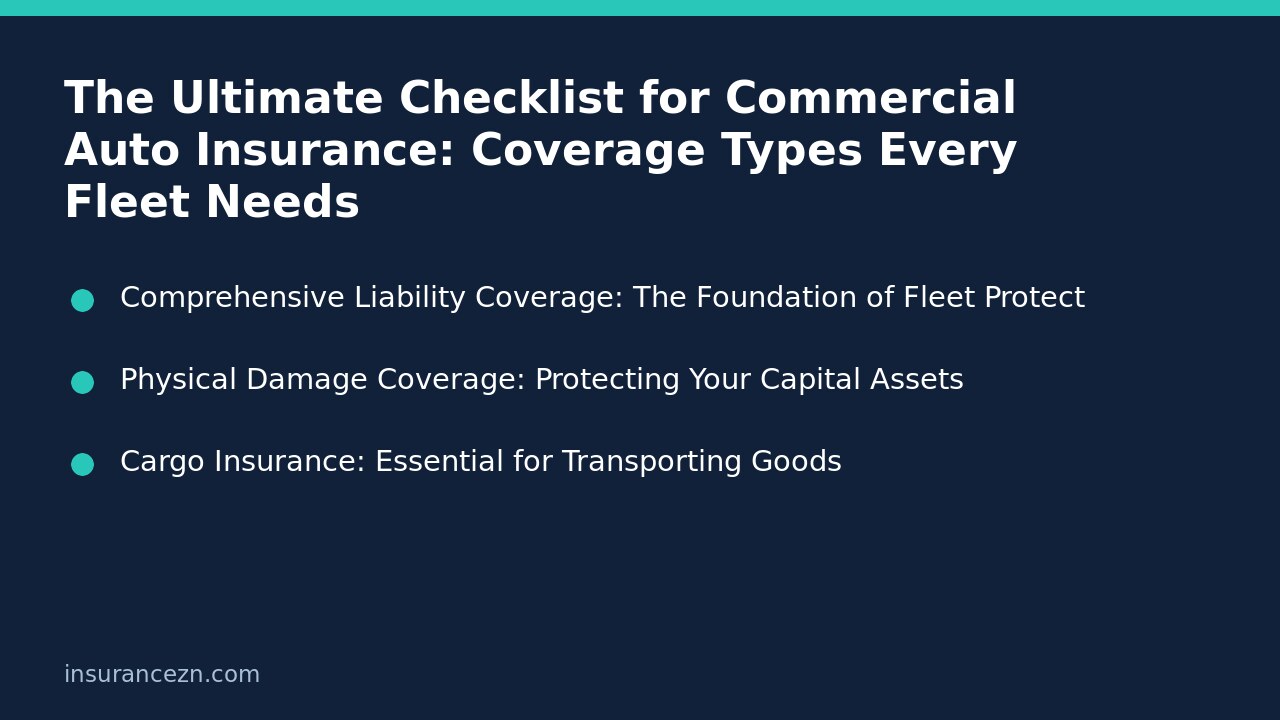
Comprehensive Liability Coverage: The Foundation of Fleet Protection
The most critical component of any commercial auto policy is bodily injury and property damage liability. Unlike personal policies, which often have low limits (such as $25,000 per person), commercial fleets require significantly higher thresholds to protect business assets. When a driver causes an accident that injures another person or damages their vehicle, the at-fault party’s insurance pays up to the policy limit first. If costs exceed those limits, the business owner is personally liable for the difference.
For example, a small delivery company with $1 million in liability coverage might face a lawsuit for $2.5 million after a severe accident. Without sufficient limits, the court could seize the company’s bank accounts and personal assets of the owners to cover the shortfall. Insurance professionals generally recommend starting with at least $1 million per person and $2 million per accident for fleets operating in high-traffic areas or carrying heavy loads. Some jurisdictions even mandate minimum liability limits that exceed standard personal policy caps. Always verify local laws, as they vary by state and country.
Physical Damage Coverage: Protecting Your Capital Assets
While liability covers others, physical damage coverage protects your own vehicles from theft, collision, fire, and vandalism. For a fleet consisting of expensive trucks or specialized equipment, this coverage is non-negotiable. There are two primary methods to structure this protection: actual cash value (ACV) and replacement cost. ACV pays the current market value of the vehicle minus depreciation at the time of loss, whereas replacement cost aims to pay for a new vehicle of similar kind and quality without deducting for wear and tear.
Replacement cost is often preferable for newer fleets or vehicles with high resale value, but it usually comes with a higher premium and may require the vehicle to be replaced within a specific timeframe. Conversely, ACV is more affordable but can leave a business underfunded if the depreciated value of a truck is far below what it takes to buy a comparable replacement. When calculating premiums, insurers consider the age of the fleet, the make and model, and the agreed-upon value of each vehicle.
Cargo Insurance: Essential for Transporting Goods
If your fleet transports goods for clients or carries inventory within the vehicles themselves, cargo insurance is a mandatory addition to your policy. This coverage protects the merchandise being transported against loss or damage due to accidents, theft, or weather events. The scope of cargo coverage depends on whether you are acting as a carrier (transporting others’ goods) or a motor carrier (carrying your own inventory).
For instance, a refrigerated food delivery truck needs specific coverage for perishable goods that could spoil during an accident. Similarly, a construction equipment hauler must ensure heavy machinery is covered against accidental damage during transit. Cargo policies often cover the full replacement cost of the goods, which is vital because standard liability limits do not extend to the value of the cargo inside the vehicle. Businesses should also consider whether they need inland marine insurance if goods are stored in trailers or warehouses before being loaded onto a truck.
Uninsured and Underinsured Motorist Coverage: A Safety Net Against Others
Despite safety measures, accidents caused by other drivers without insurance remain a significant risk. Uninsured motorist (UM) and underinsured motorist (UIM) coverage fills the gap when another driver hits your employee with insufficient or no insurance. In these scenarios, your own policy pays for medical expenses, lost wages, and pain and suffering for your injured employees.
Many states require UM/UIM coverage, but the minimum limits are often lower than what is necessary for a commercial fleet. If an uninsured driver causes a severe accident resulting in spinal injuries, the cost of treatment can easily exceed standard personal injury protection limits. For a fleet manager, ensuring that every employee has access to robust medical benefits through their employer’s policy is also crucial, but having dedicated UM/UIM coverage on the auto policy provides an additional layer of defense against financial ruin from third-party negligence.
Specialized Add-Ons: Non-Owned Auto and Hired Auto Liability
Fleet managers often overlook vehicles that are not part of the company-owned fleet but are still used for business purposes. Non-owned auto liability covers accidents involving rental cars or employee-owned vehicles used to conduct business when the company does not own the vehicle. Similarly, hired auto liability applies to rented trucks or vans. These distinctions are vital because if an employee rents a truck and causes an accident, the rental agency’s policy might only cover property damage to their truck, leaving your business liable for bodily injury claims.
For example, a sales representative borrowing a personal car to deliver documents to a client creates a scenario where non-owned auto coverage becomes relevant. Without this specific endorsement, the business could be sued directly if the driver is deemed negligent while performing job duties. Always clarify with your insurer whether your current policy automatically extends to rented vehicles or if you must purchase separate endorsements for each rental transaction.
Building Your Fleet Insurance Checklist
To ensure no gaps exist in your coverage, implement a regular review process using this practical checklist:
- Verify Liability Limits: Confirm that bodily injury and property damage limits meet or exceed state mandates and industry standards (e.g., $1M/$2M).
- Assess Physical Damage Needs: Determine if actual cash value or replacement cost is better suited for your fleet’s age and value.
- Audit Cargo Requirements: Check if you are transporting others’ goods or your own inventory, and adjust cargo limits accordingly.
- Review Employee Vehicle Usage: Ensure non-owned auto coverage is in place for employees using personal vehicles for work.
- Check Medical Benefits: Evaluate the adequacy of medical payments and uninsured motorist coverage for all drivers.
- Inspect Policy Exclusions: Read the fine print to understand what specific scenarios (like off-road use or racing) are excluded from coverage.
Remember that insurance terms, availability, eligibility, laws, and prices depend on the insurer, policy details, and jurisdiction. This article provides informational guidance only and does not constitute individualized financial or legal advice. Before finalizing any policy, consult with a licensed insurance professional to ensure compliance with local regulations and the specific needs of your business operations.