
When planning a trip, one of the most critical decisions involves selecting the right level of protection against unforeseen events. Many travelers assume that “cancellation” and “interruption” are interchangeable terms within travel insurance policies, but the distinctions between them are significant and can determine whether you receive a refund or nothing at all. Understanding these nuances is essential for comparing quotes accurately and ensuring your policy covers your specific risks. This guide breaks down the differences between trip cancellation and trip interruption coverage, explains how they function in real-world scenarios, and provides practical steps to evaluate policies effectively.
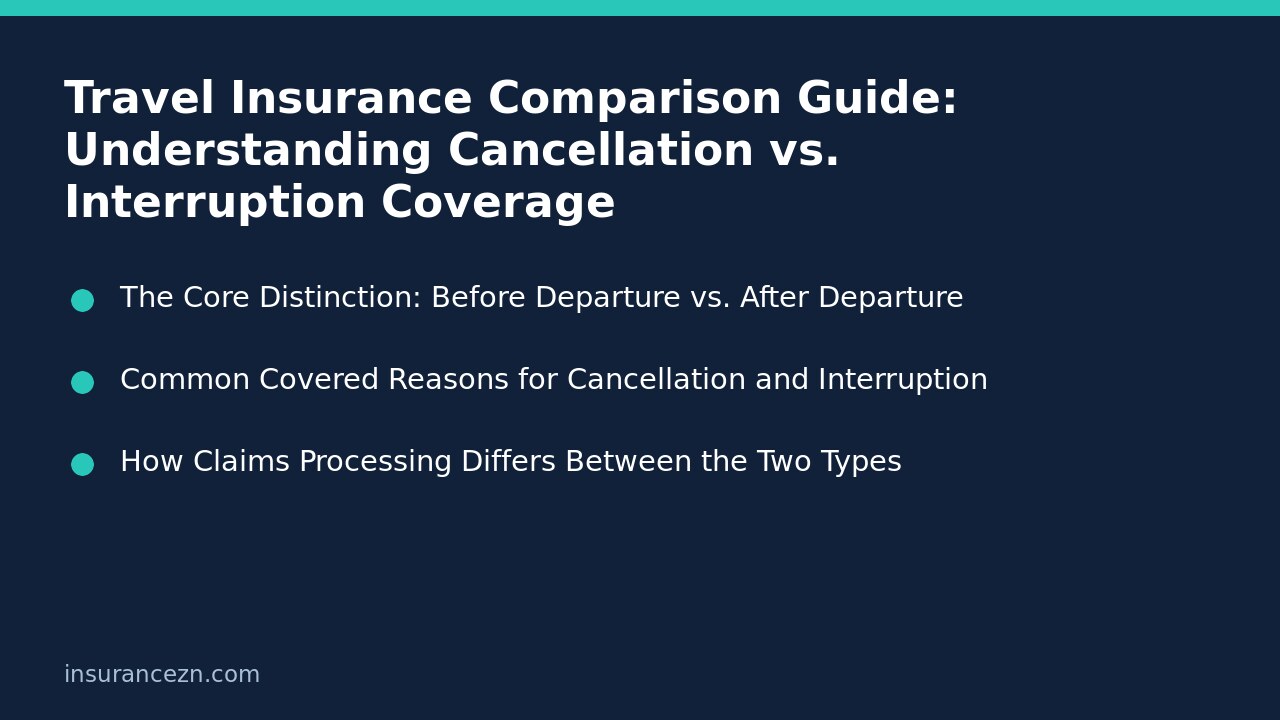
The Core Distinction: Before Departure vs. After Departure
The primary difference between cancellation and interruption lies in the timing of the event relative to your departure date. Trip Cancellation applies to incidents that occur before you leave home. If a covered reason forces you to cancel your entire trip before the start date, this coverage reimburses you for non-refundable costs such as airfare, hotel deposits, and tour fees.
In contrast, Trip Interruption applies to events that happen after you have already departed but before the scheduled end of your vacation. This coverage kicks in if you must cut your trip short due to an emergency. It typically reimburses you for the unused portion of your prepaid, non-refundable travel expenses and may also cover one-way home transportation costs if you need to return early.
Common Covered Reasons for Cancellation and Interruption
Insurance policies generally define a set list of “covered reasons” that trigger these benefits. While specific lists vary by insurer, the following scenarios are standard in most comprehensive plans:
- Sudden Illness or Injury: A doctor’s note confirming that you, a traveling companion, or an immediate family member is too sick or injured to travel.
- Unforeseen Job Loss: In many modern policies, involuntary termination of employment (not due to firing for cause) is a covered reason if documented by an employer.
- Severe Weather Events: If a hurricane, earthquake, or other natural disaster makes your destination uninhabitable or causes flight cancellations by the carrier.
- Jury Duty or Court Appearance: A summons requiring your physical presence in court.
- Death in the Family: The death of an immediate family member (spouse, child, parent, sibling) usually qualifies for both cancellation and interruption.
It is important to note that “change of mind,” fear of traveling without a medical diagnosis, or general economic downturns are rarely covered reasons. Always check the specific wording of the policy regarding what constitutes a valid claim.
How Claims Processing Differs Between the Two Types
While the reimbursement logic is similar, the administrative process for filing claims differs slightly based on the nature of the event. For cancellation, you must cancel your entire itinerary before leaving. You will need to provide proof that the trip was cancelled entirely and not just modified. Insurers often require documentation from airlines or hotels proving that you cannot recover any funds without insurance intervention.
For interruption, the process involves returning home prematurely. You must document the one-way ticket cost incurred to get back. Some policies offer an “Interruption Only” benefit, which might pay for unused hotel nights but not necessarily the full cost of a new flight home unless specified. Conversely, some comprehensive plans include “Cancel For Any Reason” (CFAR) upgrades, which allow you to cancel for reasons not listed in the standard contract, though this usually requires purchasing an additional rider and cancelling within 48 hours of departure.
Real-World Example: The Hurricane Scenario
To illustrate the practical application, consider a traveler named Sarah who books a two-week cruise departing in October.
* Scenario A (Cancellation): Two weeks before departure, a major hurricane forms off the coast of Florida, and the cruise line cancels the entire voyage. Sarah has no refund from the cruise line because they are already liable for damages. She files a claim under her Trip Cancellation coverage. Her insurer reimburses 100% of her non-refundable deposit and prepaid excursions.
* Scenario B (Interruption): Sarah departs on time. However, three days into the trip, she receives news that her spouse has fallen ill in their home country and requires immediate care. She decides to fly back immediately. Her insurer processes a Trip Interruption claim. They reimburse her for the unused portion of the cruise (the remaining 11 days) and potentially cover the cost of her emergency one-way flight home, depending on the specific policy limits.
Common Mistakes When Comparing Policies
When shopping for travel insurance, several pitfalls can lead to inadequate coverage:
- Assuming All Plans Are Equal: A basic “trip cancellation” plan may not include interruption benefits, or vice versa. Always read the fine print to see which specific events are included in each category.
- Ignoring Pre-Existing Condition Clauses: Many standard policies exclude pre-existing medical conditions unless you purchase a waiver within a specific window (often 14–21 days) of your initial trip deposit. This rule applies to both cancellation and interruption related to health issues.
- Overlooking Documentation Requirements: Without proper documentation, such as a physician’s letter or an official notice from the airline regarding weather delays, claims can be denied regardless of the coverage type selected.
- Neglecting Trip Duration Limits: Interruption benefits often have a maximum payout limit (e.g., up to $10,000). If your trip costs exceed this amount, you could be underinsured even with a comprehensive plan.
Steps to Evaluate Your Needs
Before purchasing a policy, follow these steps to ensure you are comparing apples to apples:
* List Your Non-Refundable Costs: Calculate the total amount you would lose if you had to cancel or interrupt your trip. This helps you determine the necessary coverage limit.
* Check the “Covered Reasons” List: Compare the lists of qualifying events between different insurers. Does one offer broader definitions for illness or job loss?
* Verify the Exclusions: Look specifically at what is not covered. Some policies exclude certain destinations or specific types of activities (e.g., adventure sports).
* Review the Deductible and Limits: Understand if there are per-person limits on interruption claims versus trip-wide limits on cancellation.
Conclusion
Understanding the difference between cancellation and interruption coverage is vital for securing financial protection while traveling. Cancellation protects your investment before you leave, while interruption safeguards your remaining funds and travel costs after you have embarked on your journey. By carefully reading policy documents, verifying covered reasons, and avoiding common comparison mistakes, you can select a plan that truly fits your risk profile. Remember that terms, availability, eligibility, laws, and prices depend on the specific insurer, the policy chosen, and the jurisdiction in which you reside. Always verify the current details of any policy before purchase, as insurance regulations and product offerings are subject to change.