
Most people believe they are locked into their health insurance plan for the entire year, only able to switch during the annual Open Enrollment Period. While this is generally true for individuals purchasing coverage on the Affordable Care Act (ACA) marketplace or through an employer, specific life events create exceptions known as Special Enrollment Periods (SEPs). These windows allow you to modify your coverage without waiting until next year. Missing these deadlines can leave you uninsured or with a plan that no longer fits your financial or medical needs. Understanding exactly what triggers an SEP and how to navigate the process is critical for maintaining continuous, affordable healthcare.
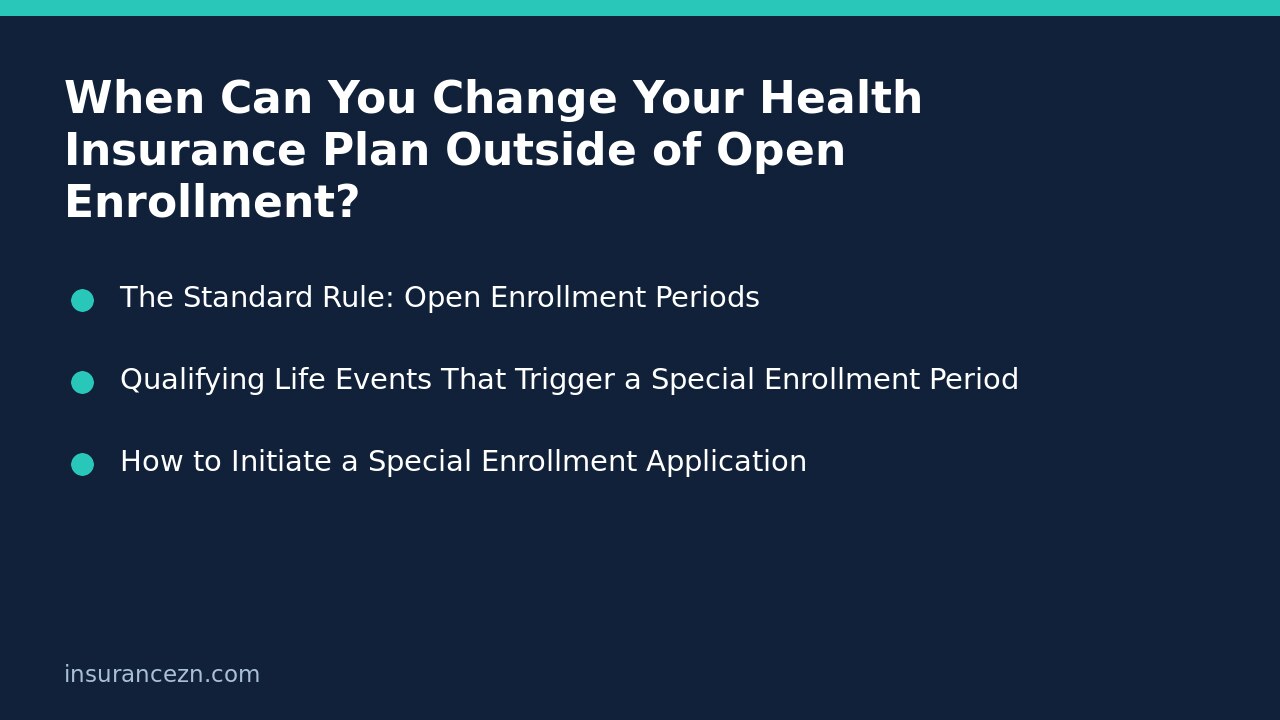
The Standard Rule: Open Enrollment Periods
To understand when you can change plans outside the standard window, one must first recognize the baseline rule. For most Americans, the only time they can switch health insurance plans, add a new family member, or drop coverage entirely is during the annual Open Enrollment Period. This period usually occurs in the winter months (November to January) for marketplace plans and varies by employer for group coverage.
Outside of this timeframe, your insurer will typically reject applications for changes unless you can prove a “qualifying life event.” The logic behind this rule is stability; insurers need predictable risk pools, and consumers need predictable access to care. However, life is unpredictable, and the system accounts for that through Special Enrollment Periods. If you experience a significant change in your circumstances, you generally have 60 days from the date of that event to apply for a new plan or make changes to an existing one.
Qualifying Life Events That Trigger a Special Enrollment Period
Not every life change qualifies for a plan switch. The government and most insurers have strict definitions for what constitutes a qualifying event. These generally fall into three categories: changes in household status, changes in income or residency, and loss of coverage.
Changes in Household Status
Marriage is one of the most common triggers. If you get married, you can combine your individual plans into a family plan or add your spouse to yours during the 60-day window post-wedding. Conversely, divorce or separation allows you to remove an ex-spouse from your policy immediately following the legal finalization.
Births and adoptions are equally significant. If a child is born to a parent or placed in adoption, you can add them to your existing health insurance plan. This addition must happen within 60 days of the birth or placement date. In many cases, parents may even be able to add the newborn before the standard Open Enrollment Period begins if they have continuous coverage from birth.
Loss of Current Coverage
Perhaps the most urgent reason to switch is losing your current health insurance. If your job ends and you lose employer-sponsored coverage, or if you are no longer eligible for Medicare Part B, you qualify for an SEP. Similarly, if you receive Medicaid or CHIP benefits in a state that expanded eligibility under the ACA, gaining those benefits often triggers a window to enroll in marketplace subsidies.
Changes in Income or Residency
A substantial change in income—usually defined as a drop of at least 10%—can qualify you for an SEP if it affects your eligibility for premium tax credits and cost-sharing reductions on the marketplace. Additionally, moving to a new state that does not have its own ACA marketplace (or moving back into a state with one) allows you to enroll in local plans within 60 days of establishing residency.
How to Initiate a Special Enrollment Application
The process for changing your plan outside open enrollment is straightforward but requires timely action. You must apply during the 60-day window following your qualifying event. The application portal will ask you to verify that a qualifying life event occurred and often requires documentation.
For example, if you married, you will need to upload a copy of your marriage certificate. If you lost a job, you may need to provide proof of termination, such as a layoff notice or a final pay stub showing no active insurance coverage. If you had a baby, a birth certificate is required. Some insurers allow you to start the application online immediately after the event, while others may require you to call a dedicated enrollment line.
It is crucial to apply before your current coverage ends. If you have a gap in coverage, you risk financial penalties or a waiting period before new coverage becomes active. Always check with your specific broker or insurer regarding their internal processing times, as some administrative delays can occur even within the 60-day legal window.
Common Mistakes to Avoid When Switching Plans
Even when you have a valid reason to switch, applicants often make errors that delay approval or result in rejection. One frequent mistake is failing to gather the necessary documentation before applying. Insurers may reject an application if the proof of life event is missing or illegible. Another common error is assuming that any change in address qualifies for a switch; minor moves within the same state usually do not count unless you are moving to a new state or changing plans due to income changes.
Additionally, people often forget that the 60-day clock starts on the date of the event, not when they realized it happened. If you get married in January but don’t apply until April, you may have missed your window depending on the exact dates. Finally, do not assume your current plan will automatically continue; if you intend to switch, you must actively cancel or let lapse your old policy to avoid double-paying premiums for overlapping coverage periods.
Real-World Example: The Job Loss Scenario
Consider the case of Sarah, a marketing manager who lost her job due to a company-wide restructuring in mid-March. Her employer-sponsored health insurance ended on April 1st. Sarah wanted to switch to a new marketplace plan with lower premiums and better prescription drug coverage.
Sarah realized she was outside the standard Open Enrollment Period, which ran from November to January. However, because she lost her job, she qualified for a Special Enrollment Period. She gathered her termination letter and proof that her insurance benefits ceased on April 1st. Within 30 days of losing coverage, she logged into the marketplace website, selected a new plan, and uploaded her documents. Her application was approved within two weeks, and her new policy went live immediately after her old one ended, ensuring no gap in care for herself or her family.
Conclusion
Changing your health insurance plan outside of Open Enrollment is possible, but it requires meeting specific criteria related to life events. By understanding the 60-day Special Enrollment Period window and knowing which changes—such as marriage, birth, divorce, or loss of coverage—qualify you for a switch, you can ensure your healthcare needs are met without interruption. Always prepare your documentation in advance and act quickly to avoid gaps in coverage. If you believe you have experienced a qualifying event, contact your insurer or state marketplace immediately to verify your eligibility and begin the application process.