
A weekend market can turn a small creative business into a public-facing operation overnight. You transport stock, assemble a display, meet customers and send products home with them. Market stall insurance needs to reflect that whole journey, not simply the hours your trestle table is open. Start by identifying what could happen, then ask which cover responds.
Separate the organiser’s requirements from your own risks
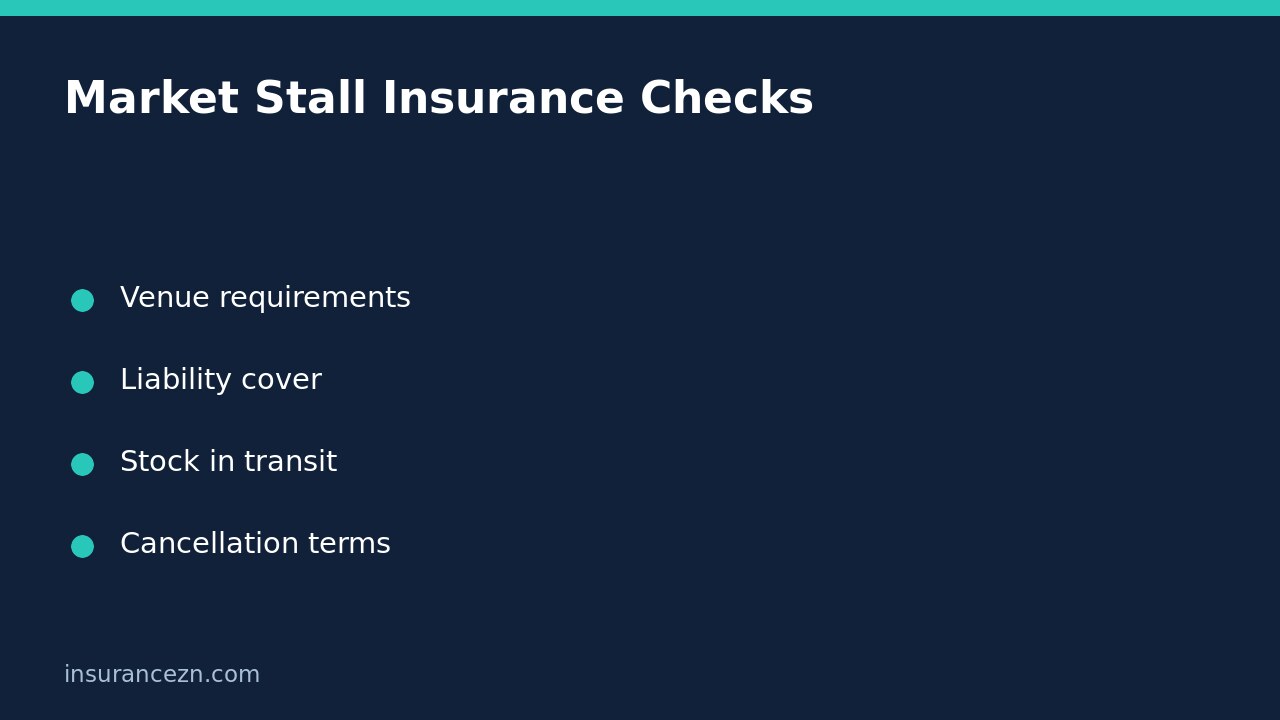
Ask the market organiser for its written insurance requirements before paying for a stall. Clarify whether you must provide a certificate of currency, what liability limit it requires and whether particular activities need approval. Requirements can differ between venues; there is no single figure to assume for every Australian market.
Do not assume the organiser’s insurance covers your business. If cover is offered through a stallholder arrangement, ask who is insured, which activities qualify and what is excluded. A venue accepting your certificate does not establish that every product, loss or location is covered.
As business.gov.au’s guide to business insurance types explains, some insurance obligations arise from law, while others arise because organisations you deal with require cover. Check relevant state or territory requirements and get professional advice rather than treating an event booking rule as legal advice.
Public liability and product liability answer different questions
Public liability generally concerns liability for injury or property damage arising from your business activities. Product liability concerns injury or property damage caused by products you make, sell or supply. These descriptions help identify questions; the definitions and exclusions in your policy determine the actual protection.
Hypothetical example: Elise sells handmade ceramic planters. A customer trips over a display stand at her stall. Later, another customer alleges that a planter broke and damaged their furniture. The first incident raises a public liability question; the second raises a product liability question. Neither example establishes fault or guarantees cover.
Tell the insurer exactly what you sell, including anything imported, modified or supplied under your own label. Ask whether the quote includes both types of liability and whether any products are excluded. If you add candles to a stationery stall or introduce food samples, seek confirmation before relying on the existing description of your business.
Follow stock from home to the market and back
Liability insurance is not a substitute for protection against loss of your own stock or equipment. Map where items spend time: your spare room, a vehicle, the stall and perhaps overnight storage. Ask about each stage separately.
Business.gov.au identifies goods in transit insurance as protection for business items during transport, and portable equipment insurance as a separate category for equipment taken to jobs. The available cover still needs to match your items and circumstances. Check theft conditions, unattended vehicle exclusions, weather damage, item limits and valuation methods.
Hypothetical example: Marcus takes printed artwork and a payment terminal to a coastal market. He asks whether stock damaged by wind-driven rain, equipment stolen during pack-down and goods stolen from his parked vehicle would be covered. He requests written answers instead of assuming one business package handles all three situations.
Do not mistake a cancelled market for an insured interruption
A market cancellation, poor attendance or a quiet trading day does not automatically trigger business interruption cover. Business.gov.au describes this insurance as paying ongoing business costs when an insured event interrupts the business, such as fire damage to business property.
Ask what event must occur, which premises or property must be affected, and whether any waiting period or relevant exclusion applies. If weather cancellation is your main concern, put that exact scenario to the insurer or broker. Also read the organiser’s refund terms: recovering a stall fee and replacing lost trading income are different questions.
Before your next market: a compact checklist
- Obtain the organiser’s written insurance conditions.
- Confirm the business name, products, venues and activities match your cover.
- Check public and product liability separately.
- Trace stock and equipment through storage, transport and trading.
- Keep policy documents, receipts and incident-reporting contacts accessible.
Business.gov.au’s insurance management guidance recommends understanding exclusions, definitions, excesses and information you must keep updated. Review cover when products or business practices change. Our business insurance claim-readiness guide can help you organise supporting records.
Quick FAQ
Does occasional trading remove the need to check insurance? No. Describe how often you trade and confirm both venue requirements and policy eligibility.
Does hiring a helper change anything? It may. Check employment arrangements and workers compensation requirements with the relevant state or territory regulator.
General information only, not personal financial advice. Read the policy documents, consider your circumstances and obtain licensed insurance advice where needed.