
If customers will start visiting your home business, review insurance before the first appointment. Do not assume that an existing home policy, a business equipment policy or a liability certificate automatically addresses the new activity. Describe exactly what visitors will do and ask the relevant insurers how that changes your arrangements.
Business Queensland’s insurance overview warns that general home and contents insurance may not cover home-based business operations. It recommends checking disclosure requirements and identifies customer and supplier injuries as a reason to consider public liability. That supports an activity-specific review, not a universal rule that every home business needs the same package.
Describe the change as an appointment, not just a business name
Start with a plain-language description of a typical visit. A customer collecting a sealed order at the front gate presents different facts from a client entering a treatment room, trying equipment or joining a small class. Tell the insurer about access routes, rooms used, activities and any products supplied.
Include expected visitor numbers, appointment frequency, trading hours, deliveries, staff and whether children accompany customers. Identify stairs, shared driveways and areas that household members also use. These details help an insurer assess the actual activity; they do not establish that any particular hazard is covered.
For example, a fictional craft seller previously posted every order but now plans weekend collections from a garage. Their review should describe collections, stored stock and the customer route. Calling the operation ‘online retail’ without explaining the visits would leave out the very change being assessed.
Ask the home insurer what must be declared
Locate the current home policy and ask which business-use disclosures or restrictions apply. Explain the proposed start date and request confirmation of whether the insurer accepts the changed use, needs additional information or proposes different terms. Ask which building, contents and liability sections are affected.
Business Queensland mentions examples of limited home-business situations where home cover may respond. Do not treat an example or floor-area percentage as a safe harbour for your own policy. Visitors, stock, equipment and the type of work can matter independently. Your insurer must assess the facts under its terms.
Keep a copy of the description you submitted and the answer received. If the reply only acknowledges receipt, ask whether underwriting acceptance remains outstanding. Do not treat silence or an unchanged direct debit as approval.
Separate public liability, professional services and products
The government overview distinguishes public liability, product liability and professional indemnity. Public liability concerns potential injury or property damage liabilities arising from business activity. Professional indemnity addresses certain errors or omissions in professional advice or services, while product liability relates to harm associated with supplied products. The actual policy determines the scope and exclusions.
Ask your broker or insurer which sections address your precise activity. A consultation business that also sells goods may need more than one question answered. Do not infer that a liability limit shown on a certificate covers every service, product or location.
Our certificate of currency checklist helps reconcile the insured entity and described cover. Use it alongside the policy and endorsements, not as a replacement for them.
Check equipment and stock without overlooking household property
List business equipment and stock separately from ordinary household belongings. Ask where each is insured, what values apply and whether visiting customers change security or storage requirements. An insurer may need to know about goods kept in a garage, a dedicated room or an outbuilding.
Also explain whether equipment leaves the home or goes to customer sites. Cover at the declared premises does not answer every off-site question. Avoid buying an overlapping policy simply because its label sounds appropriate; request a clear explanation of which section responds to each identified exposure and where gaps remain.
Get effective dates and instructions before opening the door
Request written confirmation of any amended business description, declared address, endorsements, excesses and effective date. If proposed cover differs from what you requested, resolve that before relying on it. Keep existing insurance in place until you understand any replacement arrangements; asking for a quote should not accidentally authorise cancellation.
Insurance is only one part of the change. Check applicable council, lease, strata and professional requirements separately. Insurer acceptance does not itself give planning permission, approve unsafe premises or settle every legal obligation.
Before the first customer visit
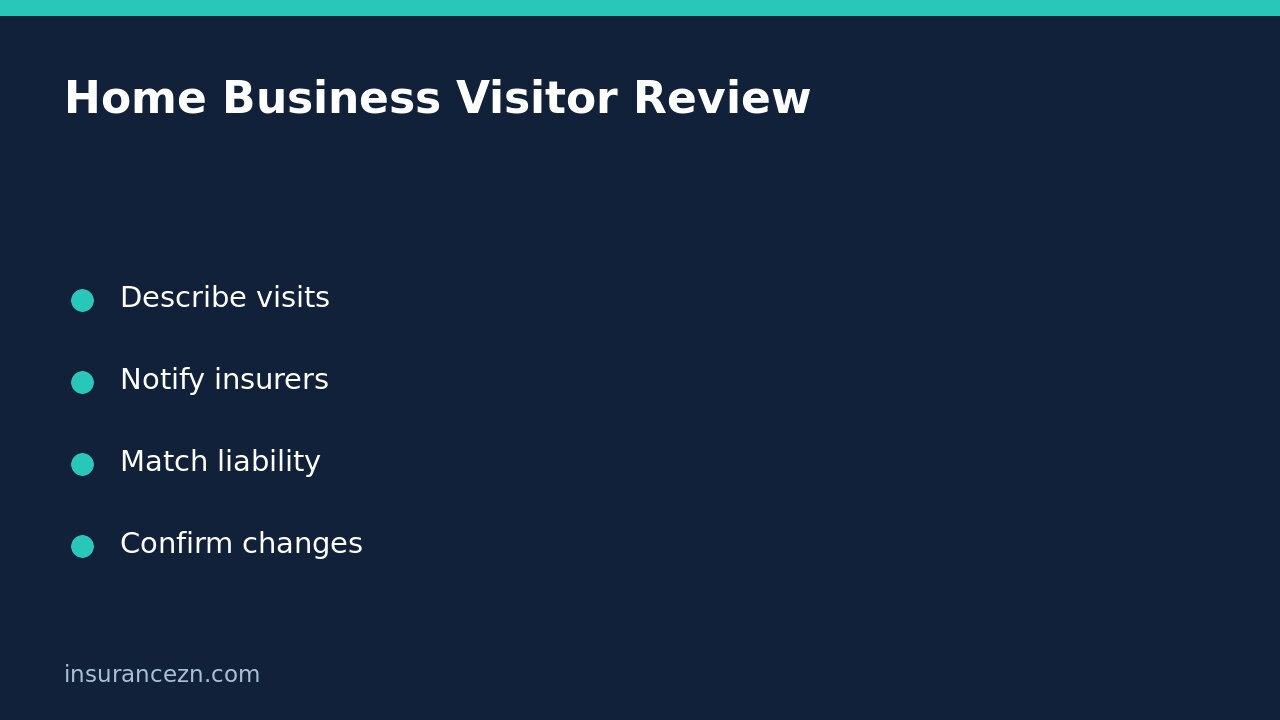
- Save a factual description of activities and visitor access.
- Confirm the home insurer has assessed the changed use.
- Match business liability and property sections to actual operations.
- Check the written terms and start date, and record unanswered questions.
Is public liability compulsory for every home business? Do not assume a national blanket rule from a general overview. Requirements can depend on the activity, location, profession and contracts. Verify the requirements that actually apply to your business.
This is general information for Australian readers, not personal financial advice. Insurance depends on the policy wording, PDS where applicable, endorsements and accepted business description. Seek advice about your circumstances rather than treating these checks as a guarantee of cover.