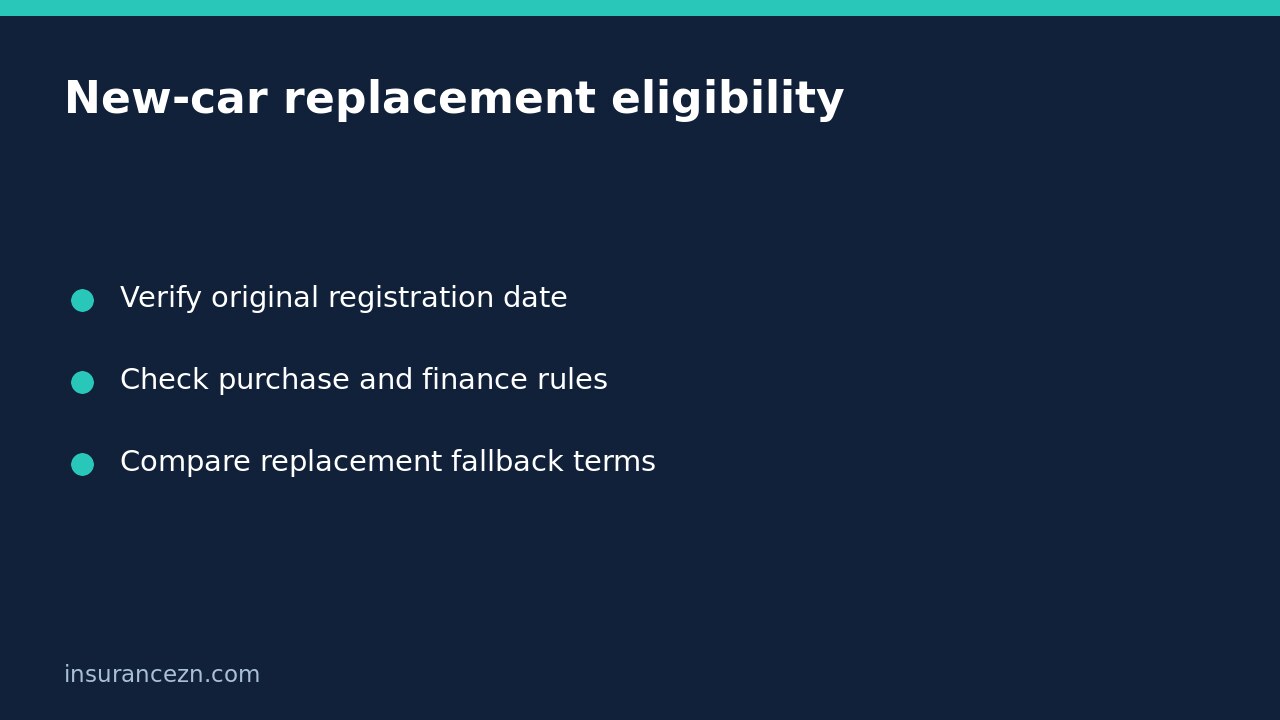

When comparing new-for-old car insurance, check which date starts the eligibility clock. Buying a demonstrator today does not necessarily make today the start of the replacement period. The original registration date, the way you bought the car and the insurer’s total-loss conditions can matter more than the vehicle’s recent appearance or your purchase date.
Make this an eligibility comparison before treating the benefit as a reason to choose a policy. A new-car replacement benefit is different from a temporary hire car and different from a promise to pay whatever a dealer charges for your preferred replacement.
Find the date the policy actually uses
Ask the seller for evidence of original registration and retain the purchase invoice, vehicle identity details and demonstrator history where relevant. Then find the replacement section in each policy’s PDS. Record the trigger date in plain language: original registration, purchase, or another definition specified by that product. Do not substitute one for another.
As a provider-specific example, AAMI’s explanation of new-for-old replacement describes loss or damage occurring less than two years from original registration. It also describes purchase as new or an ex-demonstration model from a licensed motor dealer, an accepted total-loss claim for a covered incident, and written consent from anyone financing the car. The educational article is dated 2023; use it to identify questions, then confirm the current PDS applying to your quote. AAMI’s car insurance comparison page also lists a new-car benefit for cars less than two years old, subject to policy terms.
Test a demonstrator against the wording
Imagine buying a demonstrator that was first registered several months before your purchase. If the product measures eligibility from original registration, those earlier months already count. A policy starting on the day you collect the car does not itself restart that clock.
Put the original registration date and proposed policy commencement beside each other. Ask the insurer to explain the remaining eligibility period and what happens if an insured loss occurs near its end. Get the answer against the actual car, purchase history and product, rather than asking only whether ‘new cars’ are covered.
A private purchase of a nearly new vehicle may also differ from buying a dealer demonstrator. Do not assume low kilometres or remaining manufacturer warranty satisfies an insurer’s purchase requirements. Record an unresolved eligibility answer as unresolved, not as a benefit included in your comparison.
Compare replacement terms and fallback settlement
Create a small worksheet for otherwise comparable quotes. Include the premium and excess, but add these replacement questions:
- What covered events and accepted total-loss findings trigger replacement?
- Which ownership and purchase-history requirements must be met?
- Does replacement require finance-provider consent?
- How is the replacement vehicle specified, and what happens if it is unavailable?
- Which registration and on-road costs are included, and what settlement applies if replacement cannot proceed?
AAMI’s educational explanation describes attempting to source the same make and model, a similar alternative if unavailable, and a certificate-value payout if a suitable replacement cannot be found. Treat those as that provider’s explanation, not market-wide rules or a guarantee of stock availability. Confirm the applicable contractual process rather than relying on a sales label.
Keep finance and transport questions separate
If the car is financed, ask both insurer and lender about any consent and outstanding requirements. A lender being listed on the certificate is not evidence that written replacement consent has already been supplied. Nor should you assume that replacement cover automatically clears every finance obligation.
Separately compare temporary transport. Eligibility for a replacement vehicle after total loss does not establish an unlimited hire car while the claim is investigated or stock is located. Ask about the relevant hire-car trigger, duration and authorisation. For a different comparison task, see checking agreed value when comparing renewal quotes.
Final comparison checklist
Does renewal reset vehicle age? Do not assume so. Check the date definition and eligibility at the time of loss under the relevant product.
Does an accepted theft report guarantee a new vehicle? No. Police reporting, claim lodgement, coverage acceptance, total-loss assessment and replacement eligibility are separate steps.
What should I save before buying? Retain the quote, applicable PDS, purchase and registration evidence, and written answers about eligibility and fallback settlement. Compare what remains available after the age window ends as well as the benefit available today.
This is general information for Australian readers, not personal financial advice. Policy/PDS conditions, limits, exclusions and your certificate determine cover. Confirm product-specific eligibility with the insurer before relying on a replacement benefit.