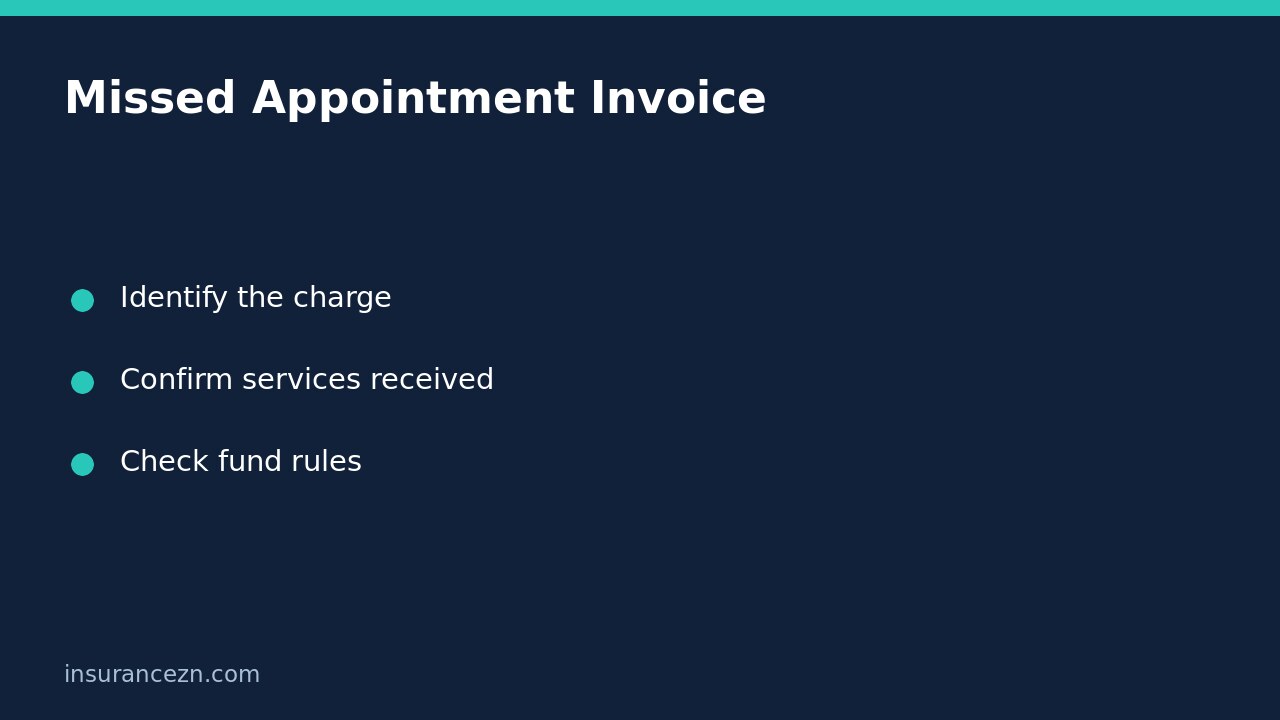

If you miss a physiotherapy, dental or other extras appointment and receive an invoice, do not assume the charge can be claimed just because the clinic is recognised by your health fund. First establish whether the invoice is for treatment actually received, a late cancellation, or a missed appointment. Ask your fund about that exact charge before submitting it as a treatment expense.
This is general information for Australian readers, not personal financial advice. Benefits depend on your policy, fund rules, relevant policy booklet or PDS, waiting periods and limits. This checklist does not establish a universal cancellation-fee benefit or decide whether a clinic’s charge is legally enforceable.
Separate the booking from the service
A reserved appointment, a payment and a completed consultation are different records. A clinic may have a cancellation policy, but agreeing to that policy does not itself establish an insurance benefit. Likewise, a receipt showing money paid does not identify what clinical service, if any, took place.
The government overview of private health insurance cover describes extras as cover for treatment by ancillary health service providers. It also explains that services and benefit limits vary between policies. That overview is a starting point for checking the charge, not evidence that your particular fund pays or refuses every missed-appointment invoice.
Ask the clinic for an accurate itemised invoice
Keep the original booking confirmation, reminder, cancellation message and invoice. Contact the clinic through its normal accounts channel and ask what each line represents. Do not ask it to rename a cancellation charge as treatment so that an insurance claim will pass.
- Confirm the intended appointment date and the date any actual service occurred.
- Identify the practitioner, patient and service description.
- Separate a cancellation or non-attendance fee from any completed assessment or treatment.
- Check whether a prepaid amount was refunded, retained or credited toward another booking.
- Ask for a corrected invoice if a treatment code was entered in error, preserving both versions.
If part of a consultation did occur, describe that accurately. For example, an appointment that began and ended early is not necessarily the same billing situation as a booking where the patient never attended. Ask the clinic and fund to assess the facts rather than choosing a more favourable description.
Give the fund the exact charge, not a generic service name
Send the itemised invoice securely and ask: “This line is described as a late-cancellation fee and no consultation took place. Does my product pay any benefit for this charge? Which rule applies?” If some treatment occurred, specify the service, date and amount separately. Ask whether any submitted item code needs correction.
Provider recognition, an unused annual limit and a previous successful claim for a genuine visit do not answer this question. Confirm the eligibility of this invoice line before relying on a benefit. If the answer is unclear, request a written explanation identifying the applicable product rule rather than repeatedly submitting the same expense under different descriptions.
Reconcile deposits, receipts and processed claims
Consider a hypothetical situation: a clinic retains a deposit after a missed visit, then books a later appointment. Before claiming anything, ask whether the retained amount paid the cancellation charge or remains a credit toward the later treatment. Otherwise, you could mistakenly treat one payment as evidence for two different expenses.
If a claim has already been submitted, keep its reference and ask the fund how to correct the record. Distinguish submission, assessment and payment. If the clinic changes an invoice, do not assume the fund’s record changed automatically. Obtain confirmation of any processed reversal, replacement assessment and resulting balance. Avoid lodging another claim until the existing one has been reconciled.
Questions before your next booking
Ask the clinic for its notice requirements, cancellation terms and arrangements for unexpected illness. Keep any agreement about a waived fee or transferred credit. These are clinic billing matters; they do not themselves change your insurance contract. For a treatment plan involving speech pathology, also check assessment and therapy quotes separately, so a future clinical bill is not confused with this missed booking.
Quick FAQ
Does a recognised provider make every charge claimable? No conclusion follows from recognition alone. Check the exact service or charge and your product rules.
Can the clinic reissue an inaccurate invoice? Request an evidence-based correction, not a different description of an event that did not happen. Preserve the audit trail and confirm any insurer correction separately.
Should I delay necessary care while sorting out the fee? Discuss clinical needs with your treating practitioner. Deal with the billing enquiry separately rather than allowing insurance administration to determine urgent treatment decisions.