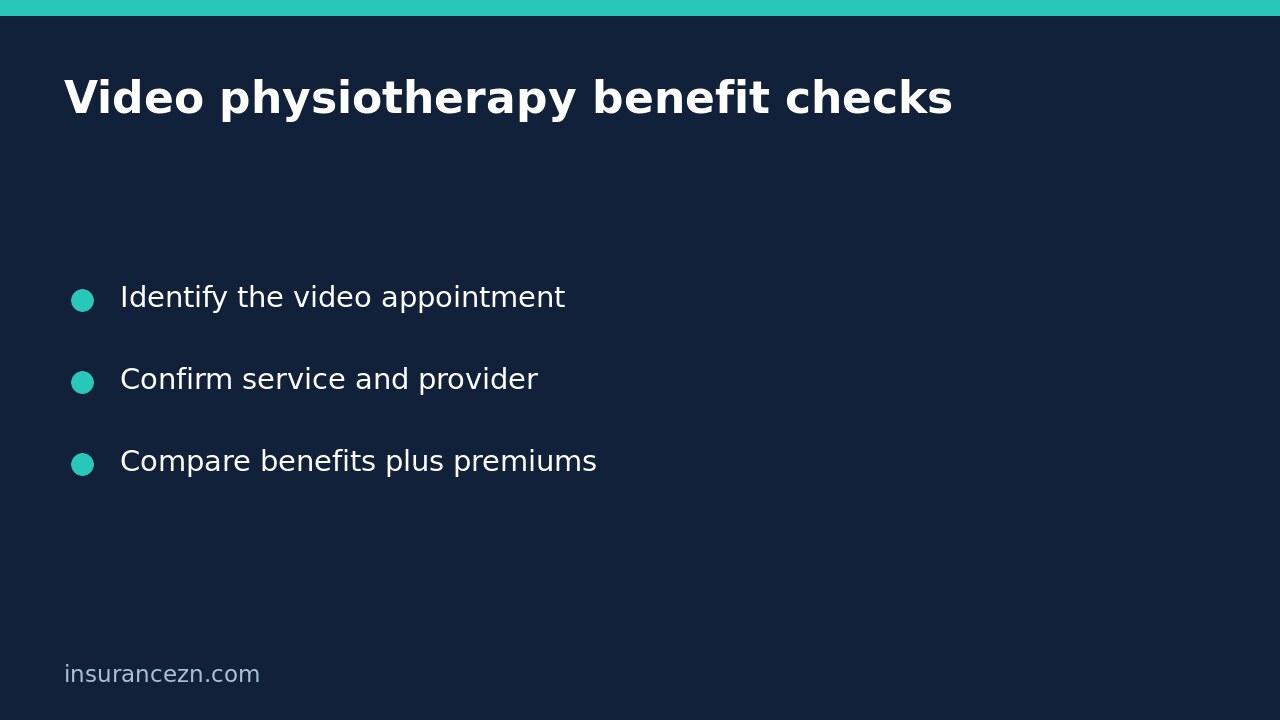

If you plan to see a physiotherapist by video, compare extras policies using that exact appointment format. A policy listing physiotherapy does not, by itself, confirm a benefit for every remotely delivered service. Before switching, obtain a service-specific estimate from each shortlisted insurer rather than transferring an in-clinic benefit into your video-appointment budget.
This is general information for Australian readers, not personal financial advice. Benefits depend on the policy, applicable membership rules, waiting periods and remaining limits. Read the policy documents and any relevant PDS; obtain personal confirmation before relying on an estimate.
Describe the actual appointment before asking about cover
The government’s General Treatments overview describes physiotherapy as treating injury, disease and disorders through physical methods, including exercise programs and manual therapies. That definition explains the service category; it does not establish that your fund pays for video consultations.
Ask your clinician whether the proposed remote appointment is clinically suitable. Insurance availability should not determine whether a video consultation is appropriate. A clinician may recommend an in-person assessment or a different care pathway. Do not delay necessary care while comparing insurance.
Get a written appointment description including:
- The treating physiotherapist’s name and provider details.
- Whether the session is live video, telephone, an exercise-app subscription or another service.
- Whether it is an initial assessment or a follow-up consultation.
- The quoted fee, duration and intended service date.
- The service description and any billing code the clinic will place on the invoice.
These are questions to resolve, not a statement that any particular format is claimable. Access to an exercise library is not necessarily the same service as a personal consultation.
Ask each insurer to assess the same service description
Send identical details to your existing fund and each alternative. Ask whether the exact product includes benefits for that delivery format, whether the actual practitioner is recognised for it, and whether different conditions apply to initial and subsequent visits.
A useful message is: “Please estimate the benefit for this quoted video physiotherapy appointment on this product and service date. Please identify any provider, delivery-format, waiting-period or limit conditions still outstanding.” Save the answer with the quote and product name.
Do not treat a clinic’s ability to issue an invoice, a professional registration or a receptionist’s general statement about health funds as your insurer’s benefit confirmation. Likewise, a fund’s acknowledgement that it received the enquiry is not an eligibility decision.
Compare the whole treatment plan and premium
The government’s insurance basics explains that extras policies differ in their services and benefits, and that waiting periods and out-of-pocket expenses matter. It does not supply a universal telehealth benefit or session allowance.
Make a simple comparison with one row for each planned appointment. Record the fee, format, insurer’s personal estimated benefit and expected remaining cost. Keep unresolved estimates labelled unknown; do not fill them with the advertised annual maximum.
Add the ongoing premiums over the same comparison period. If moving to a combined product, identify the effect on hospital cover and any lost package discount rather than comparing only an attractive extras benefit. Confirm how earlier claims affect available limits. A switch should not be budgeted as automatically restoring an already-used allowance.
Keep travel savings separate from insurance benefits. Avoided petrol or parking may matter to your household, but it is not money paid by the insurer. Similarly, a lower video fee is a clinic price difference, not an increased insurance reimbursement.
Recheck when the treatment format changes
If the clinician changes a video review into an in-person assessment, obtain an updated fee and benefit estimate. Do the same if a different practitioner conducts the session or the clinic changes its billing description. Never ask a provider to relabel the appointment to fit a benefit category.
After treatment, retain the actual invoice and compare it with the insurer’s assessment. An estimated benefit is not the final processed payment. If they differ, identify the specific service, date, provider or limit issue before asking for a review.
Quick questions before you switch
Does physiotherapy inclusion prove video cover? No. Resolve the exact delivery format and product conditions with the insurer.
Is the highest annual limit the best comparison? Not alone. Compare personally estimated benefits for your planned sessions, costs you retain and premiums over the same period.
What if appointments are prepaid? Check payment timing and individual service dates separately. Our prepaid physiotherapy package checklist addresses that different decision before you pay for a course.