
When shopping for health insurance, two numbers dominate the conversation: the monthly premium and the deductible. Many consumers mistakenly believe that the lowest premium always represents the best deal. However, the true cost of your coverage depends heavily on how much you expect to spend out-of-pocket during the year. Understanding the dynamic relationship between these two figures is essential for maintaining a stable household budget, especially in an era where unexpected medical events can quickly derail financial plans. This guide breaks down the mechanics of deductibles and premiums, helping you determine which option aligns better with your specific financial situation and risk tolerance.
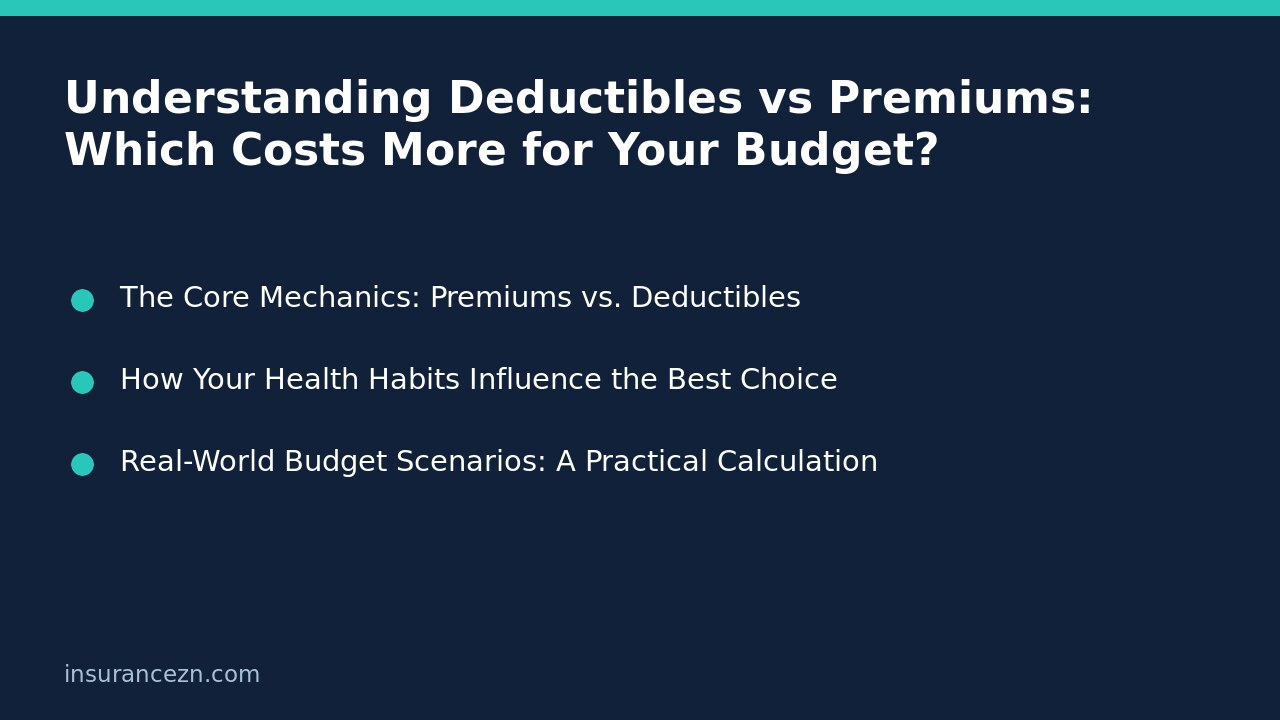
The Core Mechanics: Premiums vs. Deductibles
To make an informed decision, you must first understand what each term represents in a health insurance policy. The monthly premium is the fixed amount you pay to the insurer every month simply to keep your coverage active. Think of this as renting a car; you pay a fee to own the vehicle regardless of whether you drive it that day. In health insurance, premiums generally decrease as the deductible increases. Insurance companies operate on a risk-pooling model; if they know you are willing to pay more out-of-pocket when you get sick (a higher deductible), they will charge you less every month (a lower premium).
Conversely, the deductible is the amount you must pay for covered healthcare services before your insurance plan starts to pay. If you have a $1,000 deductible and visit the doctor for a checkup costing $200, you pay the full $200. That bill counts toward your deductible. You continue paying until you reach the $1,000 threshold. Once met, the insurance company begins sharing the cost of services according to your plan’s coinsurance or copayment structure. It is important to note that some services, like preventive care under the Affordable Care Act in the U.S., often do not count toward the deductible and have no cost to you at all.
How Your Health Habits Influence the Best Choice
The “best” financial choice between a high-deductible/low-premium plan and a low-deductible/high-premium plan depends entirely on your anticipated medical usage. If you are generally healthy, engage in regular exercise, eat well, and have no chronic conditions, a high-deductible plan might be the most economical route. In this scenario, you likely pay minimal to zero premiums-related costs throughout the year because you rarely visit the doctor or need prescriptions. You effectively “save” money by having a lower monthly bill, deferring the large deductible cost until you actually need significant care.
On the other hand, if you have a history of frequent hospital visits, manage chronic conditions like diabetes or heart disease, or require regular specialist appointments and medications, a low-deductible plan often makes more sense. While your monthly bills are higher, you avoid hitting the deductible quickly. Hitting the deductible early in the year means that for every subsequent dollar of medical care, your insurance pays its share immediately. If you do not hit the deductible at all, you have paid significantly more in premiums than a high-deductible plan would have cost you over the same period.
Real-World Budget Scenarios: A Practical Calculation
Let’s look at a concrete example to illustrate how these costs stack up over a 12-month period. Imagine two individuals: Alex and Jordan. Both are 30 years old, but their lifestyles differ.
Alex (Healthy Lifestyle):
* Plan Choice: High Deductible Health Plan (HDHP).
* Monthly Premium: $150
* Annual Deductible: $2,000
* Total Cost if Healthy: Alex visits the doctor once for a routine checkup ($20 copay, no deductible). Alex takes one prescription refilled annually.
* Yearly Spending: ($150 x 12) + $20 = $1,820.
Jordan (Frequent Care Needs):
* Plan Choice: Low Deductible Health Plan.
* Monthly Premium: $300
* Annual Deductible: $500
* Total Cost if Healthy: Jordan visits the doctor four times a year ($20 copay each). Total out-of-pocket for visits = $80.
* Yearly Spending: ($300 x 12) + $80 = $3,680.
Now, imagine both Alex and Jordan suffer a serious medical event requiring surgery costing $15,000 after meeting their respective deductibles.
* Alex’s Scenario: Alex pays the first $2,000 (the deductible). The insurance kicks in for the remaining $13,000. Assuming 80% coinsurance, Alex pays another $2,600. Total Yearly Cost: $1,820 (premiums) + $4,600 (medical) = $6,420.
* Jordan’s Scenario: Jordan hits the $500 deductible immediately in their first doctor visit of 2023. For the rest of the year, insurance pays 80% of everything else. Jordan pays the $500 deductible + 20% coinsurance on the $14,500 remaining bill ($2,900). Total Yearly Cost: $3,680 (premiums) + $3,400 (medical) = $7,080.
In this specific example, Alex saved money overall due to low usage, while Jordan paid slightly more but gained significant peace of mind knowing their insurance covered a larger portion of the expensive surgery immediately. This calculation highlights that there is no universal “cheaper” plan; it is strictly a function of personal health projections.
Common Mistakes to Avoid When Comparing Plans
Consumers often fall into traps when comparing plans, leading to unexpected bills at year-end. One common error is ignoring the out-of-pocket maximum. This is the absolute most you will pay in a policy year for covered services, including deductibles, copayments, and coinsurance. Once you hit this cap, your insurance pays 100% of covered costs for the rest of the year. Failing to check if two plans have similar out-of-pocket maximums can be dangerous; a plan might look cheap until you realize its out-of-pocket limit is dangerously high.
Another mistake is assuming that “in-network” providers always mean lower costs without checking specific drug formularies. A generic medication might be fully covered in one plan but placed on a tier requiring 40% coinsurance in another, drastically changing your total annual cost even if the deductible structure looks similar. Always review the formulary before enrolling.
Strategic Steps for Your Decision-Making Process
To navigate this decision effectively, follow these practical steps:
1. Audit Your Medical History: Look at your last two years of tax returns or health insurance statements. Estimate your average annual medical spending.
2. Project Future Needs: Consider upcoming surgeries, anticipated pregnancies, or the management of chronic conditions.
3. Calculate the Break-Even Point: Determine how many months of premiums you can “afford” to save before a high-deductible plan becomes more expensive than a low-deductible one for your specific usage level.
4. Check Employer Contributions: If you have employer-sponsored insurance, check if your company contributes toward your premium or your deductible. This can shift the math significantly in your favor.
5. Review State Regulations: Rules vary by jurisdiction regarding what must be covered and how deductibles are calculated. Always verify terms against local laws.
Conclusion: Balancing Risk and Reward
Deciding between a high-deductible, low-premium plan and a low-deductible, high-premium plan is not about finding the cheapest number on the page; it is about balancing monthly cash flow with potential out-of-pocket risk. For most healthy individuals, a high-deductible plan offers substantial savings, provided they have an emergency fund to cover the deductible if disaster strikes. For those with consistent medical needs or limited emergency savings, the higher premium of a low-deductible plan acts as insurance against catastrophic expenses, ensuring that care remains affordable when it is needed most. Always remember that insurance terms, availability, eligibility, and prices depend on the specific insurer, policy details, and jurisdictional laws. This information is for educational purposes and does not constitute individualized financial or legal advice.