
Navigating the world of travel insurance requires more than just clicking “buy” on the first policy you see. The fundamental difference between insuring an international trip and a domestic cruise lies in the scope of coverage, regulatory environments, and specific risks involved. For international travelers, medical evacuation and repatriation are often the most critical components, whereas domestic cruises frequently focus heavily on trip interruption due to weather or mechanical failure within U.S. waters. Understanding these distinctions is essential for securing adequate protection without paying for unnecessary add-ons.
When comparing plans, you must first identify the destination’s healthcare infrastructure. International travel insurance typically includes high-limit medical coverage because foreign hospitals can charge exorbitant fees if a policy isn’t present. In contrast, domestic cruises operate under U.S. maritime laws where medical treatment is generally covered by Medicare or standard health insurance, provided the cruise remains within the United States and its territories. However, once a domestic cruise vessel crosses international waters, even briefly, the rules change dramatically. A quick comparison of policy fine print will reveal whether coverage extends beyond the territorial limits of the home country.
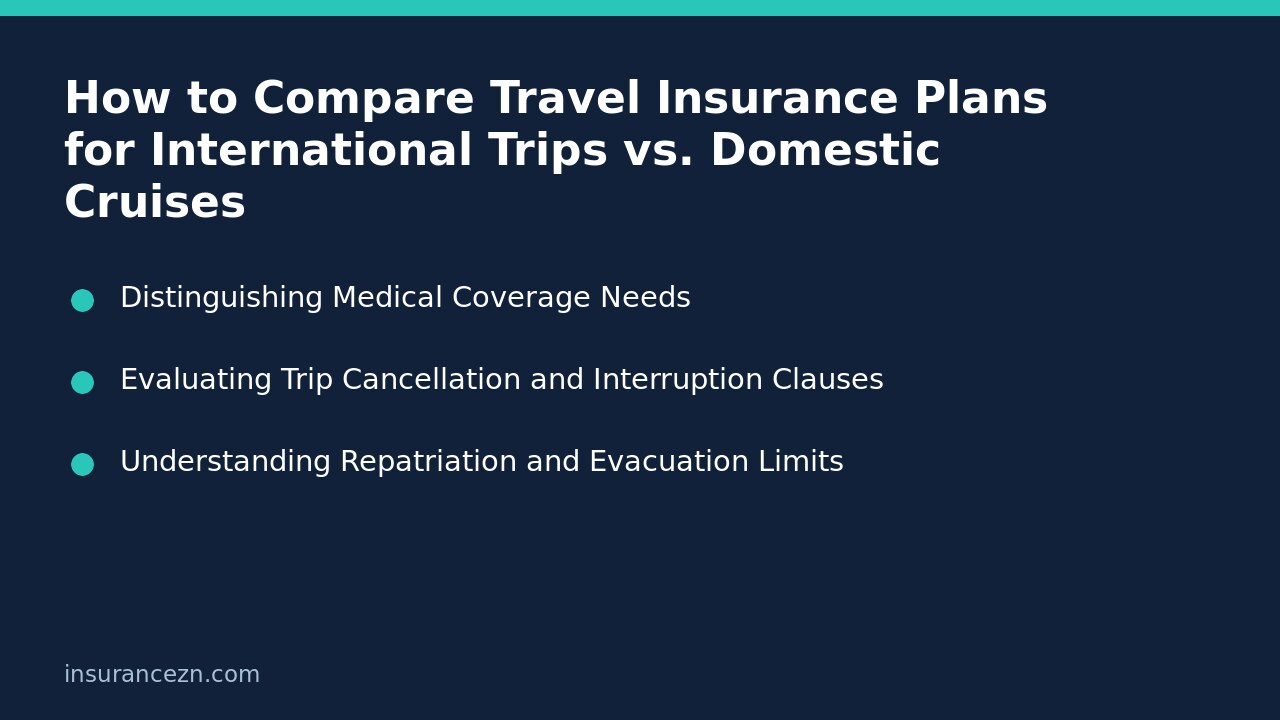
Distinguishing Medical Coverage Needs
The most significant divergence between these two travel types is medical liability. International policies often offer primary coverage that acts as your first line of defense against foreign healthcare costs. Many international plans also include emergency dental and prescription drug coverage, which are rarely needed on a domestic cruise but can be vital if you require immediate care abroad.
For domestic cruises, the insurance landscape is different. Most major U.S. health insurers provide coverage for emergencies occurring within the United States, including its coastal waters. However, this coverage often has strict exclusions or sub-limits once the ship leaves U.S. territorial waters (generally defined as 12 nautical miles from shore). When comparing plans, look specifically for clauses regarding “international waters.” If your domestic cruise itinerary includes a stop in Mexico, Canada, or any foreign port, you need a policy that explicitly covers medical events occurring while the vessel is docked or transiting those borders.
A common mistake travelers make is assuming their existing health insurance follows them onto a cruise ship. While this holds true for domestic waters, it frequently fails once you cross an international border. Conversely, some international travel insurance policies may exclude pre-existing conditions unless a specific waiver is purchased shortly after the initial trip deposit. Always verify how each insurer handles pre-existing medical conditions, as this is a frequent point of contention during claims processing.
Evaluating Trip Cancellation and Interruption Clauses
Trip cancellation coverage protects your non-refundable deposits if you must cancel before departure due to covered reasons such as illness, severe weather, or jury duty. For international trips, these policies often include “Cancel for Any Reason” (CFAR) upgrades, allowing you to receive a percentage of your trip cost back even if the reason isn’t explicitly listed in the standard exclusions. This is particularly valuable given the unpredictability of global events.
Domestic cruise insurance tends to be more rigid regarding cancellation reasons. Insurers often require proof that the cancellation was directly caused by a covered peril, such as a hurricane warning issued by the National Weather Service for your specific departure port. If you cancel due to a personal illness, the claim might be denied unless you have purchased an add-on that specifically covers illness or injury of the traveler.
When comparing these plans, pay close attention to the “interruption” clause. On a domestic cruise, interruption often occurs due to mechanical breakdowns or rough seas forcing the ship to return to port. International policies usually cover interruption for a wider array of reasons, including political unrest or terrorism alerts in the destination country. Ensure you understand the timeframes for reporting these incidents; some policies require notification within 24 hours of the event occurring, while others offer a more flexible window.
Understanding Repatriation and Evacuation Limits
Repatriation—the process of returning home after a medical emergency—is a critical component of international travel insurance. Costs associated with air ambulance services can run into hundreds of thousands of dollars. International policies typically include robust repatriation coverage, often ranging from $250,000 to over $1 million. This coverage is essential because local medical facilities in foreign countries may not be equipped to treat complex conditions or may require transferring a patient via specialized aircraft.
Domestic cruise insurance often bundles repatriation into the base price, but the limits can be lower compared to dedicated international plans. Furthermore, the logistics of repatriation from a U.S. port are different from those abroad. In domestic scenarios, you might simply be flown back to your home state on a commercial flight if medically cleared, whereas international repatriation often involves coordinating with foreign authorities and specialized medical teams.
Always check the policy limits for “emergency medical transportation.” Some plans cover only the cost of getting you to the nearest adequate facility, while others guarantee transport back to your home country. For international trips, verify that the policy includes coverage for the entire journey, including customs clearance and baggage handling during the evacuation process.
Analyzing Destination-Specific Exclusions and Inclusions
Every destination carries unique risks that influence insurance pricing and availability. International travel insurance plans often tailor their exclusions based on the region. For example, policies traveling to high-risk areas might exclude certain activities or limit coverage for specific medical conditions prevalent in that region. They may also include benefits like “Adventure Sports” coverage if your itinerary includes scuba diving, skiing, or hiking above a certain altitude.
Domestic cruises, being largely confined to the Atlantic and Pacific coasts of North America, generally face fewer geopolitical risks. However, they are susceptible to weather-related disruptions. When comparing plans for domestic cruises, look for specific endorsements related to hurricane season or storm surge. These are less common in international policies unless the destination is prone to similar weather patterns, such as the Caribbean.
It is crucial to read the list of covered destinations. Some international insurers maintain a “blacklist” of countries due to safety concerns or lack of medical infrastructure. If your international itinerary includes a country on this list, you may need to purchase a specialized policy or face denial of claims. Domestic cruise lines rarely have such blacklists for their standard routes, but they may exclude coverage if the ship is forced into a foreign port where local laws prohibit disembarkation due to safety concerns.
Practical Checklist for Selecting the Right Coverage
To ensure you select the most appropriate plan, use this practical checklist before purchasing:
- Verify Territorial Limits: Confirm whether the policy covers medical events outside U.S. territorial waters if you are on a domestic cruise with international stops.
- Check Pre-Existing Condition Waivers: Determine the enrollment window (usually within 14–21 days of trip deposit) required to waive pre-existing condition exclusions.
- Review Cancellation Triggers: Ensure the policy covers your specific reasons for cancellation, such as illness or job loss, and understand the documentation required for proof.
- Assess Repatriation Limits: Compare the maximum payout for emergency evacuation; international plans should offer significantly higher limits than domestic-only policies.
- Inspect Activity Coverage: If you plan to engage in water sports, hiking, or other activities, verify that they are not excluded from the policy.
- Understand Deductibles and Limits: Look at the out-of-pocket maximums and per-incident deductibles. A lower premium often comes with higher deductibles, which can be risky for high-cost international medical scenarios.
Conclusion
Comparing travel insurance plans for international trips versus domestic cruises requires a nuanced understanding of where your risks lie. International travel demands robust medical coverage, high repatriation limits, and flexibility regarding geopolitical disruptions. Domestic cruises, while seemingly lower risk, still require careful attention to the moment the ship crosses international borders. By meticulously reviewing policy documents, checking territorial limits, and understanding the specific triggers for cancellation and interruption, you can secure a plan that offers genuine peace of mind. Remember that terms, availability, eligibility, laws, and prices depend on the insurer, the specific policy chosen, and your jurisdiction; always verify current details with the provider directly before finalizing your purchase.