
Receiving news of a loved one’s passing is never easy, but navigating the subsequent financial logistics can feel overwhelming. For beneficiaries and executors, the primary goal is to secure the death benefit efficiently while avoiding common pitfalls that could delay payment or create legal complications. This guide provides a structured approach to filing a life insurance claim, ensuring you gather the necessary documentation, understand your rights, and communicate effectively with the insurer.
The process of claiming a life insurance benefit generally begins with notifying the insurance company immediately after the death is confirmed. While policies vary by carrier, most require specific documents such as a certified copy of the death certificate, the original policy document (or proof of ownership), and a completed claim form. It is crucial to act quickly but not prematurely; insurers typically have a window of time to verify the cause of death against their terms before releasing funds.
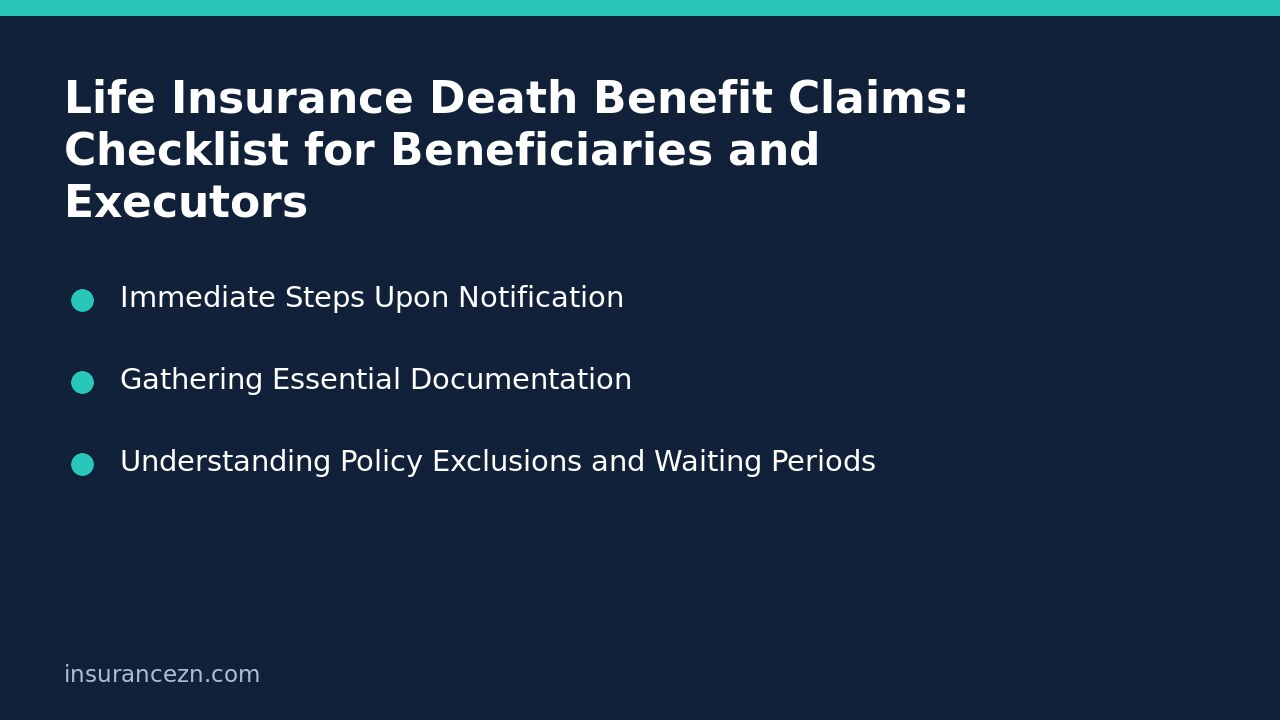
Immediate Steps Upon Notification
The first 48 hours following a death are critical for setting the tone for the entire claims process. Your immediate priority should be locating the original life insurance policy. If the deceased held multiple policies with different carriers, you must gather documents from each provider. In many cases, the policy is stored in a safe deposit box, a home safe, or with an estate planning attorney.
Once located, contact the insurer’s claims department directly. Most major companies have dedicated claims hotlines available 24/7. Have the policy number and the deceased’s date of birth ready. Request a copy of their specific claim forms and any checklists they provide. Do not rely solely on email; follow up with phone calls to ensure your inquiry is logged in their system. If you are unsure which company issued a specific policy, ask the family attorney or executor to review financial records for statements bearing insurance logos.
Gathering Essential Documentation
Insurers require a standardized set of documents to process claims, though the list can expand depending on the circumstances of death. The single most important document is the original, certified death certificate. You will need multiple copies: one for the insurer, one for the local coroner or medical examiner if required, and others for other estate settlement tasks.
If the death occurred at a hospital or nursing home, request a copy of the attending physician’s statement or the hospital’s discharge summary. These documents help verify the cause of death, which is vital if the policy has exclusions related to specific conditions. Additionally, gather the original policy contract and any riders attached to it. If the policy was assigned to an agent or held in trust, you will also need proof of that assignment or trust documentation.
For claims involving accidental death or those occurring within two years of purchasing the policy, insurers may request a detailed autopsy report or medical records from the time of diagnosis. Keep digital and physical copies of all correspondence with the insurer, including claim numbers, dates of calls, and names of representatives spoken to. This paper trail is essential if disputes arise regarding the timeline or decision-making process.
Understanding Policy Exclusions and Waiting Periods
Before submitting your claim, it is prudent to review the policy terms for potential exclusions that could affect eligibility. Many standard policies include a contestability period, usually lasting two years from the policy issuance date. If the insured dies within this window, the insurer may investigate the cause of death thoroughly and has the right to deny claims related to misrepresentation on the application. Common examples of misrepresentation include omitting a history of cancer, failing to disclose tobacco use, or hiding pre-existing heart conditions.
Some policies also contain specific exclusions for deaths resulting from high-risk activities, such as skydiving, mountaineering, or combat in foreign military service. While accidental death riders often cover these scenarios, standard term or whole life policies might not. Understanding the distinction between “natural causes” and “accidental death” is also important, as some policies pay double benefits for accidents but may require different proof. If the cause of death is unclear, be prepared to provide a coroner’s ruling to clarify whether it was an accident, suicide, or natural causes.
Navigating Beneficiary Designations and Trusts
Identifying who receives the money depends entirely on how the beneficiary was designated in the original policy. If you are named as the primary or contingent beneficiary, you generally have direct access to the funds without going through probate. However, if the beneficiary designation lists a trust rather than an individual, the claim must be paid directly to the trustee of that trust. In this scenario, the executor of the estate cannot access the funds personally; only the named trustee can act on behalf of the trust.
It is also possible that a beneficiary predeceased the insured. If a primary beneficiary dies before the insured, the policy may revert to a contingent beneficiary or, if none are listed, into the deceased’s estate. Claims paid to an estate are subject to probate court procedures and creditor claims, which can significantly delay distribution to heirs. Reviewing the beneficiary list against current family circumstances is a key step for executors managing estates with older policies that may not reflect recent family changes.
Handling Disputes and Denials
Despite thorough preparation, some claims face delays or denials due to discrepancies in medical records or allegations of fraud. If an insurer denies a claim, they are legally required in most jurisdictions to provide a written explanation citing the specific policy provision used for denial. Do not accept a denial immediately without reviewing the policy language yourself or consulting with an attorney specializing in insurance law.
Common reasons for denial include suicide within the first two years (subject to clause specifics), misrepresentation of health history, or lack of proof of premium payments. If you believe the denial is unjustified, request a formal review or appeal process. You may also need to provide additional evidence, such as independent medical opinions or witness statements. In cases where fraud is alleged but unfounded, legal counsel can help navigate the investigation and protect your rights to the benefit.
Real-World Scenario: The Multi-Policy Estate
Consider the case of a retiree who held policies with three different carriers: a whole life policy from Carrier A, a term policy from Carrier B, and an accidental death rider through Carrier C. Upon passing, the family discovers that the original policy documents were found in a drawer at home, but the beneficiary designations had not been updated after a divorce ten years prior. The ex-spouse is now listed as a beneficiary on one policy.
In this scenario, the executor must immediately contact all three carriers to locate the exact policy numbers and current status. They must obtain certified death certificates and prepare separate claim packets for each carrier. Crucially, they must prove that the divorce decree legally removed the ex-spouse from the beneficiary list for Carrier A and B, or negotiate a settlement if the insurer refuses to update records without a court order. This example highlights why maintaining updated beneficiary designations and storing policy documents in accessible locations is a vital part of estate planning.
Finalizing the Claims Process
Once all documentation is submitted and reviewed, the insurer will issue a decision. If approved, funds are typically disbursed via check or direct deposit within 30 to 60 days. Some carriers offer accelerated access to partial funds for immediate expenses before the final payout. As an executor, ensure that you understand any tax implications associated with the death benefit, particularly if it exceeds certain thresholds or if the estate is subject to income tax on interest earned prior to distribution.
Always remember that terms, availability, eligibility, laws, and prices depend on the specific insurer, policy details, and jurisdiction. This article provides general guidance and does not constitute individualized financial or legal advice. Consult with qualified professionals for complex situations involving large estates or disputed claims. By following this checklist, beneficiaries and executors can navigate the grieving process with greater confidence and ensure that their loved ones’ financial wishes are honored promptly.