
Planning an international getaway is exciting, but relying solely on your domestic health plan can leave you dangerously exposed. Most standard U.S. health insurance policies, including Medicare and many employer-sponsored plans, offer little to no coverage outside the United States or its territories. A minor medical emergency abroad, such as a broken bone from a skiing accident or food poisoning requiring hospitalization, could result in astronomical out-of-pocket costs that could bankrupt an unprepared traveler.
To avoid financial ruin, you need temporary international health insurance. This type of policy is designed specifically for short-term travel, offering coverage limits and networks tailored to foreign healthcare systems. Whether you are visiting Europe for two weeks or moving abroad for a year as a digital nomad, understanding how to secure the right policy is essential. This guide explains what to look for, where to buy, common pitfalls to avoid, and provides a practical checklist to ensure your trip goes smoothly.
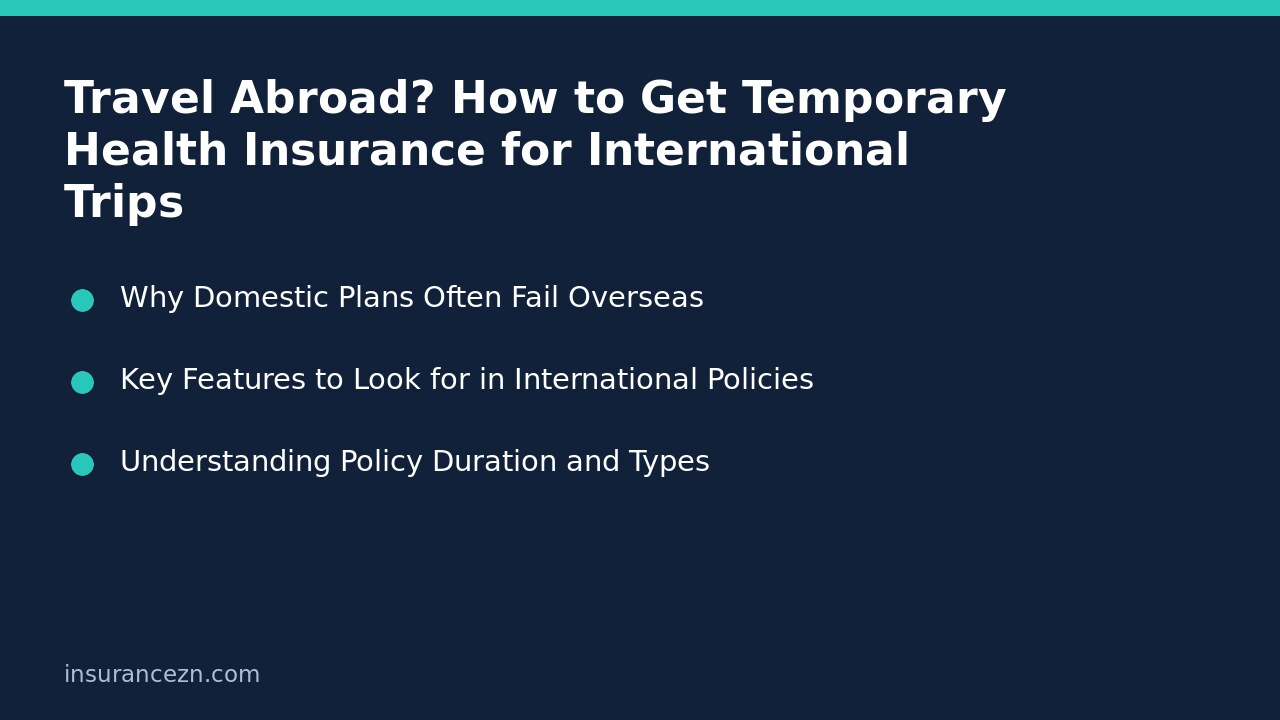
Why Domestic Plans Often Fail Overseas
Before purchasing a new policy, it is crucial to understand why your current coverage likely won’t help you. In the United States, health insurance operates under a system of provider networks. When you travel internationally, you step outside these networks entirely. Your domestic insurer has no contracts with foreign hospitals or clinics, meaning they will generally deny claims for services rendered abroad.
Even if your policy includes a “worldwide emergency” rider, the reimbursement process is often cumbersome. You may be required to pay the full bill upfront in cash and then file for reimbursement upon returning home. This creates a significant liquidity risk; if a hospital demands an immediate deposit of $10,000 for an emergency appendectomy, you must have that cash ready or face delayed treatment. Furthermore, domestic plans rarely cover medical evacuation, which is the process of transporting a patient from a remote location to a facility capable of handling their specific condition. The cost of air ambulance services can easily exceed $100,000.
Key Features to Look for in International Policies
When shopping for temporary health insurance, do not just look at the price; scrutinize the coverage details. A cheap policy with low limits is often more dangerous than a slightly more expensive one with robust protections. Look for these specific features:
- High Medical Limits: Ensure your policy offers at least $50,000 in medical coverage, though $100,000 to $250,000 is recommended for travelers visiting regions with high medical costs.
- Emergency Medical Evacuation: This covers the cost of transporting you to the nearest adequate facility or repatriating your remains if necessary. Always verify this is included.
- Repatriation of Remains: In the unfortunate event of death abroad, this coverage handles the logistics and costs of returning your body home.
- Trip Cancellation/Interruption: While not health insurance per se, this add-on protects your financial investment if you must cancel due to a medical emergency in your home country or a family illness.
- Pre-existing Condition Coverage: Many travelers worry about existing conditions like diabetes or hypertension. Some policies allow you to purchase coverage for pre-existing conditions if bought within a specific window after booking your flight, though this often comes at a higher premium.
Understanding Policy Duration and Types
Temporary health insurance is categorized by the length of your trip. Short-term travel insurance is ideal for vacations lasting from one day up to 90 or 180 days. These policies are generally inexpensive, costing between $20 and $50 for a week-long trip depending on the destination.
For travelers planning to stay abroad for several months or a year, such as those working remotely or studying overseas, you need long-term international health insurance. These policies function more like annual plans and can be renewed annually. They often offer broader networks in specific countries, such as the Schengen Area in Europe, rather than a global network that might have limited access in rural areas of South America or Asia.
The Application Process: What You Need to Prepare
Getting insured is surprisingly fast, often taking less than 15 minutes online. However, accuracy is vital. Most insurers require you to answer health questions honestly during the application process. These typically ask about hospitalizations within the last five years and current diagnoses.
You will also need to provide your travel dates and destination. It is important to note that coverage usually begins on the date listed on your policy but may not start exactly when your flight leaves if you arrive in the country before the effective date. Always align your policy start date with your departure date from your home country.
Common Mistakes That Leave Travelers Unprotected
Even experienced travelers make mistakes when buying insurance. One frequent error is assuming that “travel insurance” equals “health insurance.” Some basic travel policies only cover trip cancellation or lost luggage, offering zero medical protection. Always read the “What is covered” section carefully.
Another mistake is relying on credit card benefits. Many premium credit cards offer primary or secondary emergency health coverage as a perk. While convenient, these benefits often have strict limitations. They may exclude pre-existing conditions, cap payouts at $50,000, or exclude certain high-risk activities like scuba diving. Never rely on a credit card benefit as your sole source of protection; purchase a dedicated policy to ensure you are not caught without coverage in an emergency.
Real-World Example: Preparing for a Ski Trip
Consider Sarah, who is planning a two-week ski trip to Switzerland. She books her flights and lodges, then realizes her standard health plan offers no coverage outside the U.S. Sarah searches for temporary health insurance specifically for winter sports.
She finds a policy that covers up to $250,000 in medical expenses and includes emergency evacuation. Crucially, she confirms that “winter sports” are an included activity; some policies exclude skiing or snowboarding unless you pay an extra premium. She purchases the policy three days before her flight, ensuring immediate coverage activation. Upon arrival in Zurich, Sarah feels secure knowing that if she fractures her leg on the slopes, she will not be facing a $20,000 hospital bill out of pocket.
Final Checklist Before You Fly
Before finalizing your booking, run through this quick checklist to ensure you are fully protected:
- Verify Coverage Limits: Is the medical limit high enough for your destination?
- Check Activity Exclusions: Does your policy cover specific hobbies like skiing, scuba diving, or hiking?
- Review Pre-Existing Condition Rules: If applicable, did you buy the policy within the required timeframe to include these conditions?
- Confirm Evacuation Coverage: Is medical evacuation explicitly included?
- Understand Claim Procedures: Do you need to notify the insurer before leaving home, or can you file claims online upon return?
Conclusion
Traveling abroad opens up a world of experiences, but it also introduces health risks that domestic plans cannot handle. By understanding the limitations of standard insurance and investing in a dedicated temporary international policy, you ensure that your adventure remains stress-free. Remember to read the fine print, verify exclusions, and purchase coverage before you depart. With the right plan in place, you can focus entirely on making memories rather than worrying about medical bills.
Disclaimer: Insurance terms, availability, eligibility, laws, and prices vary significantly by insurer, policy type, and jurisdiction. This article is for informational purposes only and does not constitute financial or legal advice. Always verify current policy details directly with the insurance provider before purchase.