
Switching car insurance providers is one of the most effective ways to lower your monthly premiums, but it requires a disciplined approach to avoid costly mistakes. Many drivers assume that simply finding a cheaper quote online is enough, yet failing to account for coverage gaps, deductible changes, or policy exclusions can leave them financially vulnerable in an accident. The goal is not just to find the lowest price, but to secure the best value while maintaining necessary protection levels. This guide outlines essential strategies for comparing quotes accurately, ensuring a smooth transition, and avoiding common pitfalls that often plague new policyholders.
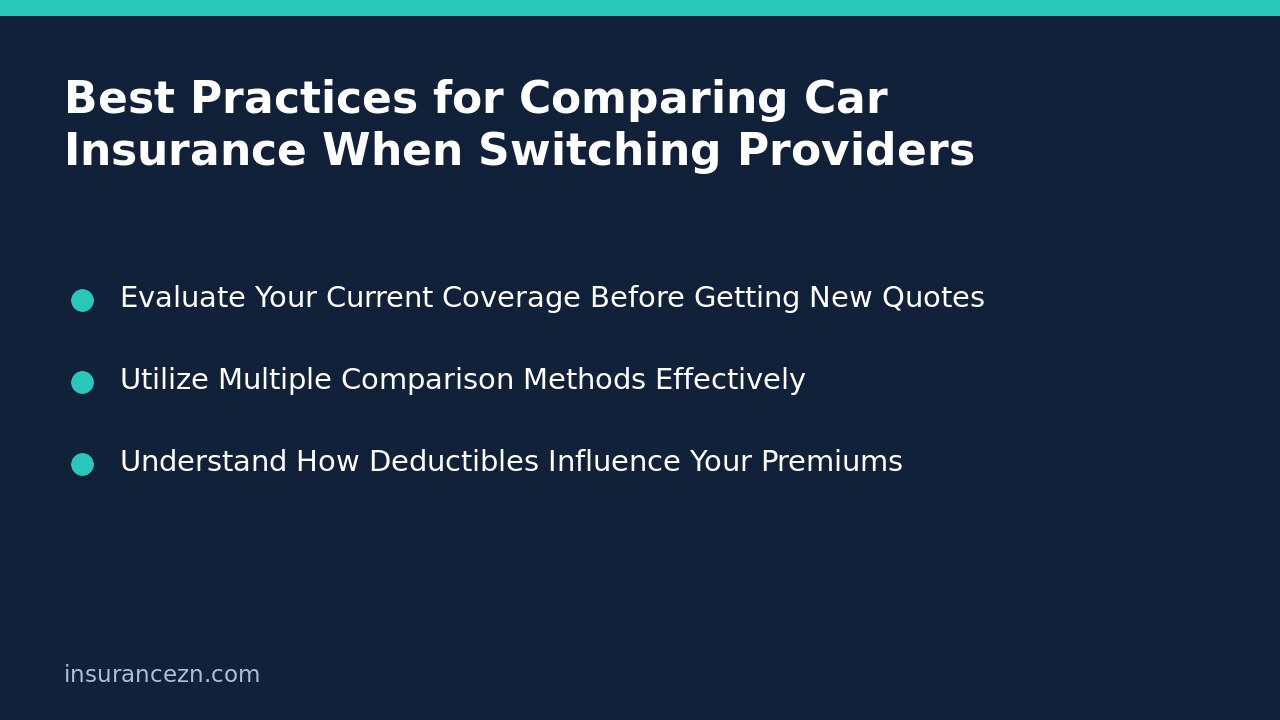
Evaluate Your Current Coverage Before Getting New Quotes
The most critical step in the comparison process is auditing your existing policy. Many drivers make the error of assuming their current coverage limits are sufficient because they haven’t had an accident in years. However, inflation has significantly increased the cost of vehicle repairs and medical treatments since many policies were purchased. If you switch providers without increasing your liability limits to match current state requirements or industry standards, you risk underinsuring yourself.
Before requesting new quotes, review your policy declaration page for the following:
* Liability Limits: Check if your bodily injury and property damage limits meet your state’s minimums and whether they offer adequate protection against high-cost lawsuits.
* Collision and Comprehensive Deductibles: Note your current deductible amounts. Switching to a lower premium often involves raising this number, which increases out-of-pocket costs after a claim.
* Exclusions and Endorsements: Identify any specific exclusions, such as coverage for custom parts, rental car reimbursement, or gap insurance. Ensure the new provider offers these as optional add-ons.
Utilize Multiple Comparison Methods Effectively
Relying on a single source for quotes is rarely the best strategy. Different insurers use varying algorithms to calculate risk, meaning a driver might see drastically different prices at two major carriers even with identical driving records. To get an accurate market comparison, you should gather quotes through three distinct channels:
- Direct from Insurers: Visit the official websites of top national and regional carriers. This ensures you receive rates based on your specific profile without third-party markup.
- Aggregator Websites: Use reputable comparison tools that allow you to input your data once and receive quotes from multiple companies simultaneously. Be aware, however, that some aggregators may not display quotes from all available markets or local insurers.
- Local Agents: Independent insurance agents can often access a broader panel of carriers than standard online forms allow. They can also provide personalized advice on bundling discounts or loyalty programs that might not appear in automated quotes.
It is important to note that rates are dynamic. A quote obtained today may differ from one obtained next week due to changes in your driving record, local accident data, or insurer pricing models. Always lock in a rate and request a formal offer letter before canceling your current policy.
Understand How Deductibles Influence Your Premiums
There is often a misconception that a higher deductible always results in a significantly lower premium. While this is generally true, the relationship is not linear, and the savings may not justify the increased financial risk. For example, raising your collision deductible from $500 to $1,000 might drop your monthly premium by $15, but if you are involved in a total loss accident, you must pay $1,000 out of pocket before insurance kicks in.
When comparing quotes, calculate the “break-even point.” If you save $20 per month by increasing your deductible to $1,500, it would take over five years of no claims to recover a single $1,500 payout. Consider your emergency savings fund; if paying a higher deductible would strain your finances, sticking with a standard $500 or $750 deductible may be the wiser choice despite slightly higher premiums. Always ensure that the new policy’s deductible options are clearly defined and match your financial comfort level.
Watch for Hidden Fees and Policy Terms
Low advertised rates can sometimes mask hidden costs or restrictive terms. When reviewing quotes, look beyond the monthly premium to understand what is included in the base price. Some insurers charge additional fees for credit card processing, policy issuance, or late payments that are not immediately obvious on the initial quote screen. Additionally, scrutinize the fine print regarding:
* Grace Periods: How much time do you have to pay before a lapse in coverage occurs?
* Claim Filing Limits: Are there restrictions on how many claims can be filed within a certain period without penalty?
* Lapse Penalties: What happens if your payment is delayed? Some insurers impose surcharges for late payments that can linger for years.
Always ask the agent or representative to clarify any ambiguous terms. If a quote seems too good to be true, it may indicate missing coverage or an error in the data entry process. Verify that the premium breakdown matches your expectations before committing.
Timing Your Switch and Avoiding Coverage Gaps
One of the most dangerous aspects of switching providers is creating a gap in insurance coverage. In many jurisdictions, driving without valid insurance can result in severe penalties, including license suspension and vehicle impoundment. To avoid this, coordinate the timing of your new policy activation with your current policy cancellation carefully.
Ideally, you should schedule your new policy to start immediately upon cancellation of the old one. However, some insurers require a specific “effective date” which might not align perfectly with your cancellation request. In such cases, it is safer to overlap the policies by a few days rather than risk a momentary lapse. When canceling your current policy, ensure you receive written confirmation that the cancellation is processed and that no refunds are being withheld improperly. If you have paid annually in advance, negotiate with your current insurer for a pro-rated refund before switching, though this depends on their specific contract terms.
Real-World Example: The Cost of Skipping the Audit
Consider the case of Mark, a driver who switched carriers based solely on a lower monthly premium found online. He did not review his existing policy and assumed his $250,000 liability limits were sufficient. Six months later, he was involved in an accident where the other party had significant injuries. The new insurer refused to cover the full extent of the damages because Mark’s policy had been downgraded during a previous renewal that he hadn’t noticed. Had Mark performed a thorough audit of his coverage before switching, he would have maintained higher limits or added endorsements for medical payments, potentially saving him from facing thousands of dollars in out-of-pocket expenses. This example underscores the importance of understanding exactly what you are buying, not just how much it costs.
Final Checklist for a Smooth Transition
To ensure a successful switch to a new car insurance provider, follow this concise checklist:
* [ ] Review current policy limits and deductibles.
* [ ] Gather quotes from at least three different sources (direct, aggregator, agent).
* [ ] Compare total costs including fees, not just the monthly premium.
* [ ] Verify that all necessary endorsements (e.g., gap insurance) are available in the new quote.
* [ ] Confirm the effective date of the new policy matches your cancellation date.
* [ ] Get written proof of cancellation from the old insurer.
* [ ] Set up automatic payments to avoid accidental lapses.
By following these best practices, you can navigate the complexities of comparing car insurance with confidence, ensuring that you secure a competitive rate without compromising on essential protection.