
When an employee suffers a work-related injury, the immediate priority is medical treatment and recovery. However, the administrative process that follows can be just as critical to the outcome of a claim. One of the most common pitfalls in this process is providing an inaccurate or incomplete description of how the incident occurred. In the world of workers’ compensation, details matter immensely. Insurance adjusters, legal representatives, and medical examiners rely on the initial report to determine liability, causation, and the extent of coverage. A discrepancy between what happened on the job site and what is written in the claim form can lead to delayed payments, reduced benefits, or even a complete denial of the claim.
Workers’ compensation systems are designed to be no-fault insurance schemes; they provide benefits regardless of who was at fault during an accident. However, this protection applies only if the injury is clearly linked to employment duties and reported accurately. If the description of the incident does not align with medical evidence or physical findings, insurers may argue that the injury was pre-existing, caused by a personal activity outside of work hours, or exaggerated. Therefore, the integrity of the initial incident report is the foundation upon which the entire claim rests.
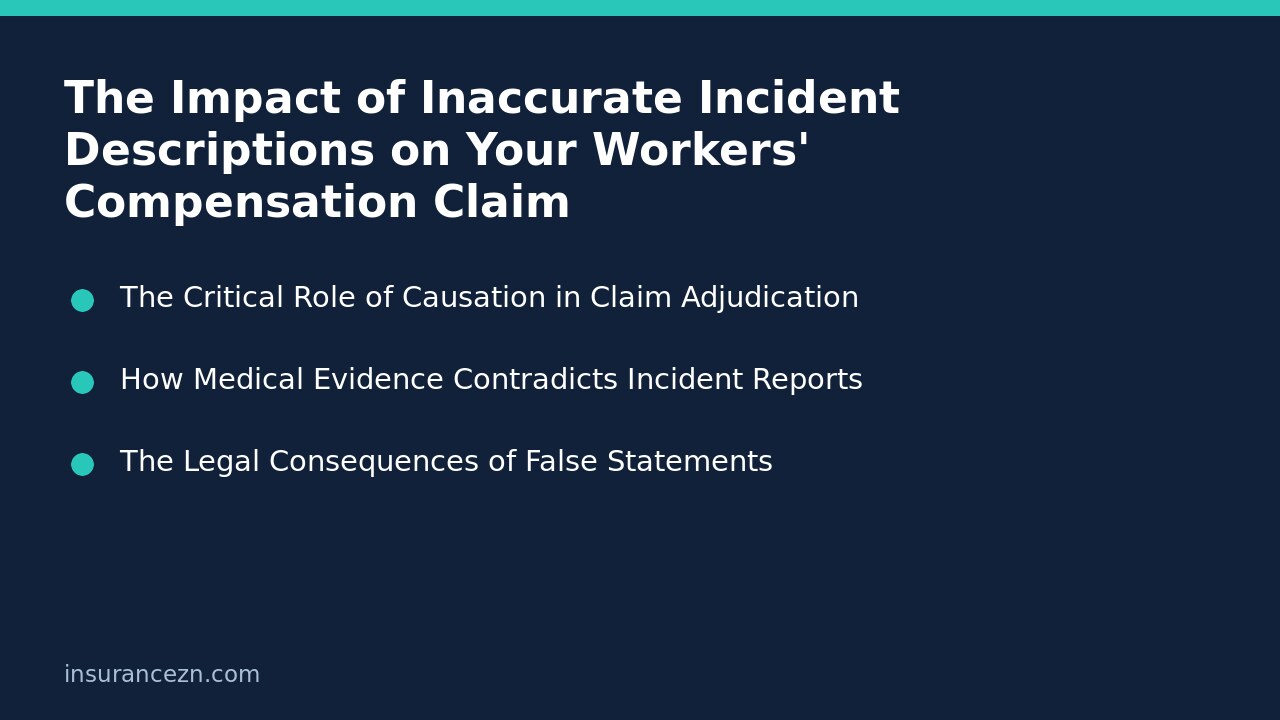
The Critical Role of Causation in Claim Adjudication
At the heart of every workers’ compensation dispute is the concept of causation. Insurers must be convinced that the injury arose out of and in the course of employment. An accurate incident description provides the narrative thread that connects the employee to the workplace at the time of the trauma. When this description is vague, contradictory, or factually incorrect, it breaks that chain of logic.
For example, if an employee claims they slipped on a wet floor but describes the location as “near the breakroom,” while surveillance footage shows the spill was actually in the loading dock three stories away, the claim faces immediate scrutiny. The insurer may investigate whether the employee was performing work duties at that specific time and place. If the description suggests the employee was taking an unauthorized break or visiting a personal errand, the claim could be denied based on the argument that the injury did not occur within the scope of employment.
How Medical Evidence Contradicts Incident Reports
Medical professionals play a vital role in validating workers’ compensation claims through physical examinations and diagnostic imaging. These findings must align with the reported mechanism of injury. If an employee reports falling from a ladder three days ago but describes the incident as a minor trip over a cable, a doctor might note specific traumatic fractures or whiplash consistent with a fall from height. When the medical evidence contradicts the written description, it raises red flags regarding the honesty of the claimant or the accuracy of their recollection.
This contradiction does not automatically mean fraud is involved; human memory is fallible, especially when dealing with pain and stress. However, insurance companies will use these discrepancies to delay treatment or demand independent medical examinations (IMEs). In severe cases, inconsistent stories can lead to accusations of malingering, where the insurer argues the injury is being fabricated or exaggerated for financial gain. This creates a hostile environment where the injured worker must defend their credibility against powerful legal teams, often while still in pain and needing care.
The Legal Consequences of False Statements
Providing inaccurate information on a workers’ compensation claim form carries significant legal risks. While many states have broad immunity laws protecting employees from lawsuits by employers for work injuries, these protections do not extend to fraudulent behavior. Submitting a knowingly false statement regarding an incident can be considered insurance fraud or perjury if sworn under oath.
Consequences of such actions can include:
* Claim Denial: The insurer reserves the right to deny benefits entirely if fraud is suspected or proven.
* Recovery Actions: Some jurisdictions allow insurers to seek recovery of any benefits already paid out if they determine the claim was based on false pretenses.
* Criminal Charges: In extreme cases involving intentional fabrication, individuals may face criminal prosecution.
* Blacklisting: Being flagged for dishonesty can result in being barred from future workers’ compensation claims, effectively leaving the worker without a safety net if they get injured again.
Even unintentional inaccuracies due to poor memory can have severe repercussions if not corrected immediately. It is crucial to distinguish between a genuine misunderstanding of events and a deliberate attempt to mislead. If an employee realizes their description was wrong after filing, they must contact their claims adjuster or legal representative immediately to amend the record before additional medical treatment or payments are authorized.
Practical Steps for Ensuring Accuracy
To avoid the pitfalls of inaccurate descriptions, employees should take specific steps when reporting an incident. The goal is clarity, consistency, and honesty. Start by writing down exactly what happened as soon as possible while the memory is fresh. Include the date, time, precise location, weather conditions (if applicable), and a step-by-step account of the actions leading up to the injury.
Avoid using vague terms like “somewhere near” or “a while ago.” Instead, use specific identifiers such as “Station 4B,” “Floor Level 2,” or “10 minutes after my shift started.” If you are unsure about a detail, note that uncertainty rather than guessing. For instance, write, “I believe the box was on the right side, but I am not certain,” rather than stating definitively if you are unsure. This transparency allows the insurer to verify the facts without assuming dishonesty on your part.
Always review the completed claim form before submitting it. Check that the narrative section matches the details of any initial first-aid reports or witness statements. If there are discrepancies, correct them before hitting submit. When in doubt, consult with a workers’ compensation attorney who can help frame the incident description in a way that protects your rights without compromising accuracy.
Real-World Example: The Disputed Slip and Fall
Consider the case of Maria, a warehouse worker who slipped on an oil spill while walking to her workstation. She filed a claim describing the incident as occurring “on the main aisle near the shipping dock.” However, during her initial interview with the claims adjuster, she mentioned that she had just finished a break in the cafeteria and was heading back when she fell. The adjuster noted that the cafeteria is located on the second floor, while the oil spill was documented on the first-floor loading dock.
Further investigation revealed that Maria’s badge access logs showed she had not entered the shipping dock area until 15 minutes after her break ended, contradicting her timeline. Because her description of the sequence of events did not match the physical evidence (the location of the spill) or digital evidence (access logs), the insurer suspended benefits pending an independent medical examination. The delay cost Maria weeks of treatment and income. Had she clearly stated the exact time she entered the dock area and described the path she took, the discrepancy might have been resolved quickly without suspension.
Checklist for Accurate Incident Reporting
To ensure your incident description is robust and defensible, use this checklist before submitting any claim forms:
- [ ] Did I record the exact date and time? Verify these against shift logs or break room schedules if possible.
- [ ] Is the location specific? Use landmarks, aisle numbers, or floor plans rather than general areas.
- [ ] Have I described the mechanism clearly? Did you trip, slip, fall from a height, or get struck by an object? Be precise about the physics of the event.
- [ ] Are my details consistent with medical records? Ensure the injury type matches the reported cause (e.g., a back strain from lifting vs. a fracture from a fall).
- [ ] Have I included witness information? List names and contact details of anyone who saw the incident occur.
- [ ] Did I admit uncertainty where appropriate? If you don’t know a detail, state that rather than guessing.
Conclusion
The impact of inaccurate incident descriptions on a workers’ compensation claim cannot be overstated. These reports serve as the primary evidence for establishing liability and causation. When details are flawed, the entire foundation of the claim is threatened, leading to delays, reduced benefits, or denial. While the system is designed to protect injured workers, it requires truthful and accurate reporting to function effectively. By taking the time to document incidents with precision and honesty, employees can ensure their medical needs are met and their rights are upheld throughout the claims process. Accuracy is not just a bureaucratic formality; it is a critical component of securing the recovery you deserve.