
Many people confuse the relationship between health insurance and savings accounts, often treating them as separate financial silos. In reality, High-Performance Savings Accounts like Health Savings Accounts (HSAs) are intrinsically linked to specific types of health insurance plans. The core question isn’t just “which account is better,” but rather whether you are eligible for an HSA at all and how that account interacts with your existing coverage. This guide clarifies the distinctions between Flexible Spending Accounts (FSAs), Health Savings Accounts (HSAs), and traditional savings, helping you determine which vehicle aligns with your financial goals and current insurance status.
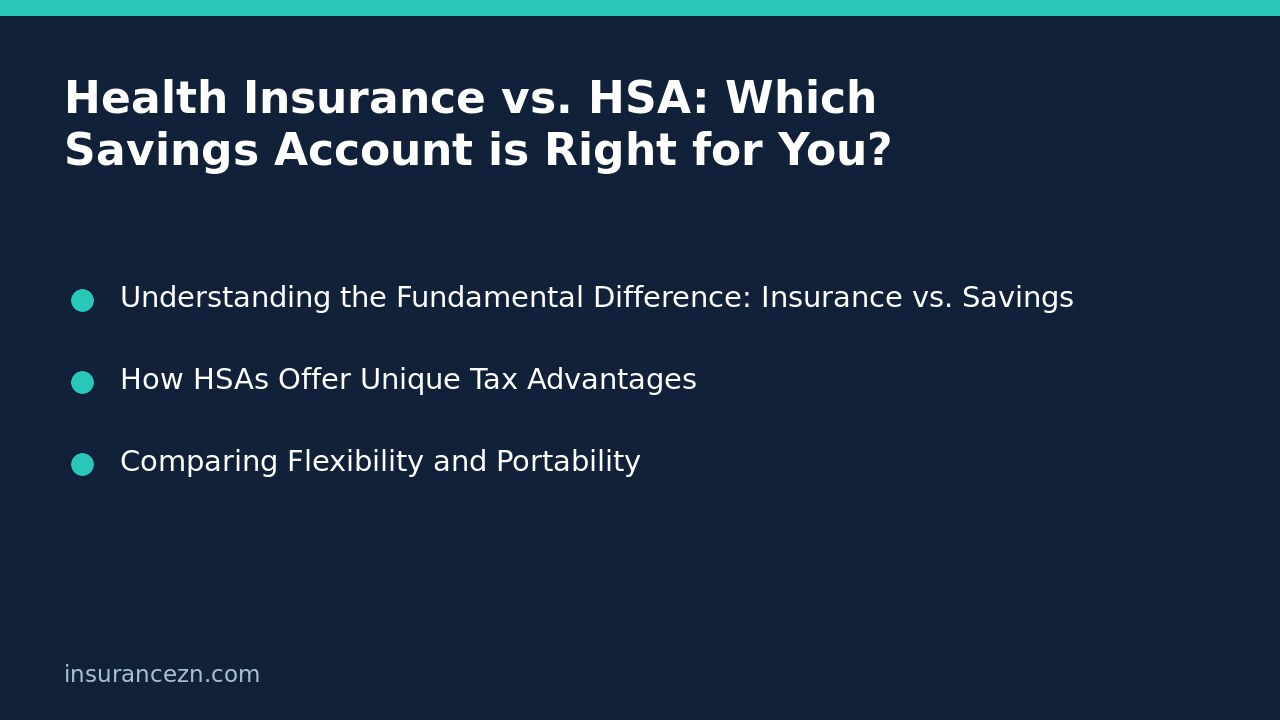
Understanding the Fundamental Difference: Insurance vs. Savings
It is crucial to start by distinguishing the nature of these products. Health insurance is a risk-management contract where you pay premiums to an insurer in exchange for coverage of medical costs when illness or injury occurs. If you do not get sick, you lose the unused premium money; it does not accumulate as savings. Conversely, HSAs and FSAs are tax-advantaged savings accounts designed specifically for qualified medical expenses.
The most significant structural difference lies in eligibility. You cannot open an HSA unless you are enrolled in a High-Deductible Health Plan (HDHP). An HDHP is defined by specific minimum deductible amounts and maximum out-of-pocket limits set annually by the IRS. If you have a traditional PPO, HMO, or plan with a low deductible, you are ineligible for an HSA. Instead, you might be eligible for a Flexible Spending Account (FSA), which can often be paired with any health plan but usually requires employer sponsorship and has a “use-it-or-lose-it” rule at the end of the year.
How HSAs Offer Unique Tax Advantages
The primary appeal of an HSA is its triple tax advantage, a feature no other medical savings vehicle offers. First, contributions are pre-tax or tax-deductible, lowering your current taxable income. Second, the money grows tax-free within the account through interest or investment gains. Third, withdrawals used for qualified medical expenses are completely tax-free.
This structure makes an HSA function more like a retirement account than a standard savings account. You can invest the balance once it exceeds a certain threshold, allowing your medical funds to compound over time. In contrast, FSAs generally do not allow investments; they are strictly cash accounts with strict spending deadlines. Traditional savings accounts offer no tax benefits on contributions or growth, and using them for medical expenses incurs taxes and potential penalties if you are under 65.
Comparing Flexibility and Portability
One of the most common pitfalls in employee benefits is assuming that savings accounts stick around after you leave a job. HSAs are uniquely portable. The account belongs to you, not your employer. When you change jobs, retire, or switch insurance plans (provided you maintain HDHP eligibility), you can take your HSA with you. Your investment history remains intact, and the tax-free growth continues uninterrupted.
FSAs, however, are typically tied to your employer. If you leave the company where you have an FSA, the account usually terminates, and any remaining balance is forfeited unless you are in a grace period or carryover plan offered by your specific employer. This lack of portability makes FSAs less ideal for long-term wealth building compared to HSAs.
Navigating Contribution Limits and Catch-Up Options
Contribution limits for these accounts are adjusted annually by the IRS to reflect inflation and healthcare cost trends. For 2024, the maximum contribution limit for an individual with self-only HDHP coverage is $4,150, while those with family coverage can contribute up to $8,300. Employers may also contribute to your account, which does not count against these limits, allowing you to max out both your own contributions and your employer’s contributions.
Individuals aged 55 or older can make an additional “catch-up” contribution of $1,000 per year. This feature is another area where HSAs outperform FSAs; traditional FSAs do not offer catch-up contributions regardless of age. Furthermore, while you cannot contribute to an HSA if you are enrolled in Medicare, you can still use the existing balance for qualified expenses tax-free after turning 65, treating it effectively like a Traditional IRA withdrawal for medical costs.
Real-World Example: The Long-Term Impact of Investing
Consider two employees, Alex and Jordan, both starting jobs with HDHP coverage and an HSA option.
* Alex treats the HSA as a checking account. He deposits $4,000 annually but spends it immediately on deductibles and copays. By age 65, he has accumulated roughly $40,000 in nominal dollars (adjusted for inflation), but because he didn’t invest, his purchasing power is limited to the cash balance.
* Jordan treats the HSA as an investment vehicle. He contributes the maximum $4,150 annually and invests the funds into low-cost index funds within the HSA. Assuming a conservative average annual return of 6% compounded over 30 years, Jordan’s account could grow to over $120,000. When Jordan retires, they can withdraw this entire amount tax-free for medical expenses like dental work, vision correction, or even long-term care, which are often not covered by Medicare.
This example illustrates why the “savings” aspect of an HSA is distinct from the “insurance” aspect; it acts as a forced savings plan that grows wealth specifically for healthcare needs in retirement.
Common Mistakes to Avoid When Managing Medical Funds
To maximize the benefits of these accounts, avoid several common errors. First, do not assume all medical expenses are qualified. While deductibles and copays are always qualified, over-the-counter medications like vitamins or pain relievers generally require a doctor’s prescription to be HSA-eligible. Second, never spend money you might need later just because it sits in the account; unlike an IRA, you cannot withdraw penalty-free for non-medical reasons before age 65 (though you can pay ordinary income tax on those withdrawals). Third, keep meticulous receipts. The IRS may audit your claims, and without documentation proving a service was qualified, you could be taxed on the withdrawal plus a 20% penalty.
Checklist for Determining Your Best Option
- Check your plan type: Is it a High-Deductible Health Plan (HDHP)? If yes, you are HSA-eligible.
- Assess your timeline: Do you need immediate access to cash (FSA), or can you let money grow for future use (HSA)?
- Evaluate portability: Will you stay with your current employer long-term? If not, an HSA is safer than an FSA.
- Consider retirement: Are you planning to incur significant medical costs in retirement? An HSA is a powerful tool for this.
Conclusion: Aligning Your Savings with Your Insurance
Deciding between relying on an FSA, utilizing an HSA, or using a traditional savings account depends largely on your current insurance plan and your financial horizon. The Health Savings Account stands out as the most versatile and tax-efficient option for those enrolled in HDHPs, offering unique portability and investment capabilities that FSAs and standard savings accounts cannot match. However, if you have a low-deductible plan, an FSA may be the only tax-advantaged medical savings vehicle available to you through your employer. Ultimately, the right choice ensures you are protecting your future healthcare finances while maximizing the tax benefits allowed by law. Always verify specific terms with your insurer and HR department, as eligibility rules and contribution limits are subject to change based on jurisdiction and policy updates.