
When a fire, flood, cyberattack, or severe weather event strikes your business location, the physical damage is often visible and immediate. However, the most financially devastating consequences usually occur in the days and weeks after operations cease. Revenue stops while fixed costs like rent, loan payments, and employee salaries continue to accumulate. This is where Business Interruption (BI) insurance becomes a critical component of your risk management strategy. Unlike property insurance, which pays for repairing or replacing damaged assets, BI insurance covers the lost income and extra expenses incurred when you cannot operate normally due to an insured cause. Understanding how this coverage functions can mean the difference between a temporary setback and a permanent closure.
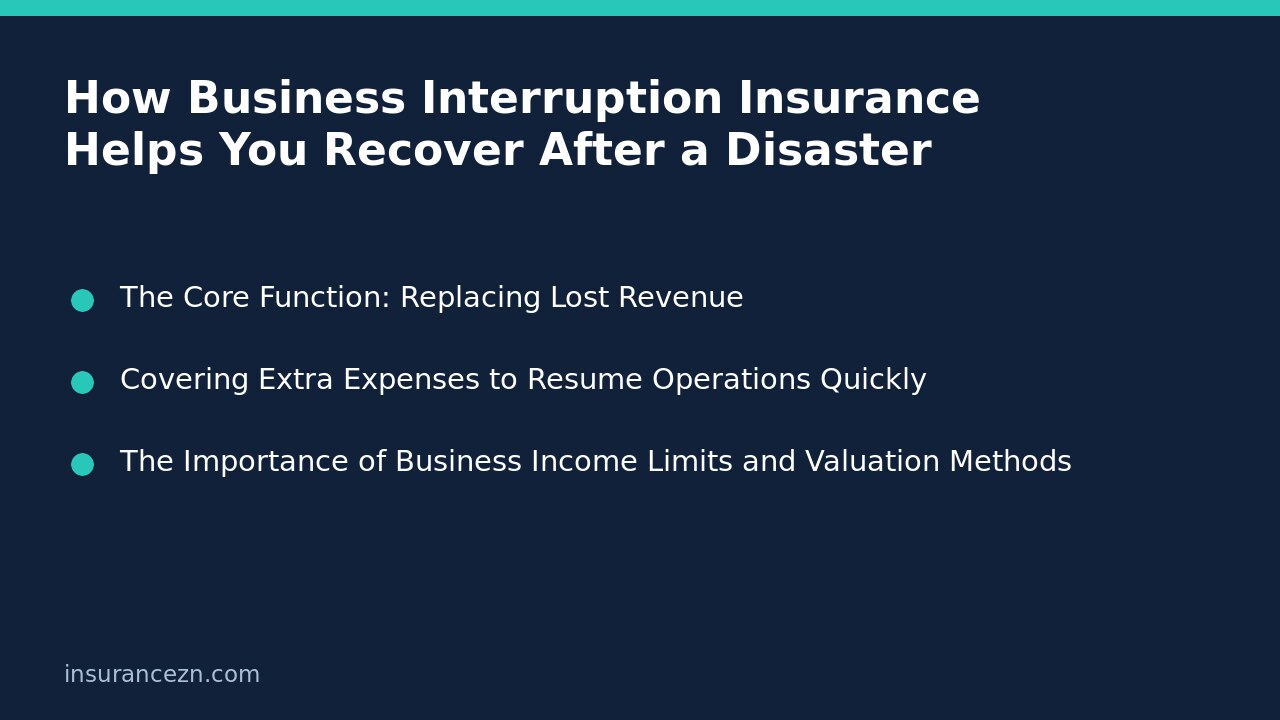
The Core Function: Replacing Lost Revenue
The primary mechanism of Business Interruption insurance is to replace the net profit your business would have earned had the disaster not occurred. This coverage typically extends beyond just the revenue you lose; it also covers ongoing operating expenses that must be paid even when the doors are closed.
When a claim is triggered, the insurer calculates the “indemnity period,” which is the time required to repair or rebuild your property and resume normal operations. During this period, the policy pays out on a monthly basis to cover:
* Lost net income (profit minus variable costs).
* Continuing fixed expenses such as rent, insurance premiums, and loan payments.
* Payroll for key employees who must be retained to help with the recovery process.
It is important to distinguish this from standard property coverage. If your building burns down, property insurance pays for the bricks and mortar. Business Interruption insurance pays for the cash flow gap created while those repairs are happening. Without BI coverage, a business might successfully rebuild its physical location but still go bankrupt because it ran out of cash before reopening.
Covering Extra Expenses to Resume Operations Quickly
A vital feature of many Business Interruption policies is the ability to cover “Extra Expense.” This sub-limit allows you to incur additional costs necessary to minimize the interruption of business operations. For example, if your primary storefront is destroyed by a flood, your BI policy might pay for renting a temporary location, leasing new equipment, or hiring consultants to expedite repairs.
Consider a manufacturing company whose production line is damaged by a lightning strike. The property insurance covers the machinery replacement. However, while waiting for parts to arrive, the business incurs significant costs to operate from a satellite warehouse, including higher utility bills and temporary staffing fees. BI coverage with an extra expense endorsement reimburses these specific outlays, ensuring that speedier recovery does not result in financial loss.
The Importance of Business Income Limits and Valuation Methods
One of the most common pitfalls in BI claims involves the policy limit, which represents the maximum amount the insurer will pay over the indemnity period. Insurers often use “Actual Loss Sustained” valuation methods, meaning they calculate exactly what you lost based on your financial records. However, setting the correct limit requires careful analysis of your historical data and future growth plans.
If your business has recently expanded or introduced new high-margin products, relying solely on past three-year averages might underinsure you. Conversely, overestimating your needs can lead to higher premiums without proportional benefit. Insurers may also apply a “coinsurance clause,” requiring you to carry a percentage of the estimated loss (often 80% or 90%). If you fail to meet this threshold and suffer a loss, the insurer may reduce your payment proportionally.
To avoid this, conduct a thorough financial audit before purchasing coverage. Review your tax returns for the last five years, not just the last three, to account for trends in inflation, economic shifts, or seasonal fluctuations. Ensure your policy limit is sufficient to cover your net income for at least 12 to 24 months, as major renovations can take longer than expected.
Key Exclusions and Common Traps to Avoid
While BI insurance is robust, it is not a blanket solution for every business disruption. Several common exclusions can deny coverage when you need it most. The most frequent exclusion involves “failure of a public utility.” If your business shuts down because the city cuts off electricity due to grid instability unrelated to direct damage to your property, standard BI policies may not cover the loss unless you have purchased specific endorsements.
Another area of contention is “cyber incidents.” Historically, many BI policies excluded losses stemming from data breaches or ransomware attacks that halted operations. While modern policies are increasingly including cyber extensions, it is essential to verify that your definition of a covered cause includes electronic failures or third-party cyberattacks. Similarly, some policies exclude losses caused by government orders, such as mandatory lockdowns during a pandemic, unless specific “government order” endorsements are added.
Readers should also be wary of the “waiting period.” Most policies include a deductible time frame, often 72 hours, before benefits begin. This means if your business shuts down for two days due to smoke from a neighbor’s fire and you reopen on day three, you might not receive any payout until day six. Understanding these nuances is critical to accurate self-assessment of coverage needs.
A Real-World Scenario: The Bakery Fire
To illustrate the practical application of this insurance, consider “Sweet Crust Bakery,” a local business with an annual net income of $250,000. During a summer storm, a lightning strike damages the bakery’s roof and electrical systems, forcing a closure for six months while repairs are completed.
Without Business Interruption insurance, Sweet Crust faces a financial crisis. They still owe $4,000 in monthly rent, $2,000 in loan payments, and must pay staff who remain on retainer to prevent them from working for competitors. Their total monthly fixed costs amount to $15,000. Over six months, they would lose approximately $90,000 in potential profit plus the $90,000 in fixed costs, totaling a $180,000 financial hit before rebuilding even begins.
With a BI policy limit of $300,000 and an extra expense endorsement, the scenario changes drastically. The insurer pays $250,000 over six months to replace lost income. Additionally, the policy covers the cost of renting a temporary commissary kitchen and purchasing portable ovens. By the time the bakery reopens, the owner has not only recovered their physical assets but has also maintained their cash flow stability, allowing them to pay off debts without taking on high-interest bridge loans.
Checklist for Evaluating Your Current Coverage
Before finalizing your policy or reviewing an existing one, run through this checklist to ensure you are adequately protected:
1. Verify the Indemnity Period: Does your coverage period match the typical time required to rebuild a structure of similar size and complexity?
2. Review Valuation Methods: Confirm if the policy uses “Actual Loss Sustained” or “Extended Business Income,” and understand the implications for each.
3. Check Utility Exclusions: Determine if losses from utility failures are covered or require an endorsement.
4. Assess Cyber Extensions: Ensure that cyber-related business interruptions are explicitly included in your definitions of covered causes.
5. Calculate Fixed Costs: List all expenses that continue regardless of whether you are open for business, including rent, insurance, and loan payments.
6. Audit Financial History: Use at least five years of financial data to set a realistic and sufficient policy limit.
Remember that terms, availability, eligibility, laws, and prices depend on the specific insurer, your policy details, and your jurisdiction. This article provides informational guidance only and does not constitute individualized financial or legal advice. Always consult with a licensed insurance professional to tailor coverage to your unique business model and local regulations.