
Workers’ compensation insurance is a critical safety net for businesses of all sizes, designed to protect employees from financial ruin following a work-related injury or illness while simultaneously shielding employers from costly lawsuits. In the United States, this form of “no-fault” insurance mandates that injured workers receive medical benefits and wage replacement regardless of who caused the accident, provided the injury occurred during the course of employment. For business owners, understanding the intersection of legal requirements and coverage limits is not merely an administrative task; it is a fundamental aspect of risk management and operational continuity.
The core function of workers’ comp is to create a compromise between employee rights and employer liabilities. Without this system, an injured worker might be left unable to pay for life-altering medical procedures, while the employer could face unlimited liability in court if sued for negligence. By purchasing workers’ compensation, employers essentially purchase immunity from being sued by their own employees for workplace injuries, provided they adhere to state regulations and policy terms.
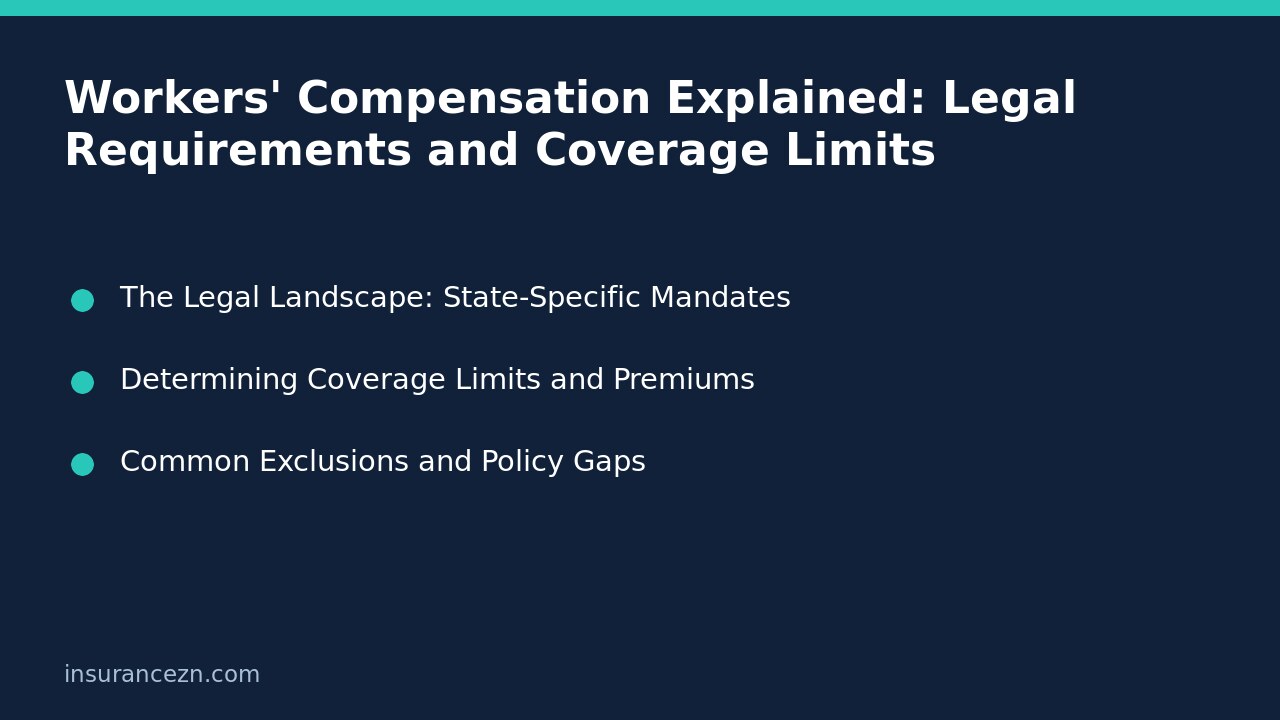
The Legal Landscape: State-Specific Mandates
One of the most common misconceptions among business owners is that workers’ compensation laws are uniform across the country. In reality, every U.S. state has its own specific statutes governing who must carry coverage, how much it costs, and what defines an “employee” under the law. While nearly all states mandate coverage for full-time employees, there are significant exceptions. For instance, some states allow sole proprietors, partners, and members of LLCs to opt out of coverage, whereas others require them to purchase policies regardless of their employment status.
Furthermore, the definition of “employee” can vary drastically. In many jurisdictions, independent contractors are excluded from mandatory coverage, yet misclassification remains a leading cause of regulatory fines. If a business hires someone as an independent contractor but exerts significant control over how and when the work is performed, state labor boards may reclassify that individual as an employee retroactively. This discovery can trigger back-pay penalties and uncovered injury claims years after the initial hiring. Consequently, businesses must carefully audit their workforce classifications annually to ensure compliance with their specific state’s Department of Labor or Workers’ Compensation Board.
Determining Coverage Limits and Premiums
Coverage limits in workers’ compensation are generally dictated by state laws rather than the insurance carrier’s discretion. States typically set maximum benefit periods for wage replacement (often capped at two-thirds of the worker’s average weekly wage) and lifetime maximums for permanent disability benefits. Medical coverage, conversely, is usually unlimited or subject to very high caps, ensuring that all necessary treatments—from emergency room visits to physical therapy—are covered without a dollar cap on the total cost.
The premium an employer pays is calculated using a formula known as “experience modification” in many states. This rating factor adjusts the base rate based on the business’s past claims history. A company with a clean safety record will pay less than one with frequent injuries, even if they are in the same industry classification code. It is vital for business owners to understand that their claims history directly impacts their future premiums. Filing a frivolous claim or failing to report an injury promptly can lead to higher experience modification factors, increasing costs for years to come.
Common Exclusions and Policy Gaps
While workers’ compensation provides broad protection, it is not a catch-all solution. Policies typically exclude injuries sustained while committing intentional crimes, engaging in horseplay, or violating company safety rules. Additionally, many standard policies do not cover off-site activities unless specifically endorsed. For example, if an employee travels to a client site for a meeting and suffers an injury unrelated to the primary job duties, that incident might fall outside the scope of coverage depending on state laws and policy wording.
Another frequent gap involves mental health conditions. While some states and carriers now include provisions for psychological injuries resulting from workplace trauma, traditional policies often exclude stress-related claims or require a direct physical manifestation of the injury before benefits are approved. Business owners must review their specific policy declarations to ensure that emerging risks, such as those associated with remote work environments or high-stress industries, are adequately addressed.
Navigating Claims and Reporting Procedures
The administrative burden of managing workers’ compensation often falls on the employer’s shoulders. Most states require employers to report any work-related injury within a strict timeframe, usually 30 days, though some states demand immediate notification if a worker is hospitalized or requires surgery. Failure to meet these deadlines can result in the denial of benefits for the injured worker and severe penalties for the employer.
When an incident occurs, the proper protocol involves documenting the scene, gathering witness statements, and ensuring the employee receives immediate medical attention. Employers should maintain a log of all injuries, no matter how minor they seem, as what starts as a simple sprain can develop into a chronic condition requiring long-term treatment. Keeping accurate records is essential for defending against potential disputes regarding the nature or extent of an injury.
Real-World Example: The Misclassification Trap
Consider a landscaping company that hires several seasonal workers to maintain gardens for private clients. These individuals are labeled as independent contractors and are not covered by the company’s workers’ comp policy. During the winter, one of these “contractors” slips on ice while clearing a driveway—a task they were hired to perform. They break their leg and require surgery costing $40,000.
Because the business failed to classify them correctly, the insurance carrier denies the claim, citing that the injured party is not an employee. The landscaping company then faces a lawsuit from the worker seeking medical bills and lost wages. Simultaneously, state regulators investigate the misclassification, imposing fines and requiring the business to pay retroactive premiums for past years. In this scenario, the cost of the single accident skyrocketed from a manageable insurance premium to a financial crisis involving legal fees and punitive damages. This example underscores why accurate employee classification is as important as having a policy in place.
Checklist for Business Owners
To ensure your business remains compliant and protected, review the following checklist:
* Verify Employee Status: Confirm that all workers are correctly classified as employees or independent contractors according to your state’s “ABC test” or similar legal standards.
* Check State Mandates: Review your specific state’s laws regarding who must be covered, including requirements for part-time or seasonal staff.
* Audit Your Policy Limits: Ensure your policy limits align with state maximums for medical and indemnity benefits to avoid underinsurance.
* Review Exclusions: Read the fine print regarding off-premises injuries, mental health claims, and intentional acts.
* Establish Reporting Protocols: Create a clear internal process for employees to report injuries immediately and train supervisors on reporting deadlines.
* Monitor Experience Mod: Track your claims history to understand how it affects your experience modification factor and future premiums.
Conclusion
Workers’ compensation is a complex legal framework that balances the needs of injured workers with the financial stability of employers. While the basic principles of no-fault coverage are consistent, the specific requirements and limits vary significantly by jurisdiction. Business owners must stay vigilant regarding employee classification, reporting deadlines, and policy exclusions to avoid costly penalties. By understanding these nuances and maintaining rigorous safety and reporting practices, businesses can navigate the workers’ compensation landscape effectively, ensuring they remain compliant while providing necessary support to their workforce. Always consult with a licensed insurance professional familiar with your specific state’s regulations to tailor coverage to your unique operational needs.