
Homeowners insurance is more than just a requirement for securing a mortgage; it is a critical financial safety net designed to protect your most significant asset against unpredictable events. Often misunderstood as a simple policy that pays out only when your house burns down, this type of coverage actually encompasses a complex web of protections ranging from structural damage to liability claims and loss of personal property. Understanding the nuances of what is included versus what is excluded is essential for every homeowner to avoid catastrophic financial gaps in their protection strategy.
At its core, homeowners insurance is a contract between you and an insurance company. In exchange for regular premium payments, the insurer agrees to cover specific risks associated with owning a home. However, the scope of this coverage varies significantly depending on the policy form and the specific endorsements you purchase. A common misconception is that if your house is damaged, the insurance automatically covers everything related to it. In reality, policies are designed to cover “sudden and accidental” perils, not wear and tear or intentional damage.
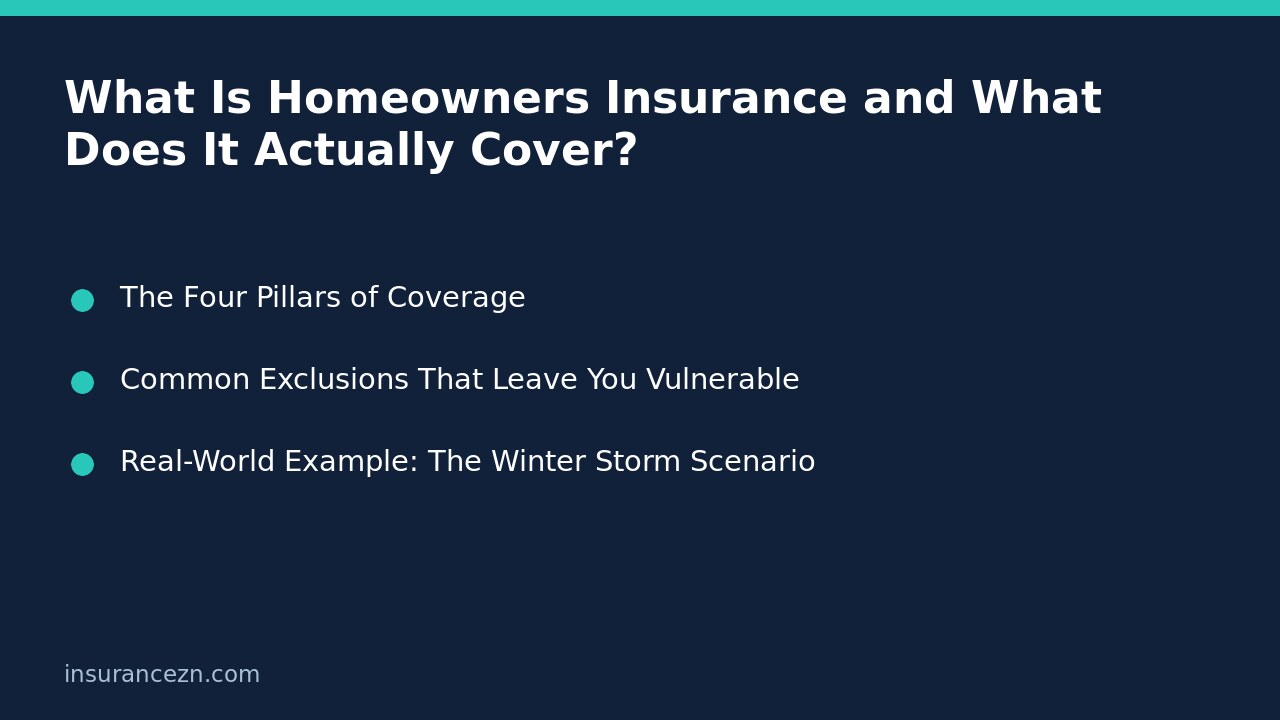
The Four Pillars of Coverage
To truly understand what homeowners insurance covers, you must look beyond the physical structure of the home. A standard policy generally consists of four distinct parts, often referred to as the “four pillars” of coverage. Each pillar serves a different purpose and has its own set of limits and exclusions.
1. Dwelling Coverage
This is the most fundamental component, protecting the physical structure of your home against covered perils. This includes the foundation, walls, roof, doors, windows, and built-in appliances like ovens or dishwashers. If a covered event, such as a fire, windstorm, or hail, damages your house, dwelling coverage helps pay for repairs or total reconstruction. It is important to note that this coverage typically applies only to the main living quarters, not detached structures like a garage unless specific upgrades are made, though garages are often included under limited limits.
2. Other Structures Coverage
Distinct from the main dwelling, this portion of the policy covers outbuildings on your property that are not attached to the house. Examples include a detached garage, a shed, a fence, or a gazebo. The coverage limit for these structures is usually a percentage of your total dwelling coverage (often 10%), but you can increase this limit if you own multiple large structures. This ensures that if a fire starts in your shed and spreads to your house, or vice versa, both are protected appropriately.
3. Personal Property Coverage
This pillar protects the contents of your home, including furniture, electronics, clothing, and other belongings. If a covered peril damages or destroys these items, the insurance company will reimburse you up to the policy limit. However, there are important distinctions here: replacement cost versus actual cash value. Some policies pay what it costs to buy a new item today (replacement cost), while others deduct for depreciation (actual cash value). High-value items like jewelry, art, or collectibles often require separate scheduled personal property endorsements because they are subject to sub-limits in standard policies.
4. Personal Liability Coverage
Perhaps the most overlooked but vital aspect of homeowners insurance is liability protection. This covers you if someone is injured on your property and sues you for damages, or if you accidentally cause damage to someone else’s property. For instance, if a guest slips on your icy walkway and breaks their leg, liability coverage can help pay for their medical bills and any legal fees if they file a lawsuit. It also extends to certain offenses committed away from home, such as hosting a party where an accident occurs.
Common Exclusions That Leave You Vulnerable
While the above sections outline what is covered, understanding what is explicitly excluded is equally important. Insurance policies are contracts of indemnity based on risk management, and insurers exclude high-frequency or catastrophic risks that are too unpredictable to insure in standard forms.
One of the most significant exclusions is flood damage. Standard homeowners policies do not cover flooding caused by rising water from rivers, lakes, or storm surges. Similarly, damage from earthquakes is almost universally excluded. To obtain protection for these specific perils, you must purchase separate policies or endorsements, which are available in many regions but require additional premiums.
Another common exclusion involves wear and tear, gradual deterioration, and pest infestations. If your roof leaks because the shingles have degraded over ten years due to sun exposure, that is considered maintenance, not a covered peril. Insurance is intended for sudden accidents, not the slow decay of assets. Rodent damage, mold resulting from long-term neglect, and termite damage are also typically excluded unless they are direct results of a covered event like a burst pipe.
Real-World Example: The Winter Storm Scenario
To illustrate how these pillars interact in a real-world scenario, consider a homeowner living in an area prone to severe winter storms. A massive snowstorm hits, and heavy ice accumulates on the roof of the garage, eventually causing the roof to collapse onto a parked car below. Simultaneously, high winds tear off sections of the main house’s siding, exposing the interior to rain.
In this scenario:
* Dwelling Coverage would kick in to repair the damaged siding and fix the roof leaks caused by the wind.
* Other Structures Coverage would pay to repair or replace the collapsed garage roof and potentially the structure itself if the damage is extensive.
* Personal Property Coverage might apply if water from the leaking roof damaged furniture or electronics inside the house, though there may be sub-limits for certain types of items.
* Liability Coverage would not apply here unless a neighbor’s property was damaged by falling debris, in which case their medical costs or legal fees would be covered under your policy.
However, if the roof collapsed because the shingles were old and brittle (wear and tear), the insurer would deny the claim for the siding damage as well, citing that the collapse was not a sudden, accidental peril but a result of poor maintenance. This highlights why regular home inspections and timely maintenance are crucial components of risk management alongside insurance.
Practical Steps to Ensure Adequate Protection
Navigating homeowners insurance requires active engagement rather than passive acceptance of a default policy. Start by assessing the replacement cost of your home, not just its market value. Market value includes land and equity, but insurers only pay for rebuilding the structure. If you underinsure your dwelling, you risk having your personal property coverage reduced proportionally, a concept known as the “80% rule.”
Review your policy annually to ensure limits have kept pace with inflation and renovation costs. Update your inventory of valuable items, such as jewelry or high-end technology, and consider scheduling them separately. Finally, understand the difference between named perils and open perils policies; while open perils (all-risk) offer broader protection, they come at a higher premium. Always read the exclusions section carefully before signing, as this is where the fine print that could leave you unprotected often hides.
Remember that insurance terms, availability, eligibility, laws, and prices depend on the specific insurer, your policy details, and your jurisdiction. This article provides informational guidance and does not constitute individualized financial or legal advice. Always consult with a licensed insurance professional to tailor a policy that meets your unique situation.