
Navigating the world of car insurance can feel like deciphering a complex code filled with jargon, confusing deductibles, and seemingly endless coverage options. However, the landscape has shifted dramatically in recent years; obtaining multiple quotes from different carriers is now entirely possible without leaving your home or office. The most effective way to secure affordable protection for your vehicle—and potentially lower your monthly premiums—is to systematically compare online quotes. By understanding how insurers calculate rates and what specific data points you need to prepare, you can avoid high costs and ensure you aren’t overpaying for coverage you don’t fully understand. This guide provides a clear, actionable roadmap to help you navigate the comparison process efficiently.
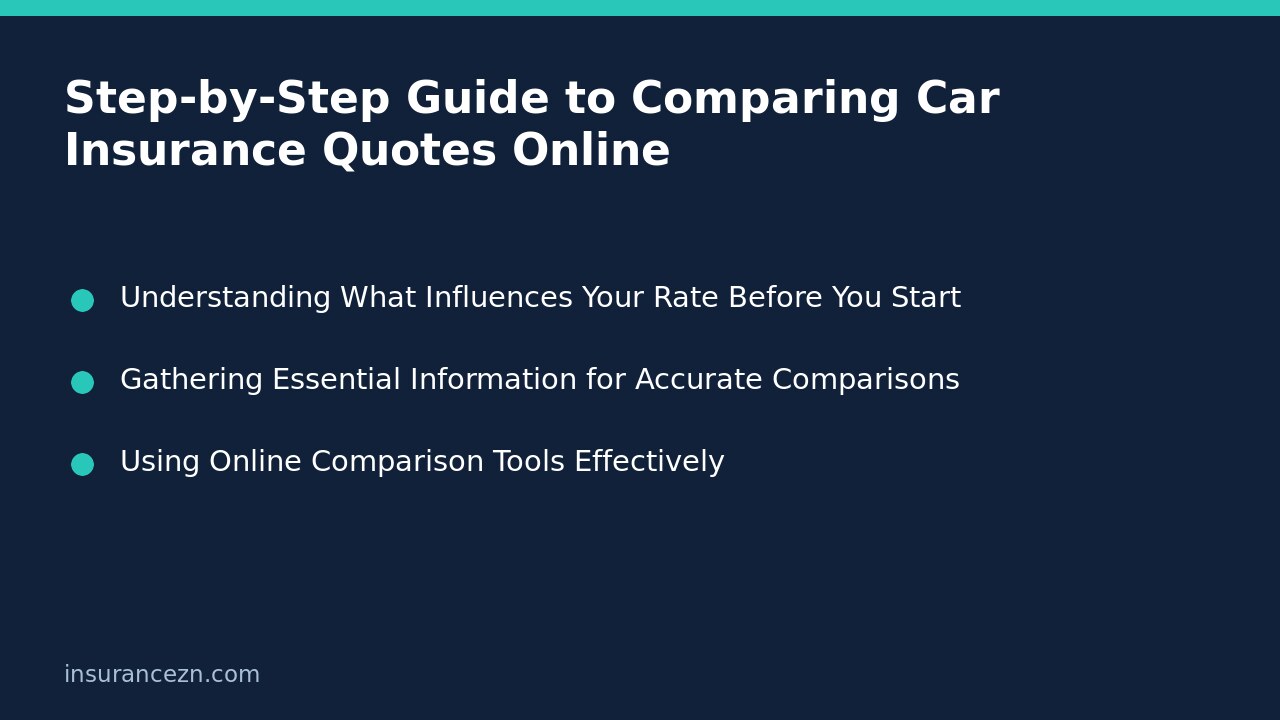
Understanding What Influences Your Rate Before You Start
Before clicking “get a quote,” it is crucial to understand the variables that insurance algorithms use to determine your price. Insurers do not guess; they rely on actuarial data to predict risk. The primary factors influencing your premium include your driving history, credit score (in many jurisdictions), vehicle type, location, and coverage limits.
Your driving record is perhaps the most significant factor. Accidents, traffic violations, and claims filed in the last three to five years will heavily impact your rate. Conversely, a clean record can qualify you for safe driver discounts. Your zip code matters significantly as well; areas with high accident frequencies or theft rates will naturally carry higher base premiums. Additionally, the car you drive plays a role. Vehicles with robust safety features and low repair costs are generally cheaper to insure than those that are expensive to fix or prone to theft.
Gathering Essential Information for Accurate Comparisons
To ensure the quotes you receive are accurate and comparable, you must gather specific information before visiting insurance comparison websites or carrier portals. Entering incomplete data can lead to misleading quotes that may change once an agent reviews your full profile.
Prepare the following documents and details:
* Current Policy Details: Have your current policy number and expiration date ready. This allows you to identify if you are eligible for a non-renewal discount or if you qualify as a loyal customer with another provider.
* Vehicle Information: Locate your Vehicle Identification Number (VIN) or have the make, model, year, and exact trim level ready. Know whether the vehicle has anti-theft devices or advanced driver-assistance systems.
* Driving History: Have your license number and any past violations or accidents documented. Be prepared to explain any gaps in coverage history, as this is a common red flag for insurers.
* Coverage Requirements: Check your state’s minimum liability requirements. While you can buy the cheapest policy by meeting only these minimums, it is often wise to carry higher limits to protect your assets. Decide if you want comprehensive and collision coverage included in your comparison.
Using Online Comparison Tools Effectively
The internet offers various platforms designed to help you compare quotes simultaneously. These tools typically connect you with multiple carriers at once, saving you the time of visiting individual websites. When using these aggregators, look for sites that allow you to filter results by specific needs, such as “best for bad drivers” or “lowest rates for teens.”
However, be cautious of sites that promise “instant approval” without verifying details, as this often leads to declined applications later. The most reliable comparison tools will ask for the same data points listed in the previous section. Enter your information carefully, ensuring there are no typos in your address or social security number. Once submitted, review the generated list of carriers. Pay close attention not just to the monthly price, but also to what is included in that price. A lower quote might exclude comprehensive coverage or have a much higher deductible than you anticipated.
Evaluating Carriers Beyond the Price Tag
Price is undeniably important, but it should never be the sole deciding factor when choosing an insurance provider. A cheap policy from an unreliable carrier can lead to financial ruin if you are involved in an accident and the insurer denies your claim. When comparing quotes, investigate the financial stability of the company. Look for ratings from independent agencies like A.M. Best or Standard & Poor’s; a rating of “A” or higher generally indicates strong financial health.
Customer service responsiveness is another critical metric. Read recent reviews on third-party sites like the Better Business Bureau (BBB) or trusted consumer forums to see how the company handles claims and customer complaints. Does the carrier have a dedicated mobile app for filing claims? Is there 24/7 support available? A slightly higher premium from a company known for quick, fair claim payouts is often a better investment than saving $10 a month with an insurer that takes months to process a loss.
Common Mistakes That Skew Your Comparison Results
Even when following a guide, it is easy to make errors that result in suboptimal quotes. One common mistake is entering your current mileage incorrectly. Insurers often charge more for high-mileage drivers because the risk of an accident increases with time on the road. Another frequent error is failing to ask about available discounts before finalizing a quote. Discounts can range from 5% to 25% and may apply for bundling home and auto insurance, paying annually in full, having good grades (for students), or completing a defensive driving course.
Additionally, do not automatically choose the first quote you see. Some carriers display their lowest price prominently while hiding higher-priced options that offer better coverage ratios. Always scroll through the entire list of results provided by your comparison tool. Finally, avoid transferring a policy mid-month without confirming prorated billing rules, as some insurers charge full monthly premiums regardless of the start date, which can distort the cost comparison.
Real-World Example: Optimizing Your Quote Strategy
Imagine you are currently paying $120 per month for car insurance with a deductible of $500. You decide to shop around online. You gather your VIN, driving history, and current policy details. You input this data into three different comparison aggregators.
The first aggregator returns a quote from Company A at $95/month but notes that they do not offer roadside assistance. The second aggregator shows Company B at $105/month with a $250 deductible option and a 10% multi-policy discount applied. The third aggregator lists Company C at $118/month, which is higher than your current rate, but includes comprehensive coverage for glass breakage and a newer vehicle replacement value that matches your car’s actual cash value more accurately.
In this scenario, simply choosing the lowest price ($95) might seem logical, but you are losing out on discounts and potentially better coverage terms available at Company B. By analyzing the breakdown of each quote—deductible amounts, coverage limits, and included perks—you determine that Company B offers the best balance of cost and value, potentially saving you $100 annually while providing superior protection.
Final Checklist Before Switching Insurers
Before cancelling your existing policy to switch to a new one, run through this final checklist to ensure a smooth transition.
1. Verify Coverage Gaps: Ensure the new policy starts exactly when your current one ends to avoid any lapse in coverage, which could void your insurance on your driver’s license.
2. Check for Lapse Penalties: Some insurers charge a penalty if you let your current policy lapse, even briefly. Confirm this with your current agent before cancelling.
3. Review Discount Eligibility: Double-check that all discounts (bundling, safe driver, paperless billing) are applied to your final quote.
4. Compare Deductibles: Ensure the new deductible amount is comfortable for your budget in case of an accident. A higher deductible lowers premiums but increases out-of-pocket costs during a claim.
Conclusion
Comparing car insurance quotes online is a straightforward process that empowers drivers to make informed financial decisions. By gathering accurate information, understanding the factors that influence rates, and evaluating carriers based on more than just price, you can secure a policy that offers both affordability and reliability. Remember that insurance terms, availability, eligibility, laws, and prices vary significantly by insurer, policy structure, and jurisdiction. Always read the fine print and consult with licensed agents if you have complex needs. Taking the time to compare quotes carefully today can result in substantial savings over the life of your policy.