
For small business owners, general liability insurance (often abbreviated as GLI) is frequently the first policy purchased, yet it remains one of the most misunderstood. Unlike commercial auto or workers’ compensation, which cover specific risks like vehicle accidents or employee injuries, general liability acts as a foundational safety net for third-party claims. It protects your business when someone other than your employees suffers bodily injury, property damage, or alleges personal and advertising injury while interacting with your operations. Without this coverage, a single lawsuit over a minor slip-and-fall incident could bankrupt a fledgling company, turning a manageable operational error into a catastrophic financial event.
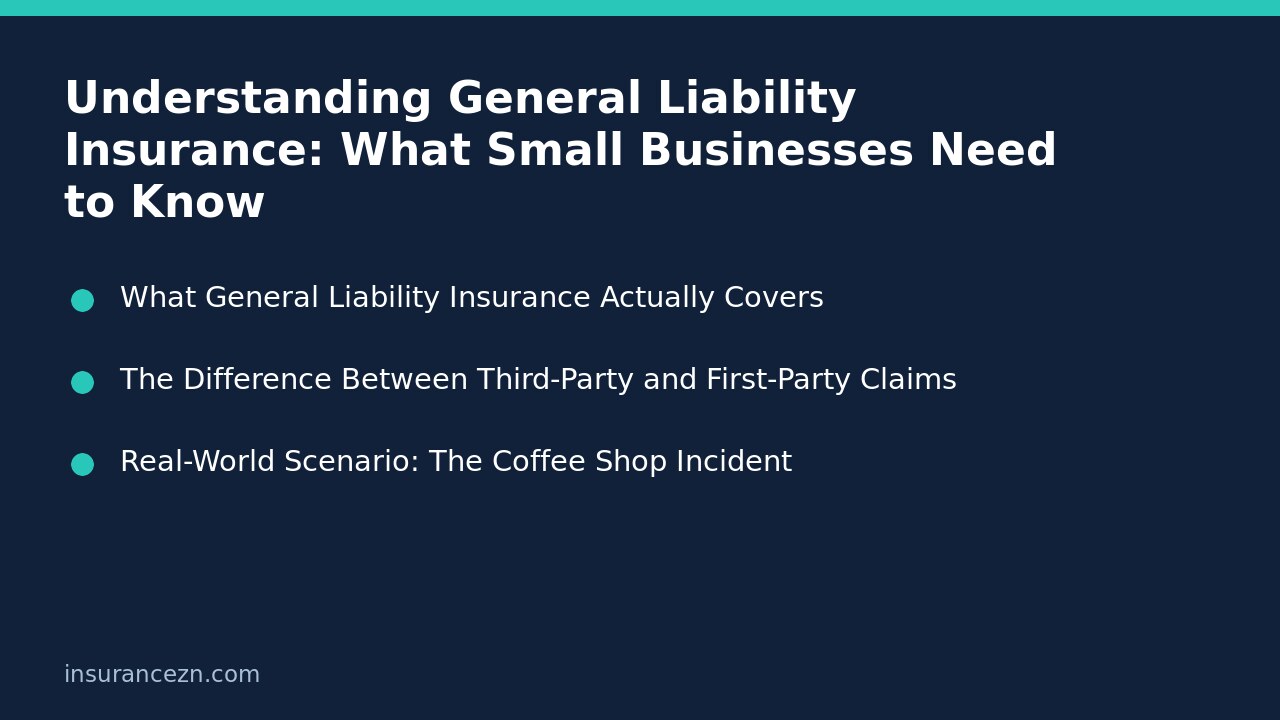
What General Liability Insurance Actually Covers
To understand the value of GLI, you must first distinguish what it pays for versus what it excludes. At its core, this policy covers three primary categories of loss. First is bodily injury, which occurs when a client or visitor is physically hurt on your premises. Second is property damage, covering scenarios where your business operations accidentally harm someone else’s physical assets. Third is personal and advertising injury, a often-overlooked category that addresses non-physical harms such as libel, slander, false arrest, or copyright infringement in your marketing materials.
It is crucial to clarify what general liability does not cover. Most standard policies exclude professional negligence (errors and omissions), which requires a separate policy. They also typically exclude auto accidents, pollution, employee injuries, and criminal acts. If you operate a business where employees use vehicles for work duties or provide professional advice, relying solely on GLI will leave massive gaps in your risk management strategy.
The Difference Between Third-Party and First-Party Claims
A common point of confusion involves the distinction between third-party and first-party claims. General liability is strictly designed for third-party claims. This means it pays for injuries or damages suffered by people outside your organization—customers, vendors, or members of the public. If a customer trips over a box in your showroom and breaks their leg, GLI covers their medical bills, legal fees, and any settlement amounts you agree to pay.
Conversely, if that same employee who set up the box slips on it and breaks their leg, general liability does not apply. That scenario involves an “insured,” or someone within your organization, and falls under workers’ compensation insurance. Confusing these two types of coverage is a frequent mistake for new business owners, potentially leading to uncovered losses during an audit or a claim.
Real-World Scenario: The Coffee Shop Incident
Consider a hypothetical coffee shop owner named Sarah. On a Tuesday morning, a regular customer walks into the shop to pick up their usual order. They step on a wet patch near the door that was not mopped before opening time and fall, fracturing their wrist. A passerby witnesses the incident and takes photos. The injured customer sues Sarah’s business for $150,000 in medical expenses and pain and suffering.
Without general liability insurance, Sarah would be personally liable for all costs. She would need to pay for the ambulance, surgery, physical therapy, and legal defense out of her own pocket. Even if she is not at fault, defending a lawsuit takes time and money that small businesses cannot easily absorb. With a standard GLI policy, the insurer handles the legal defense, negotiates the settlement, and pays the medical bills up to the policy limit. Sarah’s business remains solvent, and she can focus on recovering her shop rather than fighting a financial survival battle.
Common Misconceptions About Coverage Limits
One of the most dangerous myths in the insurance industry is that “higher limits are always better.” While having sufficient coverage is essential, blindly selecting the highest available limit without understanding your risk profile can be inefficient. However, the opposite error—selecting the minimum limit—is far more common and risky. Many small businesses opt for $1 million per occurrence because it seems standard, but high-risk industries like construction or event planning often require $2 million or $5 million limits to protect against catastrophic claims.
Another misconception is that GLI covers all property damage. It generally only covers sudden and accidental damage, not wear and tear or gradual deterioration. For example, if a customer’s laptop falls into your coffee machine due to negligence, GLI covers the repair cost. However, if a customer reports that their phone fell in your shop last week and you never found it, they might claim lost data, but standard GLI often excludes consequential losses like business interruption or data recovery unless specific endorsements are purchased.
How to Choose the Right Coverage for Your Industry
Selecting the right policy requires an honest assessment of your specific industry risks. Retailers face high foot traffic, increasing the likelihood of slip-and-fall incidents. Contractors must consider third-party damage to a client’s home during renovations. Marketing agencies need robust personal injury coverage to protect against allegations of defamation in their campaigns.
When reviewing quotes, look beyond the premium price tag. Examine the deductible options; a higher deductible lowers your monthly cost but increases your out-of-pocket expense if a claim occurs. Ensure the policy includes necessary endorsements, such as “products and completed operations” for manufacturers or “pollution liability” if you handle cleaning supplies. Always verify that the policy limits meet the requirements of any contracts you sign with larger clients or landlords.
Practical Steps to Maintain Your Policy
Once you secure a policy, maintenance is key to ensuring it remains valid when you need it most. Notify your insurer immediately of any changes in business operations, such as hiring new staff, moving locations, or launching new product lines. Failure to disclose material facts can void coverage during a claim. Additionally, keep detailed records of all incidents that occur on your premises, even if no lawsuit follows. These logs can help demonstrate the frequency and nature of risks to your insurer during renewal negotiations.
Regularly review your policy annually. Laws change, and so do industry standards for liability. What was acceptable coverage five years ago might be insufficient today. Engage with your insurance agent to discuss emerging risks in your sector, such as cybersecurity extensions or specific environmental liabilities, ensuring your general liability umbrella remains tight against the realities of modern business operations.