
Launching a startup is an exercise in managing immense uncertainty. Every day brings new risks, from potential lawsuits and property damage to cyberattacks and employee injuries. Unlike established corporations with deep pockets, startups often lack the financial reserves to absorb even a single catastrophic loss. This makes securing the right business insurance not just a regulatory formality, but a fundamental pillar of your survival strategy. However, navigating the complex landscape of commercial policies can be overwhelming for founders who are already stretched thin. The key is to move beyond generic “packaged” policies and instead construct a tailored risk management plan that protects your specific assets and liabilities without draining your limited cash flow.
The first step in choosing the right policy is understanding that there is no one-size-fits-all solution. Insurance needs vary drastically based on your industry, location, number of employees, and the nature of your products or services. A software development company has vastly different risks compared to a food truck business or a construction firm. Therefore, your initial assessment must focus on identifying your primary exposures. Are you worried about clients suing you for negligence? Do you store valuable equipment that could be stolen? Is your website vulnerable to data breaches? Answering these questions provides the foundation for selecting coverage types that offer genuine protection rather than false security.
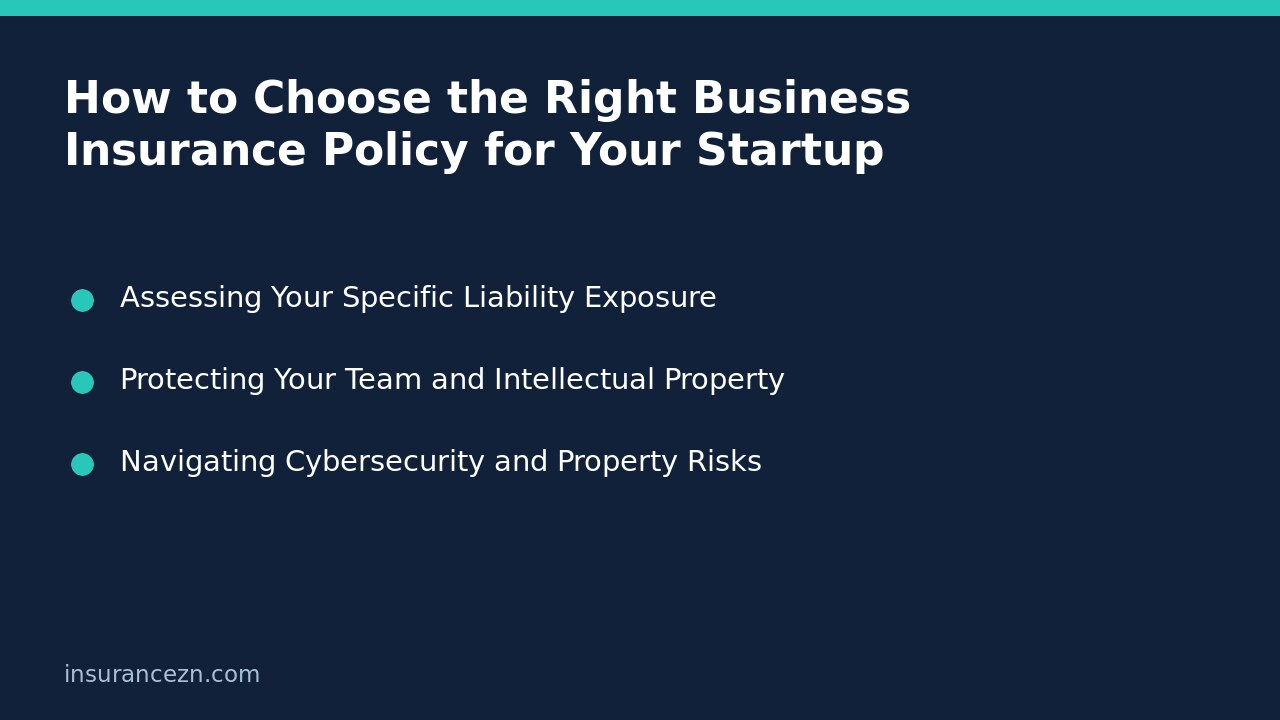
Assessing Your Specific Liability Exposure
General Liability Insurance is often the first policy entrepreneurs purchase, but it is also frequently misunderstood. This coverage typically protects against third-party claims of bodily injury, property damage, and personal injury, such as libel or slander. For a startup with an office location and physical products, this is essential. However, many startups operate in fields where general liability is insufficient on its own.
For example, if you are a consultant providing advice to clients, you face significant professional liability risks. If your recommendations lead to a client’s financial loss, general liability will not cover the legal defense costs or settlements. In this scenario, Professional Liability Insurance (often called Errors and Omissions or E&O) is the critical layer of protection. Similarly, if your startup involves manufacturing goods, product recall insurance becomes a vital consideration to handle the costs associated with removing defective products from the market.
When evaluating liability, consider your contractual obligations. Many larger clients or landlords will require specific limits of liability and may mandate certain endorsements before signing an agreement. Ignoring these requirements during the selection process can lead to breach of contract penalties that exceed the cost of insurance itself. Always review the “exclusions” section of a policy carefully; standard policies often exclude claims arising from professional negligence, employment practices, or cyber incidents unless specifically added.
Protecting Your Team and Intellectual Property
As your startup grows, hiring employees introduces new layers of risk. Workers’ Compensation Insurance is legally required in almost every jurisdiction for businesses with employees. This mandatory coverage pays for medical expenses and lost wages if an employee is injured on the job. Beyond the legal requirement, failing to secure this coverage can result in severe fines and personal liability for the business owner.
However, workers’ comp only covers physical injuries. You must also consider Employment Practices Liability Insurance (EPLI). This policy defends your company against claims of discrimination, harassment, wrongful termination, or retaliation. Startups are particularly vulnerable here as they often build cultures quickly without mature HR protocols. A single well-funded lawsuit based on alleged misconduct can bankrupt a young company. EPLI fills this gap by covering legal fees and settlements related to employee relations.
Intellectual property (IP) is another asset that requires protection, though it is often handled differently than traditional insurance. While standard business insurance does not cover IP theft directly, some policies offer limited coverage for legal costs incurred when defending your patents or trademarks against infringement claims. It is crucial to distinguish between insuring the cost of defending your IP versus actually insuring the value of the IP itself. Most commercial policies will exclude pre-existing conditions or specific IP disputes unless they are explicitly listed in a schedule. For startups, securing IP through registration with relevant government bodies (like the USPTO) is the primary defense, with insurance serving as a secondary safety net for legal battles.
Navigating Cybersecurity and Property Risks
In the digital age, every startup that collects customer data, stores employee records, or processes payments is at risk of a cyberattack. A ransomware attack or data breach can halt operations immediately and destroy customer trust. Cyber Liability Insurance is no longer optional; it is a necessity. This coverage typically pays for forensic investigations, credit monitoring services for affected customers, legal fees related to data privacy laws (such as GDPR or CCPA), and public relations costs to manage the reputational fallout.
When selecting a cyber policy, look beyond the base price. Policies often have sub-limits for specific items like extortion payments or social engineering attacks. Ensure the policy covers business interruption losses caused by a cyber event, which can be just as devastating as physical fire. If your startup relies heavily on cloud storage or remote work, ensure your property insurance extends to digital assets and covers equipment loss specifically related to home offices if employees are working remotely.
Understanding Policy Limits and Deductibles
Once you have identified the necessary coverage types, the next critical step is determining the appropriate limits and deductibles. Insurance limits represent the maximum amount the insurer will pay for a single claim or during the policy period. Setting limits too low leaves your business exposed to out-of-pocket costs that could threaten its existence. Conversely, setting limits too high can unnecessarily strain your cash flow through premium payments.
Deductibles are the amount you agree to pay out of pocket before the insurance kicks in. In exchange for a higher deductible, you will typically pay a lower premium. For startups with limited capital reserves, a high deductible might seem attractive to reduce monthly costs. However, if you face a claim that exceeds your deductible but is still below your policy limit, you could be forced to dip into your operating cash or personal savings. A balanced approach involves analyzing your ability to self-insure for small claims versus the cost of transferring large risks to an insurer.
The Importance of Comparing Quotes and Reviewing Terms
Do not settle for the first quote you receive. Insurance pricing is highly variable and depends on the specific underwriter’s algorithm, which considers factors like your industry code, location, loss history, and even the age of your business. Request quotes from multiple carriers, including brokers who specialize in startup insurance. Brokers can be invaluable as they understand the nuances of different policies and can bundle coverage to avoid gaps.
When comparing quotes, do not focus solely on the premium price. Scrutinize the policy language, exclusions, and endorsements. A cheaper policy might exclude critical coverages like “business interruption” or limit cyber protection significantly. Ask specific questions: Does this cover mold damage? What is the definition of “cyber attack”? Are pre-existing conditions excluded? Reading the fine print ensures you are comparing apples to apples rather than getting a false sense of security from a low price tag.
Real-World Example: The SaaS Startup Scenario
Consider a hypothetical software-as-a-service (SaaS) startup named “DataFlow Solutions.” DataFlow collects user data, has a small remote team of five developers, and sells its product to mid-sized enterprises.
* General Liability: Essential for their office lease and potential slip-and-fall incidents during client demos.
* Professional Liability: Critical because if their software glitches and causes a client’s database corruption, they face massive lawsuits for negligence.
* Cyber Liability: Mandatory due to the sensitive data they handle; a breach would trigger regulatory fines and customer notification costs.
* Workers’ Comp: Required by law for their five employees.
* Commercial Property: Covers their laptops, servers (if on-site), and office furniture, though much of their infrastructure is likely cloud-based.
If DataFlow chose a “starter pack” policy that excluded cyber liability and capped professional liability at $1 million, they would be ill-equipped for the reality of modern tech risks. A tailored approach ensures every layer of risk is addressed proportionally to the threat level.
Final Checklist for Policy Selection
Before signing any agreement, run through this final checklist:
1. Identify Assets: List all physical and digital assets needing protection.
2. Map Liabilities: Determine who you could be sued by (clients, employees, vendors) and why.
3. Check Contracts: Review client and landlord contracts for specific insurance requirements.
4. Evaluate Limits: Ensure limits are high enough to cover worst-case scenarios, not just average claims.
5. Review Exclusions: Confirm that your specific industry risks are not excluded by default.
6. Compare Quotes: Get at least three quotes from different carriers or brokers.
7. Understand Deductibles: Ensure you have the cash reserves to meet your chosen deductible levels.
Choosing the right business insurance is an ongoing process, not a one-time task. As your startup evolves, so too should your risk profile and coverage needs. Regularly review your policies annually or whenever your business undergoes significant changes, such as hiring new staff, launching new products, or moving locations. By taking a proactive, informed approach to insurance selection, you secure the financial stability needed to focus on what matters most: growing your business.