
A hired floor-cleaning machine arrives tomorrow. The hire business asks you to accept responsibility for damage, keep it secure overnight and pay continuing hire charges if it cannot be returned. Your public liability certificate may be current, but that alone does not answer those three requests. The practical task is to compare the actual hire agreement with the cover you bought, before signing or collecting the equipment.
This is general information for Australian readers, not personal financial advice. Check your current PDS, policy wording, schedule and endorsements, and contact your insurer or broker for your individual cover. The insurer examples below illustrate questions to ask; they are not a finding that your hire is insured.
Start with an item-and-journey description
Prepare a short brief with the equipment description, owner, identifying number, replacement value supplied by the owner, hire dates and intended use. Record who collects and returns it, where it will operate and where it stays after hours. Include any handover to another contractor rather than describing the equipment as always under your direct supervision.
These details turn a vague request for hired-equipment insurance into something the insurer can assess. Attach the complete hire agreement, not just the page containing a damage waiver. If the owner refers to separate online terms, retain the version supplied with your booking and ask which documents form the agreement.
Separate three different loss questions
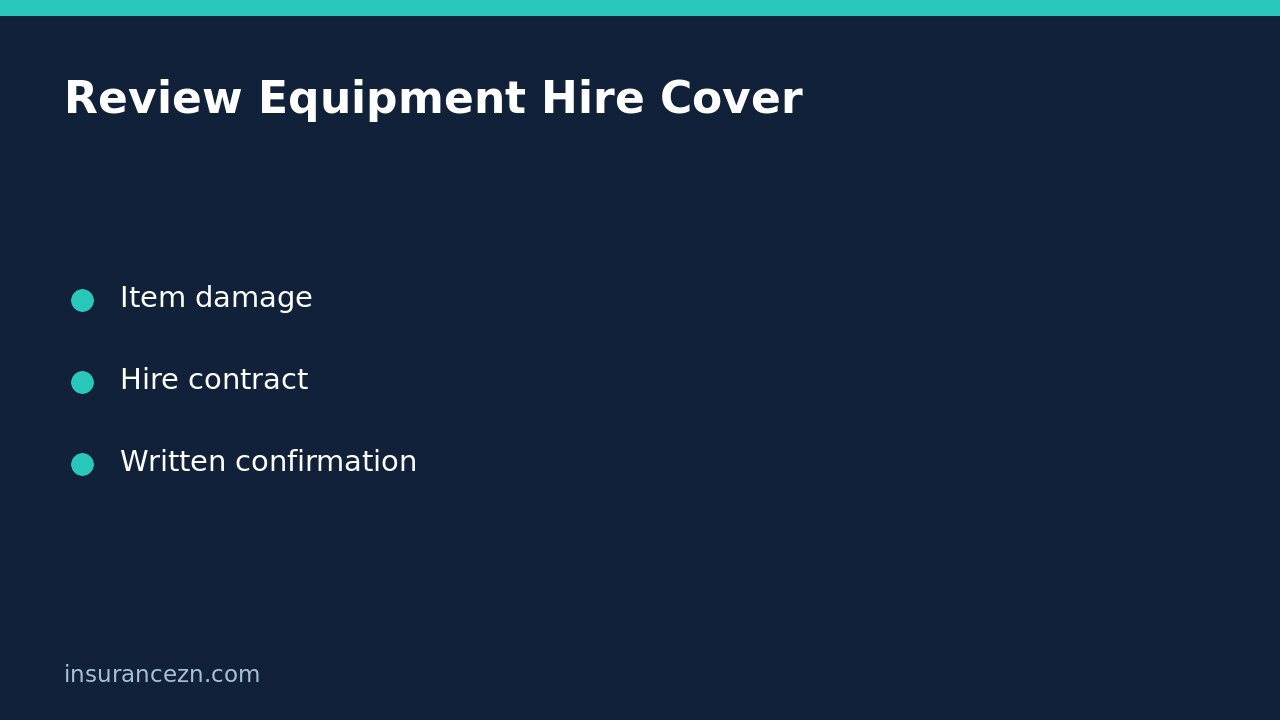
The first question is physical damage to the machine. The second is liability you may have to its owner. The third is extra responsibility accepted in the hire agreement, such as an obligation to insure the item or pay regardless of fault. One event can raise all three questions, but an answer about one does not resolve the others.
For a hypothetical example, the machine is damaged during unloading. Ask separately about repairing the machine, damage it causes to somebody else’s property, and the owner’s demand for additional rental charges. Do not put those amounts in one undifferentiated claim estimate. The insurer may need different facts and policy sections for each cost.
Read the care, custody or control wording
The public liability section of the Allianz Business Insurance Pack wording contains a care, custody or control exclusion with specified exceptions and conditions. Its existence matters more than the marketing shorthand that public liability covers damage to other people’s property. Property temporarily held by a business needs a closer check.
The Blue Zebra Steadfast business wording likewise addresses property in physical or legal control and refers to an additional benefit. These are product-specific structures, not identical promises. Ask your insurer to identify the applicable clause, any sublimit, the excess and whether the equipment’s type or use changes the answer. Do not assume the value on a hire invoice equals an insured amount.
Have the insurer review the contract promise itself
Both example wordings also contain contractual-liability provisions. Those provisions have exceptions, so it would be misleading to say that every written hire agreement destroys cover. It would be equally misleading to say that a standard agreement is automatically acceptable. Send the actual obligations for review, particularly an obligation to arrange insurance over the equipment or indemnify the owner without regard to fault.
A useful question is: does the policy respond to liability that would exist without the agreement, and what changes because I am accepting this specific clause? Where the answer depends on an incidental-contract definition or an endorsement, ask for the relevant wording in writing. Get legal advice about contractual exposure when needed; a broker’s cover explanation is not a substitute for reviewing the legal effect of a contract.
Do not treat a damage waiver as your whole insurance answer
If the hire business offers a waiver, request its written terms and ask what it changes in your agreement. List excluded events, any amount you remain responsible for, security obligations and the process after an incident. Avoid guessing from the name: the commercial arrangement must be read on its own terms.
Give the waiver document to your insurer alongside the contract. Ask how any existing cover interacts with that arrangement and whether you must notify either party promptly after damage. Do not cancel cover, decline a waiver or accept overlapping charges based on a general article. Make the decision only after the people responsible for the documents clarify the actual position.
Check transport, storage and return as separate stages
A workshop address does not describe a road journey, an unsecured trailer or a temporary worksite. For each stage, record the location, custodian and storage arrangement. Ask whether loading and unloading are addressed and whether the owner expects a particular transport method. Check the related discussion of business tools away from the premises for the distinction between an item and its journey.
At collection, make a dated condition record with the owner’s agreement where practical. Keep the inventory, accessories list and return instructions. At return, obtain a receipt or other confirmation of handover. These records help explain what happened; they do not themselves prove insurance cover or defeat an owner’s claim.
Use a clear go-or-pause checklist
- Identify the item, work, dates and every custody stage.
- Send the complete contract and any waiver to the insurer or broker.
- Obtain an answer for physical damage, legal liability and additional contractual promises separately.
- Record limits, excesses, exclusions and required changes or endorsements.
- Resolve unanswered questions before taking the equipment or accepting the obligation.
Keep the final response with the accepted agreement. If the hire dates, location, operator or equipment change, ask whether the earlier answer still applies. A documented review of the real arrangement is more useful than a broad certificate that never addressed the hire.