
Filing an insurance claim is often stressful enough without the added anxiety of worrying about being underpaid or dragged out in delays. Whether you are dealing with a property loss, an auto accident, or a liability issue, the claims process can feel like navigating a maze designed to minimize payout. However, understanding how insurers evaluate evidence and calculate settlements empowers policyholders to advocate effectively for themselves. The core principle remains consistent across most policies: full compensation is intended to restore you to your pre-loss financial position, not necessarily to maximize profit for the insurer. By preparing meticulously before submitting a claim and communicating strategically afterward, you can significantly increase the likelihood of receiving a fair settlement quickly. This guide outlines practical steps to ensure your claim is handled efficiently while protecting your rights under your specific policy terms.
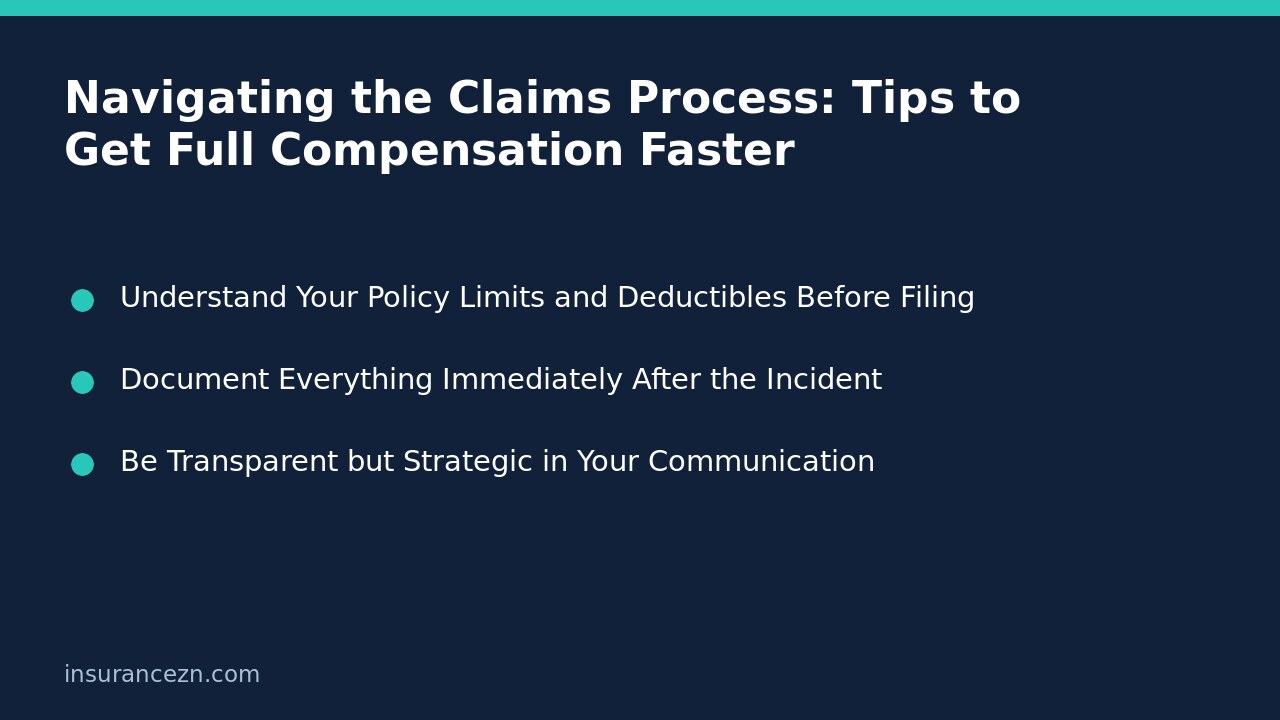
Understand Your Policy Limits and Deductibles Before Filing
The foundation of a successful claim lies in knowing exactly what your policy covers before you speak to an adjuster. Insurers often start with the minimum interpretation of coverage limits, so you must be ready to reference your specific declarations page. Common pitfalls include forgetting about “gap” coverage for vehicles or underestimating the cost to rebuild a home after storm damage. For instance, if your auto policy has comprehensive and collision coverage but you do not carry gap insurance, the insurer will only pay the actual cash value of the car, leaving you responsible for the difference between that value and what you owe on the loan.
Similarly, homeowners policies vary widely regarding water damage exclusions or coverage for high-value items like jewelry and art. If you have not scheduled these items separately with agreed-value coverage, your claim could be capped at a much lower “replacement cost” limit found in the general personal property section. Reviewing your policy documents early allows you to identify any missing endorsements that might be crucial for getting full compensation. Remember that terms, availability, and eligibility depend entirely on your specific insurer, jurisdiction, and the exact wording of your contract.
Document Everything Immediately After the Incident
One of the most critical steps in securing a faster payout is creating an indisputable paper trail immediately after the incident occurs. Do not wait for days or weeks to gather evidence; time can degrade memory and destroy physical proof. Start by taking comprehensive photographs and videos of all damage from multiple angles, including wide shots that show the extent of the loss and close-ups of specific details like cracks in a foundation or scratches on a bumper.
In addition to visual documentation, create a detailed written inventory of damaged or stolen items. For valuable possessions, having original receipts, credit card statements, or photos taken before the incident is essential. If an item no longer has its receipt, use online marketplaces to find comparable sales data to estimate value. In auto accidents, exchange contact information with all parties involved and note down license plate numbers, weather conditions, road surface types, and the precise location. If there are witnesses, obtain their names and contact details while the memory is fresh. This immediate action prevents insurers from later claiming that damage was pre-existing or that an item was not part of your inventory.
Be Transparent but Strategic in Your Communication
When you contact your insurance company, honesty is vital to avoid accusations of fraud, which can lead to claim denial. However, transparency does not mean volunteering unnecessary information that could be used against you. Stick strictly to the facts regarding the cause and extent of the damage. Avoid speculating on why an accident happened or admitting fault in a way that contradicts police reports or witness statements.
It is also important to avoid giving recorded statements to the other party’s insurance company before consulting your own adjuster or legal counsel if necessary. While you must cooperate with your own insurer, be cautious about how you frame your narrative when speaking to third parties. Keep all communication regarding your claim in writing whenever possible, such as via email or official portal messages, so there is a record of what was said and when. If a representative offers a low initial settlement figure based on incomplete information, politely request more time to review the documentation and gather additional evidence before signing any release forms.
Request a Detailed Inspection and Review the Settlement Offer
Once your claim is filed, an adjuster will likely schedule an inspection to assess the damage. This is your opportunity to ensure every damaged item or repair cost is accounted for. During the inspection, walk through the property or vehicle with the adjuster and point out any items you listed in your inventory. If the adjuster misses a damaged wall or a totaled electronic device, mention it immediately. After the inspection, the insurer will issue a settlement offer. Do not accept the first offer without reviewing the breakdown of costs.
Compare the insurer’s estimate against your own research for repair costs and replacement values. If you have contractor bids for home repairs or mechanic estimates for auto body work, present these to the adjuster as proof of reasonable market rates. Insurers may try to use “actual cash value” depreciation to lower payouts, but if you can prove that inflation or specific market conditions warrant a higher replacement cost, negotiate accordingly. If there is a dispute over the value of an item, be prepared to provide third-party appraisals or expert opinions.
Common Mistakes That Delay Payouts
Many policyholders inadvertently slow down their claims by making preventable errors. One frequent mistake is failing to report the claim promptly; most policies have strict deadlines for notification after a loss occurs. Another common error is accepting an early settlement before fully understanding the scope of repairs needed, which can leave you with out-of-pocket expenses later if additional damage surfaces. Failing to keep copies of all correspondence, medical records (in liability cases), or repair invoices is another significant risk. Additionally, do not sign any documents that release your claim rights until you are completely satisfied with the settlement amount and understand exactly what has been covered versus what remains your responsibility.
Real-World Example: The Kitchen Fire Scenario
Consider a scenario where a small kitchen fire damages cabinets, appliances, and the flooring. An insured who follows these tips would immediately photograph the charred cabinets, the melted appliance controls, and the water damage from firefighting efforts. They would list every item, noting that the refrigerator is over five years old but has been maintained well. When the adjuster arrives, they might initially offer a low figure based on the age of the fridge. However, because the homeowner provided maintenance records and comparable pricing for replacement units, the insurer agrees to replace it with a new model or pay the full replacement cost up to the policy limit. By providing contractor bids for cabinet repair versus full replacement, the homeowner ensures they get paid for the necessary work without overpaying for cosmetic fixes. This proactive approach often results in a faster closure and a settlement that truly covers the loss.
Checklist for a Smooth Claims Experience
To streamline the process, keep this checklist handy when filing your next claim:
* [ ] Review your policy declarations page for limits and deductibles.
* [ ] Take photos/videos of all damage from multiple angles.
* [ ] Create a written inventory with receipts or estimated values.
* [ ] Gather contact info for witnesses and other parties involved.
* [ ] Notify your insurer within the timeframe specified in your policy.
* [ ] Keep all communication records in writing.
* [ ] Obtain multiple repair estimates before accepting an offer.
* [ ] Read every settlement document carefully before signing.
Conclusion
Navigating the claims process requires preparation, patience, and a clear understanding of your rights. While insurers are obligated to pay valid claims, they operate on business models that prioritize efficiency and cost control, which can sometimes conflict with immediate full compensation for the insured. By documenting thoroughly, communicating strategically, and verifying settlement offers against market data, you position yourself to receive fair and timely payment. Always remember that insurance terms vary by jurisdiction and carrier; what applies in one state may differ in another. If a claim becomes excessively complicated or disputed, seeking guidance from a licensed public adjuster or legal professional may be the best step toward resolving the issue without unnecessary delays.