
Missing a health insurance premium payment can feel like a minor administrative oversight, but the consequences extend far beyond a simple late fee. In the United States, health insurance is typically purchased on a monthly basis, and policies are contracts that require ongoing financial commitment. When you fail to pay your bill by the due date, the status of your coverage changes immediately, often triggering a cascade of events that can leave you uninsured at a critical moment. The severity of these repercussions depends heavily on how quickly you miss the payment and whether you have an extended grace period attached to your specific plan. Understanding the timeline from missed payment to potential loss of coverage is essential for maintaining continuous protection against high medical costs.
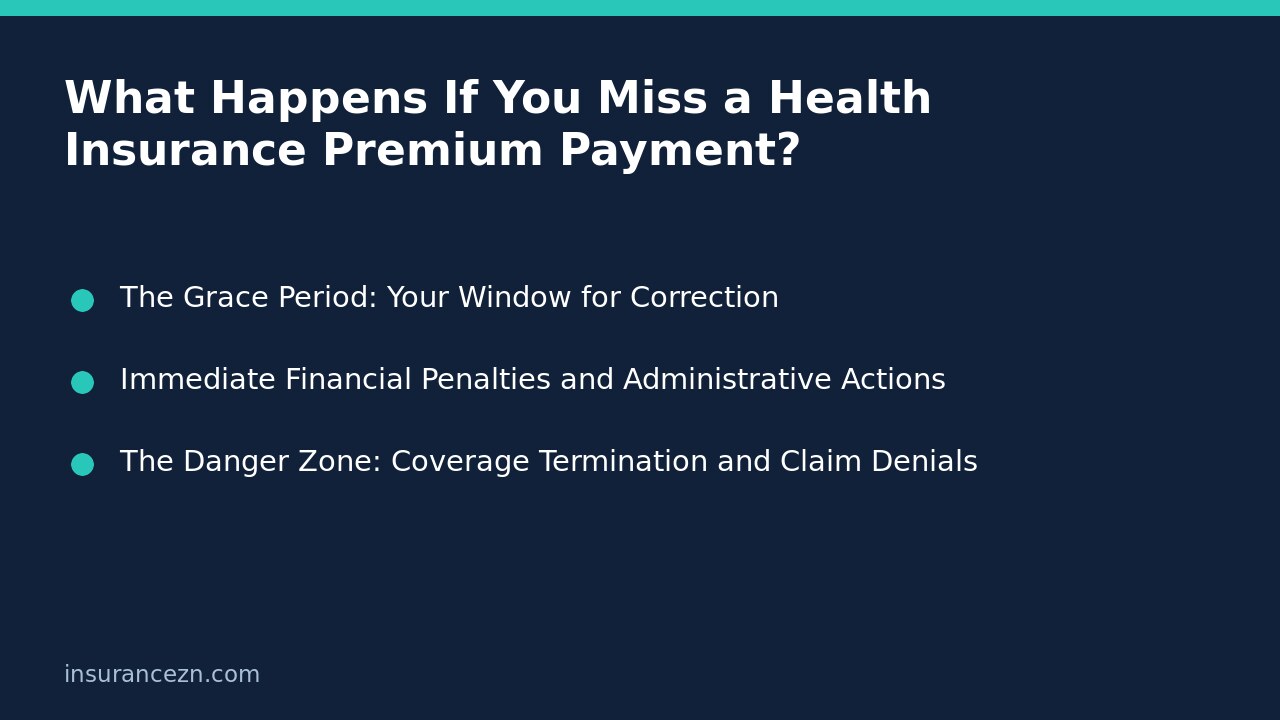
The Grace Period: Your Window for Correction
Most health insurance plans, particularly those sold through the Health Insurance Marketplace (ACA-compliant plans), include a built-in grace period. This is a specific timeframe—usually between 30 and 90 days after your premium due date—during which you can still make your payment without losing your coverage or facing a gap in benefits. For example, if your monthly premium is due on the 15th of each month and you pay on the 20th, you are likely still within the grace period. During this window, your insurance remains active, meaning any medical services received before the grace period ends will be covered as usual.
However, not all plans offer a grace period. Employer-sponsored health plans often operate under different rules set by the employer and the specific policy language. Some may have no grace period at all, meaning coverage stops immediately on the day after the due date if payment is not received. It is crucial to check your Summary of Benefits and Coverage (SBC) or contact your insurer directly to determine if your plan includes a grace period and exactly how many days it lasts. Assuming you have one when you do not can lead to unexpected denial of claims for emergency room visits or hospitalizations occurring during that “missing” month.
Immediate Financial Penalties and Administrative Actions
Once the grace period expires without payment, the insurance company’s first step is usually to assess financial penalties. These typically manifest as late fees added to your outstanding balance. While these fees might seem small in isolation, they can accumulate quickly if payments are made sporadically. Additionally, the insurer will likely send a formal notice of non-payment. This communication often outlines the exact amount owed, including any accrued interest or administrative costs, and sets a final deadline for payment before coverage is terminated.
At this stage, your account status may change to “inactive” or “suspended.” While you might still see provider statements coming in the mail, these bills will not be paid by the insurance company. Instead, they become your personal debt. If you fail to pay during the grace period and after the final notice, the insurer initiates the termination process. This is a formal cancellation of your policy due to non-payment, which is distinct from other reasons for loss of coverage such as moving or job loss. Termination for non-payment is permanent; you cannot simply “reactivate” the old policy number once it has been officially cancelled.
The Danger Zone: Coverage Termination and Claim Denials
The most significant risk associated with missing a payment is the abrupt end of your health coverage. Once the insurer terminates your policy, you are effectively uninsured. This creates a dangerous gap where any medical treatment incurs 100% out-of-pocket costs until new coverage is secured. Even if you had surgery or required emergency care during the grace period, once the policy is officially cancelled due to non-payment, the claims for those services may be denied retroactively depending on the specific state laws and contract terms.
Insurance companies are strict about enforcing payment obligations because premiums fund their ability to pay for your care. If a provider submits a claim while your status is marked as “non-paying,” the insurance company will deny it immediately. You will then receive a letter from the insurer stating that you have no active coverage, and they will forward the bill to your personal address. Ignoring these bills can lead to collection agency involvement, credit score damage, and potential legal action for unpaid medical debts, which are treated differently than other consumer debts in many jurisdictions.
Steps to Take If You Cannot Pay Immediately
If you find yourself unable to make a premium payment on time, panic is not the solution; proactive communication is. The first step is to contact your insurance provider’s member services department immediately. Explain your situation honestly. Many insurers have financial assistance programs or hardship funds designed to help members who face temporary financial difficulties due to job loss, medical emergencies, or unexpected expenses. They may offer a payment plan that allows you to pay the overdue balance in installments while keeping your coverage active, provided you stay current on future payments.
Another option is to explore government subsidies if you are enrolled in an ACA Marketplace plan. Changes in income can affect eligibility for premium tax credits, which might lower your monthly cost or help cover a missed payment. You must report these changes within 60 days of the event to avoid overpaying or underpaying. If you cannot afford the full amount owed right now, ask about a “grace period extension” or a temporary forbearance program, though these are not guaranteed and depend on the insurer’s specific policies.
Real-World Example: The Cost of Waiting Too Long
Consider the case of Maria, who missed her monthly premium due to an unexpected car repair expense. Her plan had a 30-day grace period. On day one of the late period, she went to the ER for severe abdominal pain. Because she was still within the grace period and had technically paid her previous month’s premium on time, the hospital billed her insurance company, which covered the deductible and co-insurance as normal. However, Maria waited until day 25 of the grace period to call the insurer to arrange a payment plan. Unfortunately, the system automatically processed her account as “non-paying” at midnight on day 30 without waiting for her verbal request.
When she returned from the hospital two days later to pick up prescriptions, the pharmacy discovered her coverage had lapsed. She was now responsible for the full cost of the emergency visit and the medication. Furthermore, because the policy was terminated, the insurer denied the claim for the ER visit entirely, citing that the termination date preceded the resolution of her account status in their internal ledger. This scenario highlights why waiting until the last minute to arrange payment is risky; administrative delays can turn a manageable financial slip-up into a catastrophic loss of coverage.
Checklist for Avoiding Coverage Gaps
To prevent missing a premium payment or minimizing the damage if it happens, follow this practical checklist:
* Set Up Auto-Pay: The most reliable method to avoid late payments is to enroll in automatic bank drafts or credit card payments through your insurer’s portal. This ensures funds are withdrawn on the due date regardless of your memory or cash flow fluctuations.
* Mark Your Calendar: If you do not use auto-pay, set a recurring reminder on your phone for three days before the due date. Use this time to verify that the payment went through successfully.
* Monitor Bank Statements: Regularly review your bank account or credit card statements to ensure the deduction occurred and the amount matches your premium bill exactly.
* Communicate Early: If you anticipate missing a payment, call the insurer at least 48 hours before the due date. Do not wait for a late notice letter; initiate the conversation yourself.
* Shop for Subsidies: If your income has dropped significantly, apply for marketplace subsidies immediately to reduce your premium burden before the next billing cycle.
Conclusion
Missing a health insurance premium payment is more than just a financial inconvenience; it is a direct threat to your access to essential medical care. The process from missed payment to coverage termination involves grace periods, late fees, and formal notices, but the ultimate result of non-payment is loss of protection. By understanding the rules regarding grace periods, communicating proactively with your insurer, and utilizing tools like auto-pay, you can safeguard your health coverage against administrative errors or temporary financial struggles. Always remember that in the realm of health insurance, continuity is key, and a single missed payment can unravel months of careful planning if not addressed immediately and correctly.