
A prescription outside the Pharmaceutical Benefits Scheme (PBS) does not automatically qualify for an extras benefit. Before budgeting for a rebate, ask your Australian health insurer to check the exact medicine and your specific policy. The advertised pharmaceuticals limit is not a promise to reimburse every private prescription up to that amount.
This is general information for Australian readers, not personal financial advice. Eligibility depends on your policy, applicable Product Disclosure Statement (PDS) or fund rules, exclusions and remaining benefits. Medication and treatment decisions belong with your prescriber and pharmacist; an insurance check should not delay necessary care.
Separate the prescription from the benefit decision
The Australian Government’s PrivateHealth.gov.au general treatments guide explains that pharmaceutical benefits usually require a patient contribution equivalent to the normal PBS payment before the insurer pays benefits. It also states that not all non-PBS pharmaceuticals are eligible and that insurers may decline particular items, such as compound pharmaceuticals.
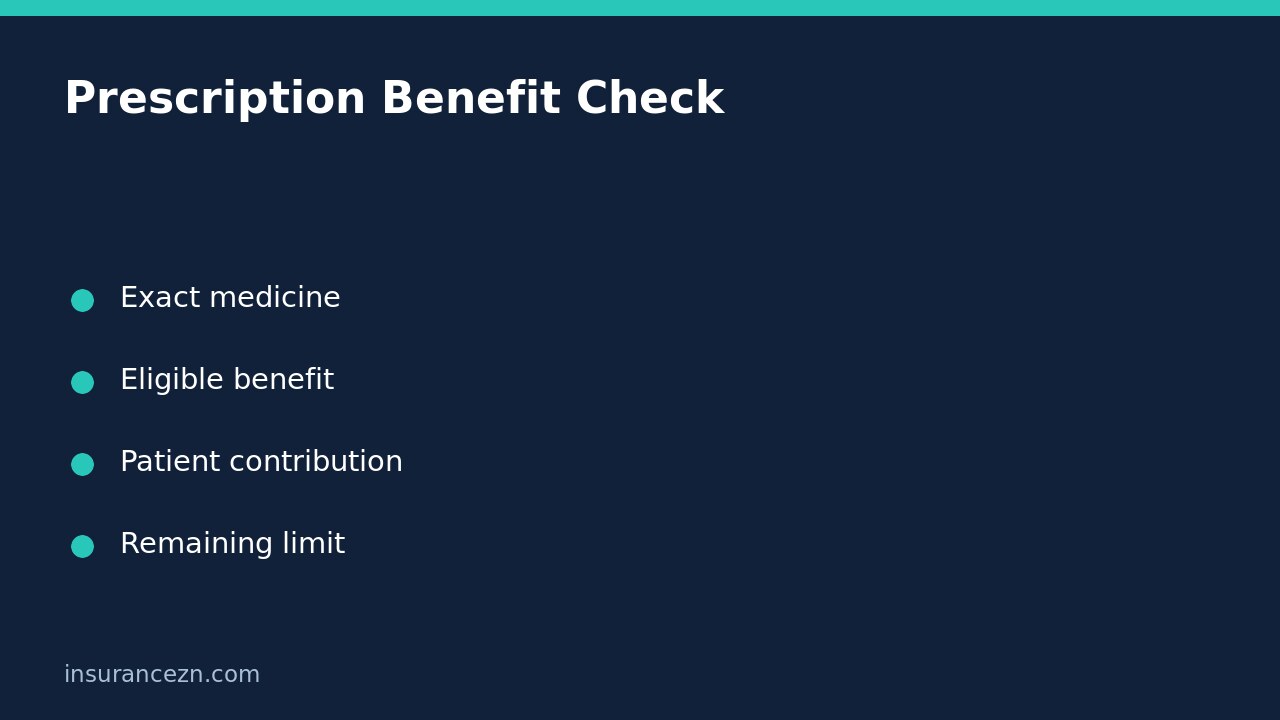
Those points create two separate checks: whether the exact item qualifies, and how much an eligible item would attract. A prescription from a qualified practitioner does not answer either insurance question by itself. Nor does the pharmacy description ‘private prescription’ establish that your extras policy covers it.
Collect enough detail for an accurate enquiry
Ask the pharmacy what information identifies the proposed supply. Useful details can include the medicine name, active ingredient, strength, form, quantity and expected charge. If the medicine is compounded, say so explicitly. Keep the prescriber’s instructions and ask the pharmacist to clarify any uncertainty about the supply or its PBS status for your circumstances.
Provide sensitive health information only through appropriate channels. You do not need to post a prescription publicly to obtain general guidance. When contacting the fund securely, have your membership and policy details ready so the response relates to your actual cover rather than a different product advertised online.
- Is this exact medicine and supply eligible under my current extras product?
- What patient contribution is deducted before a benefit is calculated?
- Is there a per-prescription or per-item benefit cap?
- How much of my relevant annual limit remains after earlier claims?
- Are waiting periods or other policy conditions still relevant?
- What invoice details and supporting documents will you require?
Turn the reply into a realistic cost estimate
Ask the fund for the expected benefit against the pharmacy’s actual quote, not just its headline annual allowance. Record any conditions attached to that estimate. The purchase price, patient contribution, per-item cap and remaining annual limit are different figures; adding them together does not produce a larger entitlement.
For a purely fictional budgeting example, suppose a pharmacy quotes $110 and the insurer confirms an estimated $25 benefit for that exact supply after applying its rules. The provisional cost to the patient is $85. These invented amounts are not current PBS contributions, quoted premiums or typical rebates. If the item is ineligible, the expected insurance benefit may instead be zero regardless of the unused annual allowance.
For repeated prescriptions, ask how the same rules apply to each future supply and when the relevant limits reset. Do not multiply one estimate across a whole year without considering remaining benefits and possible changes in price, cover or eligibility. A larger pack or changed strength may need a fresh check.
Keep a useful claim record
Before paying where practical, save the written eligibility response, its reference number and the policy name. Ask the pharmacy for an itemised receipt showing the details the insurer requires. Keep the payment evidence and any requested prescription documentation securely. Retain your own copy when submitting a claim.
If a rebate differs from the estimate, compare the paid item, supply date and quantity with what you asked about. Request an explanation identifying the rule or remaining limit applied. Correcting an administrative mismatch may help establish the facts, but it does not guarantee a benefit or override an exclusion.
Common questions before changing cover
Will a higher annual pharmaceuticals limit solve this? Not necessarily. An excluded medicine can remain excluded under a more expensive product. Obtain item-specific confirmation, then compare premiums, conditions and expected benefits rather than selecting a policy by its annual limit alone.
Can hospital cover pay instead? Do not assume that an outpatient pharmacy purchase becomes a hospital claim. Ask about the actual service and policy section; this article concerns extras pharmaceutical benefits, not medicines supplied during an insured admission.
What if my membership payment is unresolved? Check your health fund paid-to date after a failed direct debit as a separate administrative issue. A medicine’s eligibility does not establish that your membership is current. Resolve both questions without changing prescribed treatment solely to fit insurance benefits.