
Navigating the aftermath of an accident, theft, or property damage can be overwhelming. When you contact your insurance provider, your primary goal is often simply to get the process started and receive compensation quickly. However, a critical step that many policyholders overlook before hitting the “file” button on their claims portal—or before speaking to an adjuster—is a deep understanding of their deductible. This out-of-pocket amount is not just a number on your policy document; it is the financial threshold you must cross before insurance kicks in, and misunderstanding it can lead to denied claims, unnecessary premium hikes, or paying more than necessary for repairs.
The deductible acts as a shared risk mechanism between the insurer and the policyholder. By agreeing to cover a specific portion of the loss yourself, you help keep premiums lower. However, if you file a claim for an expense that is less than your deductible, you are essentially asking the insurance company to pay $0 while triggering a claim on your record. This can be financially detrimental in the long run. Understanding this dynamic before initiating the claims process allows you to make informed decisions about whether filing a claim is the smartest financial move or if paying out of pocket is a better strategy for minor issues.
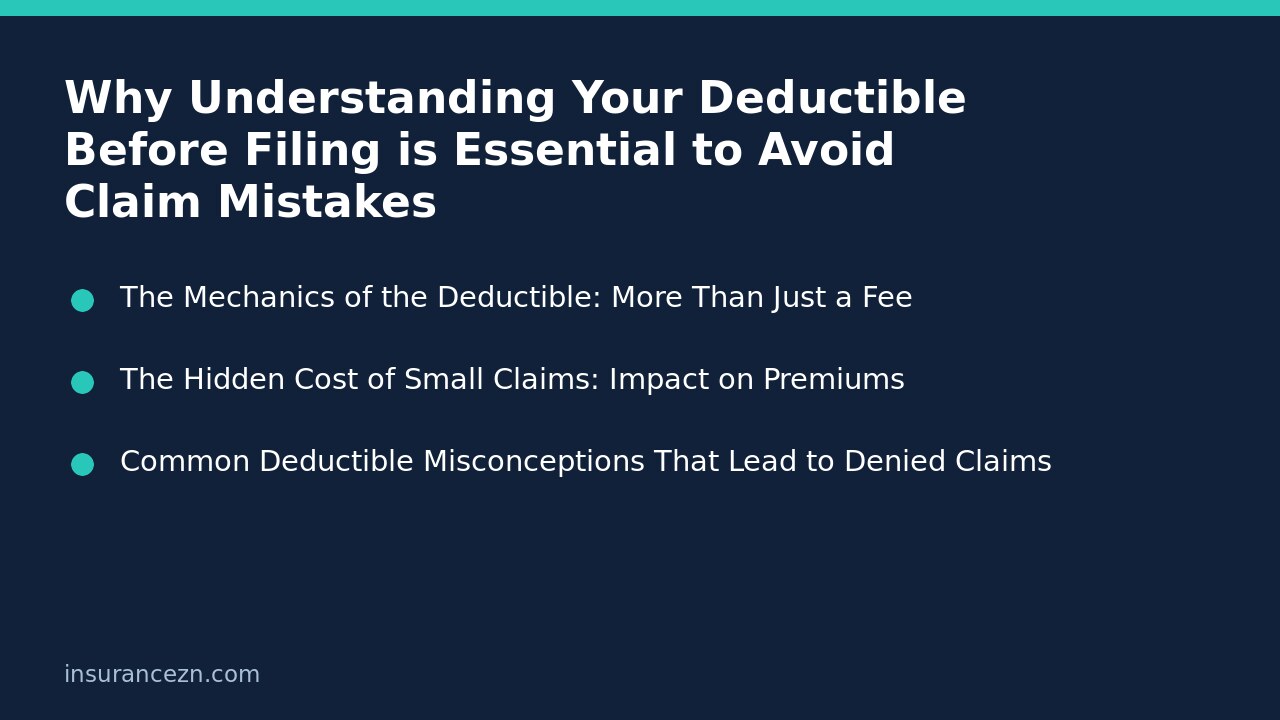
The Mechanics of the Deductible: More Than Just a Fee
To avoid common claim mistakes, one must first grasp how the deductible functions within an insurance policy. A deductible is the amount you agree to pay for covered losses before your insurance coverage applies. For example, if you have a comprehensive auto insurance policy with a $500 deductible and you suffer damage costing $1,200, your insurer will pay $700, and you are responsible for the remaining $500.
The confusion often arises when drivers or homeowners conflate the deductible with a flat fee paid to file a claim. It is not a filing fee; it is a cost-sharing arrangement applied only to claims that exceed that threshold. If your repair estimate comes in at $400 but your deductible is $500, you are responsible for the entire $400. Filing a claim in this scenario serves no financial benefit to you regarding the repair cost but does add a new incident to your claims history.
Insurance companies track every claim filed against your policy. Frequent filing, even for amounts below your deductible if the insurer agrees to pay a portion or offers a settlement, can signal higher risk to underwriters. This often results in increased premiums at renewal. Therefore, understanding whether a loss exceeds your deductible is the first logical step before engaging with an adjuster.
The Hidden Cost of Small Claims: Impact on Premiums
One of the most significant mistakes people make is assuming that filing a small claim is harmless because they will only pay their deductible anyway. While the immediate repair cost might be covered, the long-term impact on your insurance premiums can be substantial. Insurance algorithms often view any filed claim as an indicator of potential future risk.
When you file a claim, it is recorded in the industry database (such as CLUE for auto or similar databases for home). If you have multiple claims within a short period—often referred to as “frequent filers”—insurers may raise your rates by 20% to 50% or more. This rate increase can last for three to five years, depending on your jurisdiction and the specific insurer’s rules.
Consider a scenario where you have a minor fender bender causing $600 in damage. Your deductible is $1,000. You pay the $600 out of pocket without filing a claim. You avoid adding a mark to your claims history. Alternatively, if you file the claim and the insurer pays $400 (your $1,000 minus the $600 damage), you still have to pay your full $1,000 deductible eventually if the repair shop bills the insurer for the full amount after you settle, or you might find that the insurer denies the claim because it falls below their threshold. In either case, filing a small claim risks a premium hike that could cost you hundreds of dollars annually, far outweighing the benefit of the immediate payout.
Common Deductible Misconceptions That Lead to Denied Claims
Several misconceptions about deductibles frequently lead to denied claims or disputes with adjusters. One common error is believing that the deductible applies to every single claim in a way that allows you to file multiple times for small amounts. Most comprehensive policies have a per-occurrence deductible, meaning it resets after each distinct event. However, some policies include aggregate limits or specific clauses regarding frequent claims.
Another misconception involves collision versus comprehensive coverage. If you are involved in an accident caused by another driver who is uninsured or underinsured, your own uninsured motorist coverage might apply, but the mechanics of how your deductible applies can vary. In many jurisdictions, if the at-fault party cannot pay, you must pay your deductible first and then seek reimbursement from the uninsured motorist fund, which may have its own waiting period or limitations. Understanding these nuances prevents you from filing a claim expecting immediate coverage that might not materialize as expected.
Furthermore, failing to read the fine print regarding “loss of use” or rental car coverage can lead to unexpected out-of-pocket expenses. Some policies cover the cost of a rental vehicle while your car is being repaired for collision damage, but they may require you to meet your deductible first before that rental benefit kicks in. If you do not understand this layering of costs, you might be surprised by bills piling up after the initial claim approval.
When to File vs. When to Pay Out of Pocket: A Decision Framework
Before submitting a claim, run a quick mental calculation or use a checklist to determine if filing is necessary. Ask yourself these three questions:
1. Does the estimated repair cost exceed my deductible?
2. Will paying this amount out of pocket cause significant financial hardship?
3. Is there a risk that the damage will worsen if I do not get it repaired immediately?
If the answer to the first question is no, or if the answers to the second and third suggest that the cost of repairing the item yourself is less than the potential premium increase plus the deductible you must pay, filing a claim might be a mistake. For instance, if your windscreen is cracked but not shattered, many repair shops can fix it for under $200. If your car insurance deductible is $500, paying out of pocket is often the smarter financial decision to preserve your claims-free discount.
Conversely, if you have a major event like a hail storm that damages multiple vehicles in your driveway or a severe fire that affects your home’s structure, the costs will likely far exceed your deductible. In these cases, filing a claim is essential to manage the massive financial burden. Understanding the scale of the loss relative to your deductible helps you prioritize which claims are worth pursuing aggressively and which can be handled privately.
Practical Steps to Verify Your Deductible Before Filing
To ensure you are making an informed decision, take these practical steps before initiating a claim:
* Locate Your Policy Document: Review the declarations page where your specific deductible amounts for collision, comprehensive, home, and auto glass are listed. Note that some policies have different deductibles for different types of coverage (e.g., lower for glass, higher for collision).
* Contact Your Agent or Insurer: If the document is unclear, call your insurance agent. Ask specifically about how frequent claims affect your renewal rates in your specific state or province.
* Get Multiple Repair Estimates: Never rely on a single estimate from one shop. Obtain quotes from at least two reputable providers to get an accurate picture of the total cost.
* Calculate the True Cost: Add up the repair cost, potential rental car fees, and any deductible you must pay. Compare this sum against the estimated premium increase for the next three years.
Conclusion: Protecting Your Financial Future Through Informed Claims Decisions
Understanding your deductible before filing a claim is a fundamental aspect of responsible insurance management. It empowers you to make decisions that protect both your immediate repair needs and your long-term financial health. By recognizing that every claim filed impacts your premiums, you can avoid the trap of filing for minor incidents where paying out of pocket is more economical.
Remember that insurance terms, availability, eligibility, laws, and prices vary significantly by insurer, policy structure, and jurisdiction. The advice provided here is informational and does not constitute individualized financial or legal advice. Always verify your specific policy details with your insurance provider before making final decisions. Taking a moment to analyze the cost-benefit ratio of filing a claim can save you hundreds of dollars over the life of your policy, ensuring that you are using your coverage exactly as it was designed to be used: for significant, unforeseen losses rather than minor inconveniences.