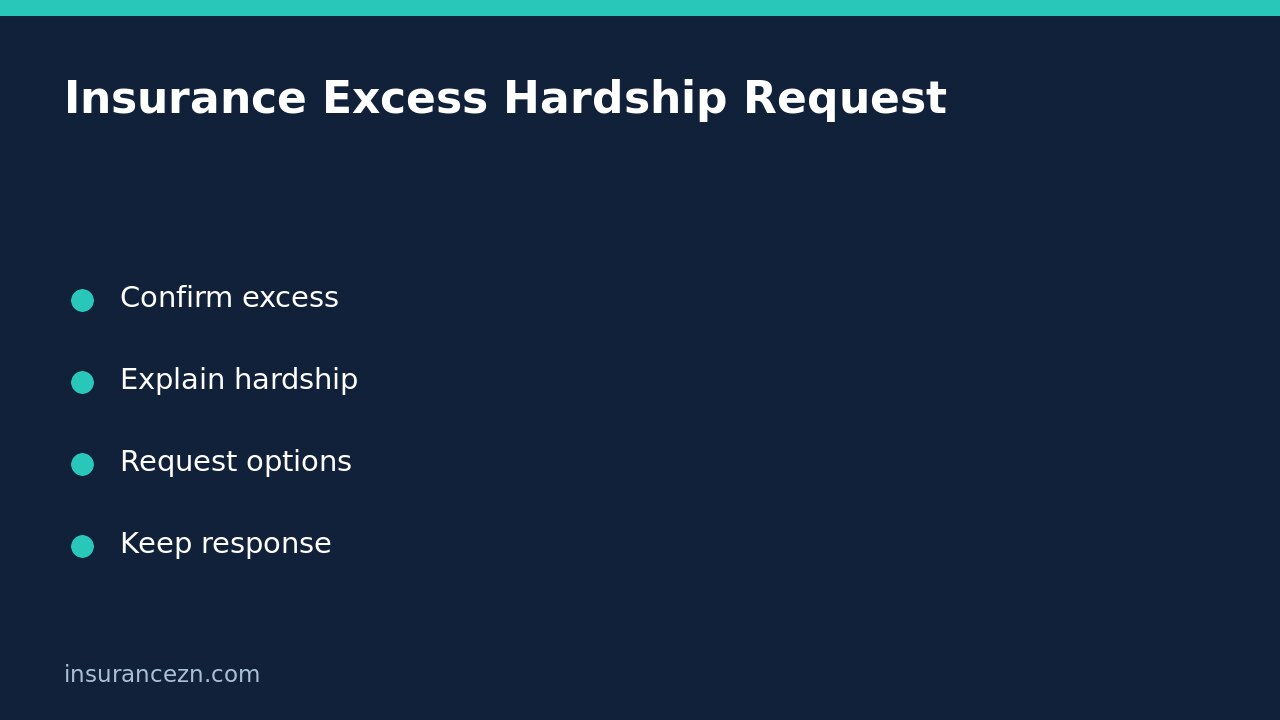

If you cannot afford an insurance excess, tell your insurer that you are experiencing financial hardship and ask about payment arrangements before assuming your claim cannot proceed. Ask whether instalments, extra time or deduction from a cash settlement are available for your circumstances. Get the arrangement and its effect on the claim confirmed in writing.
This is general information for Australian readers, not personal financial advice or legal advice. Cover, excesses and payment arrangements depend on your policy, Product Disclosure Statement (PDS), claim circumstances and applicable requirements. A hardship request does not establish that the underlying loss is covered.
First, identify exactly what payment is being requested
Find the claim number, current policy schedule and the message asking for payment. Record the amount, any stated due date, who is asking for it and how the amount was calculated. A repairer asking for an excess is not necessarily the same as the insurer making a formal decision about a payment arrangement.
Ask the insurer to identify each excess that it considers applicable. If an additional excess appears, request the relevant policy wording and explanation. Keep this question separate from your hardship request: you may need both an explanation of the amount and help with paying whatever amount is properly payable.
Prepare a short, relevant hardship summary
You do not need to turn your first email into a complete financial biography. Explain why the requested payment is currently unaffordable, whether the difficulty is temporary or continuing, and which response you are seeking. Ask what supporting information is genuinely needed and how to supply it securely.
- Include your claim and policy references, with a safe contact method.
- Summarise the difficulty in plain language, without inventing figures or promising payments you cannot sustain.
- Note any urgent consequence, such as an essential repair awaiting instructions.
- List information already supplied so you are not repeatedly sending sensitive records.
- Keep copies of your request, attachments and acknowledgement.
If documents contain unrelated account numbers or other household members’ information, ask whether redacted copies will be accepted. Use an insurer-confirmed secure channel rather than replying to an unexpected payment link.
Ask for an arrangement, not just a general callback
Legal Aid NSW’s October 2023 disaster-claims brochure explains that an insurer may allow an excess to be paid by instalments or taken from a final payment. Its sample hardship letter also asks for claim processing to continue. These are useful options to raise, not a promise that every insurer or settlement method will operate identically.
A practical request could say: “I am experiencing financial hardship and cannot currently pay the excess requested on this claim. Please consider an affordable payment arrangement or, if appropriate, deduction from the cash settlement. Tell me what information you require and confirm whether assessment can continue while you consider this request.”
If the claim will be repaired rather than cash-settled, ask specifically how any proposed arrangement would work with the repairer. Do not assume a deduction option exists when there is no cash payment to you.
Check the written response before relying on it
Make a simple record with four fields: proposed arrangement, amount and payment dates, effect on assessment or repair commencement, and contact person. Confirm whether an instalment proposal has actually been accepted rather than merely referred for review. Ask what happens if your circumstances change and whom you should contact before missing an agreed payment.
For example, a fictional household might ask to split an excess across several payments after an unexpected income interruption. That proposal is not an approved plan until the insurer confirms it. The household should not instruct a builder to start on the assumption that insurer funding has been authorised.
Keep any payment arrangement separate from acceptance of a settlement or release. If paperwork combines the two, ask for an explanation and consider independent advice before signing. For other claim records to request, see our home insurance claim report document checklist.
Quick questions before you send
Must I withdraw the claim because I cannot pay now? Do not assume that. Explain the hardship and ask what options apply to your claim.
Does hardship remove the excess? Not necessarily. Timing or collection arrangements are different from waiving an amount.
What if I receive no useful answer? Follow up with the original request attached, ask for the insurer’s hardship contact, and request its complaint process if the issue remains unresolved. Seek qualified help promptly if a deadline, housing risk or disputed settlement is involved.
Source and scope
Legal Aid NSW, Insurance claims after a disaster, October 2023, explains excess arrangements and provides a hardship-letter example. This article uses its practical record-keeping guidance, not its historical deadlines or service contact details as current nationwide rules.