
Before deciding whether a home insurance settlement addresses the damage, ask for the reports and scope of works behind it. A payment figure alone does not show which rooms, causes or repairs have been assessed. Build a short request list, track what arrives and mark the gaps before making a decision.
This checklist is for Australian householders managing a storm, flood or bushfire claim. It is a document-management method, not a promise that every document must be disclosed or that a report will support coverage.
1. Start with the decision you need to understand
Write down the immediate question: is the insurer deciding the cause of water damage, the extent of repairs or the amount of a proposed settlement? Then copy the claim number, property address and relevant event date into your request. Use the date recorded in your claim rather than guessing an exact time you cannot establish.
Find the policy schedule and the policy wording applying to that event, including the Product Disclosure Statement (PDS) and any relevant endorsements. Ask the insurer for copies if yours are missing. Reports describe evidence and technical conclusions; the policy determines how those matters relate to cover.
2. Ask for identifiable reports and their attachments
Legal Aid NSW’s Insurance claims after a disaster recommends asking for assessor and expert reports. Its examples include building, engineering, hydrology and hygiene reports. Use only the categories relevant to your damage rather than sending an indiscriminate list.
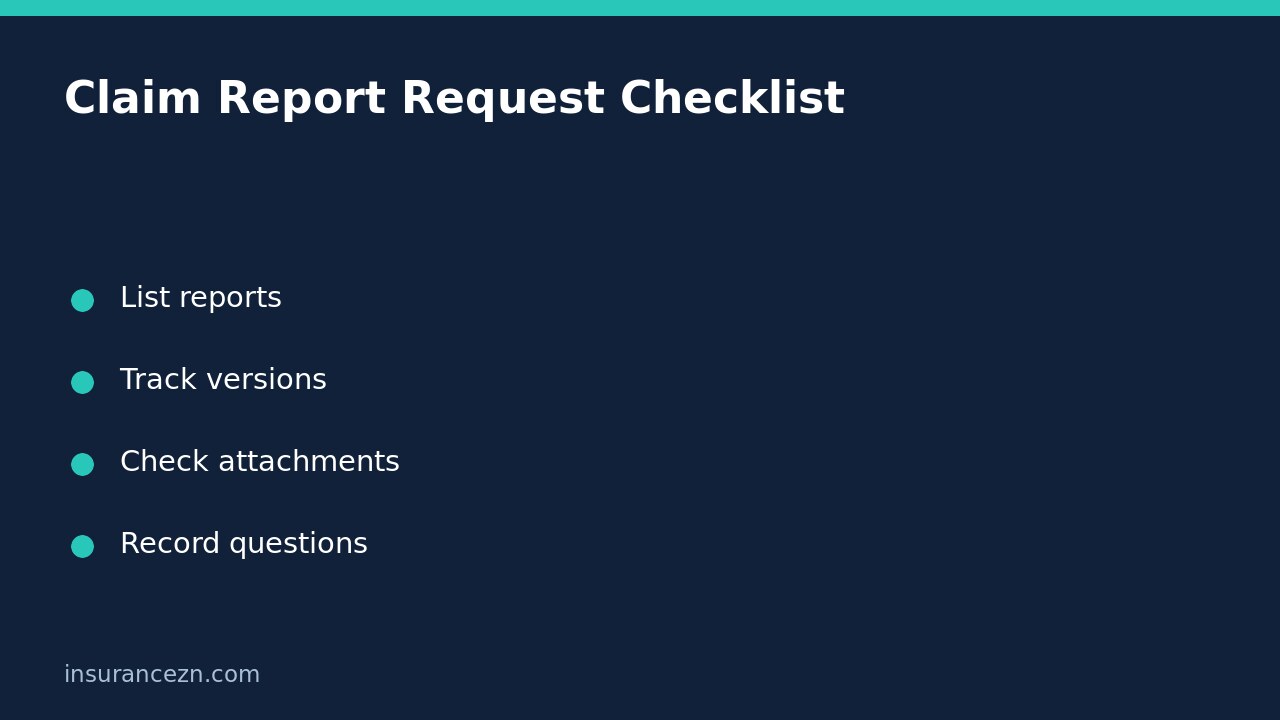
- Ask for the loss assessor or adjuster report relied on in your claim.
- Request the builder report and proposed scope of works where repairs are involved.
- Identify specialist reports mentioned in correspondence, such as an engineering assessment.
- Ask whether referenced photographs, plans, schedules and appendices are included.
- Request the calculations explaining a settlement figure if that is the decision under review.
The cited brochure is an October 2023 NSW publication. This article uses its practical document guidance, not its historical deadlines as a statement of current national requirements. Ask the insurer which current process and response timeframe apply to your request.
3. Use a request register instead of an attachment pile
Create a simple table with five columns: document requested, request date, date received, version or author, and outstanding question. Save original files unchanged, and use a separate working copy for notes. Keep emails linking a report to the insurer’s decision.
For example, suppose an email refers to a builder scope covering the kitchen and hallway, but the supplied PDF contains only the kitchen pages. Record the missing hallway section as a specific gap. Do not assume the hallway was rejected or included in the settlement just because it is absent from that attachment.
Use filenames such as builder-scope_received-2026-11-03_original.pdf. A received date is not necessarily the report date. Record both where available, and ask whether a later revision supersedes the earlier copy.
4. Send one focused written request
A practical message could say: “For claim [number], please provide the assessor report, builder scope and specialist reports relied on for the proposed settlement, including referenced attachments. Please identify any documents not yet available and confirm when you expect to respond. I am requesting information so I can understand the assessment.”
Adapt this wording to your situation. Do not describe the message as acceptance of an offer, authorisation for works or agreement with the findings. If the insurer cannot supply a requested item, ask for the reason in writing and what information it can provide instead. Avoid repeatedly sending the entire file when a precise missing-document request will do.
5. Reconcile the documents before deciding
Check that each report concerns the correct property and event. Match the rooms and damage in your evidence to the scope, and list unanswered questions separately from technical disagreements. A report can be factually accurate yet leave a coverage issue unresolved. Equally, a missing attachment does not by itself prove an incorrect decision.
If cleanup evidence is still being collected, see our insurance evidence and disposal checklist. Never enter an unsafe building or retain hazardous materials just to improve your document file.
Quick questions before closing the request
Have all reports arrived? Check your register against the insurer’s list, not just the number of email attachments. Should I challenge every difference? Start with differences that affect the assessment, and explain the supporting evidence. Must I settle immediately after receiving reports? Ask about any applicable offer deadline and seek advice if you feel pressured or do not understand the proposed agreement.
This is general information for Australian readers, not personal financial advice or legal advice. Cover, exclusions, limits and settlement options depend on your policy, PDS and circumstances. Seek qualified advice about a disputed decision or settlement before committing.