
Paying Australian health insurance premiums in advance does not automatically protect you from a later premium increase. Before making a large payment, ask whether your specific policy includes rate protection, what period it protects and what happens if you change or cancel cover. A payment receipt alone does not answer those questions.
This is general information for Australian readers, not personal financial advice. Read your policy documents, fund rules, Private Health Information Statement and any applicable PDS. Benefits, eligibility, waiting periods and payment arrangements depend on the actual product; a cheaper payment method does not improve the clinical services covered.
Separate advance payment, a discount and rate protection
These are three different arrangements. Advance payment means putting money towards future cover. A discount reduces the premium under stated conditions. Rate protection determines whether a later rate increase changes the cover purchased by your advance payment. A fund may offer one arrangement without offering all three.
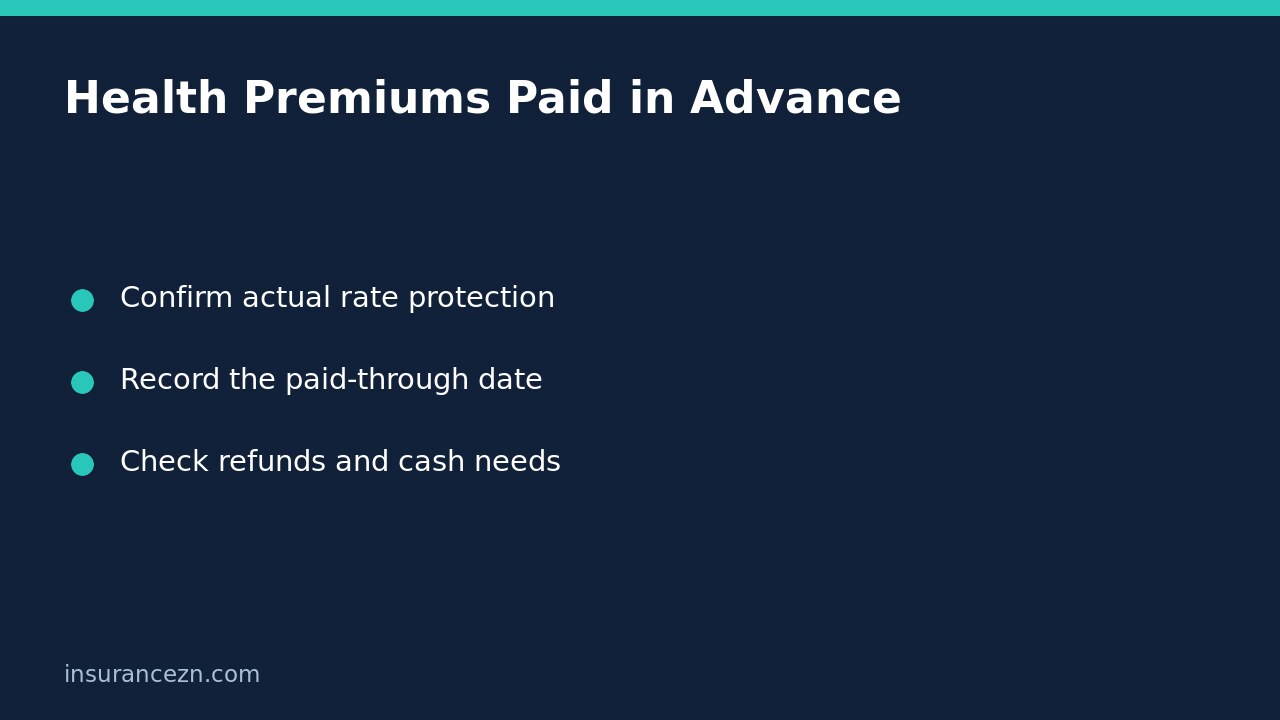
The government comparison website PrivateHealth.gov.au explains that some insurers offer rate protection when premiums are paid twelve months in advance. With that arrangement, increases during the protected prepaid period do not affect you until the period ends. Without rate protection, the insurer may require the difference or shorten the period covered by the payment.
That distinction is the reason to ask for written terms before transferring money. Do not assume a direct-debit discount, promotional offer or annual payment option carries a rate guarantee.
Get a dated quote with a clear end point
Ask the fund to quote for your exact membership, including the people covered and the selected hospital and extras products. Record the date of the quote and how long it remains valid. If you are close to a payment deadline, ask when the payment must be received or processed rather than assuming the day you initiate it will count.
- What total payment is required for the quoted period?
- What is the exact paid-through date after it is applied?
- Is the current rate protected for the whole prepaid period?
- Does the protection apply to both hospital and extras components?
- What changes to membership or cover would alter the arrangement?
Keep the response with your receipt and later membership statement. If the paid-through date differs from the quote, query the difference promptly rather than waiting until a claim or renewal.
Compare payment options without inventing savings
Use two written quotes for the same cover and people: the normal payment arrangement and the proposed advance payment. Ask the fund to identify any actual discount separately from rate protection. If the future premium has not been announced or confirmed for your membership, you cannot calculate a reliable saving from avoiding that increase.
For a practical comparison worksheet, list the upfront amount, confirmed covered dates, included discounts, protection terms and conditions for policy changes. Leave unknown future costs marked as unknown. This avoids presenting a possible saving as guaranteed.
Also consider whether committing the cash would leave you short for ordinary expenses, policy excesses or treatment gaps. There is no universal answer that paying annually is better. A payment arrangement that strains the household budget can be unsuitable even when its quoted premium is lower.
Check cancellation and policy-change treatment
PrivateHealth.gov.au says that, if you cancel a policy, advance contributions should be refunded, though a small administration charge may be deducted. Ask your fund how it calculates your refund, how you request it and when you can expect processing. Do not assume the full original payment will be returned after some cover has already been used.
Ask separately about adding a family member, changing products or transferring funds during the protected period. Request an explanation of how the prepaid credit and any protection would be treated. Paying ahead does not mean an upgraded benefit is available immediately; waiting-period rules still need checking.
If your reason for changing cover concerns a discount rather than advance payments, our article on age-based discounts when switching health insurance addresses another condition worth checking independently.
Final questions before authorising the payment
Will prepayment lock every policy term? Do not treat premium rate protection as a promise that benefits, provider arrangements or other terms can never change. Ask exactly what the protection covers and read later notices.
What if I cannot afford a large advance payment? Ask about available payment frequencies or discounts rather than borrowing simply to obtain an unverified saving. The official guidance also suggests contacting the fund about payment difficulties.
What evidence should I keep? Save the dated quote, written protection conditions, payment receipt and statement showing your paid-through date. Those documents make a later billing question much easier to resolve.