
Cheap extras cover for occupational therapy is only useful if its benefits apply to the appointments you actually need. Before comparing premiums, get a proposed appointment plan and ask each fund about those exact services. A prominent annual maximum is not a promise that every visit will receive a rebate or that your total treatment bill will be paid.
This is general information for Australian readers, not personal financial advice. Benefits depend on the policy, fund rules and your circumstances. Read the relevant policy documents, Private Health Information Statement and any applicable PDS before deciding.
Start with the appointment plan, not the insurance brochure
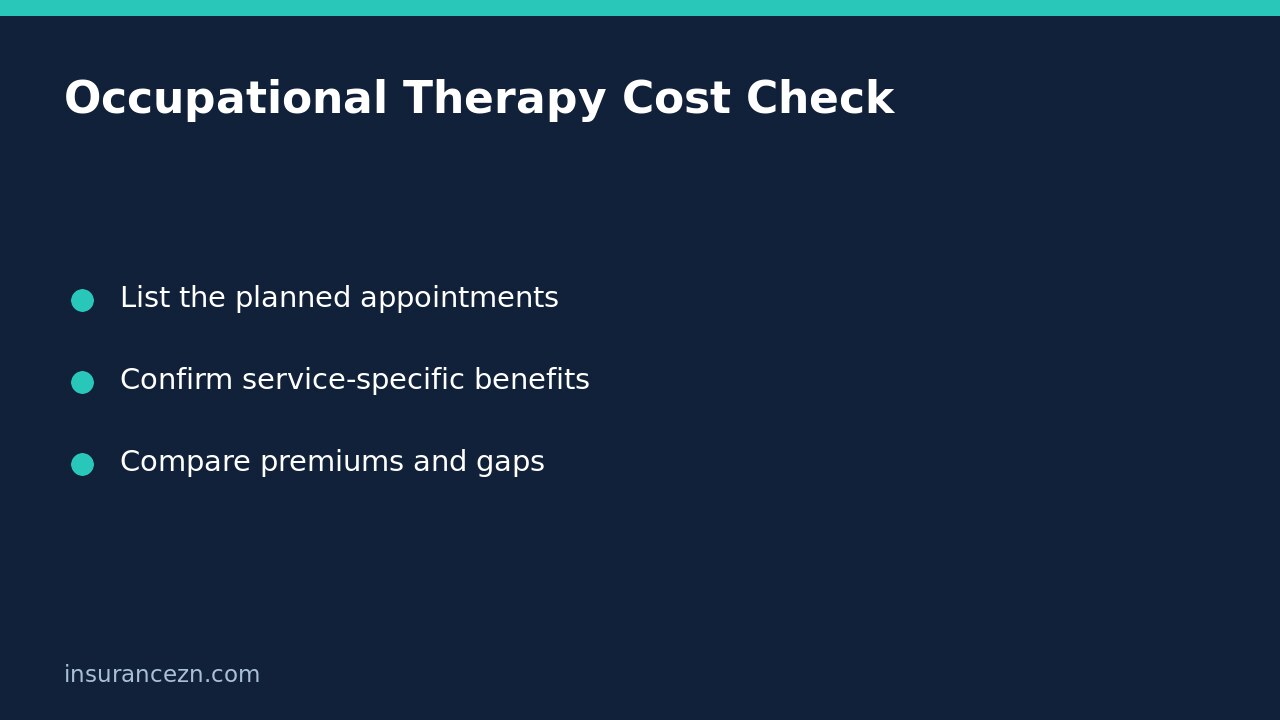
Ask the occupational therapist for an itemised estimate covering the services currently proposed. Record the type of appointment, fee, expected frequency, provider details and intended treatment dates. If the plan includes an assessment, follow-up appointments or separately charged reports, list them separately rather than treating the whole package as one insured service.
This does not mean every listed charge is claimable. It gives the fund something specific to assess. If travel, administration or another non-consultation charge appears on the estimate, ask whether it is eligible instead of assuming that recognition of the therapist makes every invoice line covered. Keep clinical decisions with your treating professional; an insurance comparison should not determine medically necessary care.
Check whether the policy includes the exact service
The government’s health-system overview explains that private insurance can cover many services outside Medicare, including occupational therapy, and that insurers commonly impose per-service and yearly limits. It does not establish that every extras policy includes occupational therapy.
Send each shortlisted fund the same appointment information. Ask which benefit category applies, whether the provider is recognised for that service, what waiting period applies and when you could first claim. If appointments are delivered in different ways or settings, include those details in your question. Obtain a benefit estimate for the actual service rather than accepting a broad statement that allied health is included.
Build a comparison that uses expected benefits
Use one row per planned appointment and one column per policy. Record the provider charge, quoted benefit and expected gap. Identify what remains uncertain. A blank benefit field should mean unconfirmed, not full reimbursement and not automatically zero.
For the same comparison period, place the total payable premiums beside the estimated appointment gaps. Include any change to package discounts if you are replacing combined hospital and extras cover. Do not compare a short introductory premium against another product’s full ongoing annual cost. If other extras services matter to you, include their realistic expected use without inventing appointments simply to make cover appear valuable.
Compare these figures with paying the planned fees yourself. This is a budgeting exercise, not a recommendation to cancel insurance: consider other benefits you value, uncertainty about future treatment and the consequences of changing cover. An annual maximum should cap a supported estimate, not substitute for one.
Ask how limits interact across the treatment period
PrivateHealth.gov.au’s cover explanation warns that general-treatment benefits may have per-service, annual or lifetime limits and that some services are not covered. Ask whether occupational therapy has its own limit or shares a pool with other services or family members. Do not assume either arrangement applies universally.
If the appointment plan extends over a benefit reset, ask which dates and rules the fund uses. Do not count a second full allowance without confirmation. For an existing membership, use the remaining available entitlement rather than the headline starting limit. For a proposed switch, ask how previously paid benefits and waiting-period history will affect your estimate.
A practical decision checklist
- Are the actual services and provider confirmed as eligible?
- Do quoted benefits distinguish assessments, visits and other charges?
- Are waiting periods and intended service dates compatible?
- Have shared limits and benefits already used been included?
- Are premiums compared over the same period, with discounts treated consistently?
- Have you saved the written estimate and the policy version used?
For another example of checking the unit behind an advertised benefit, see our orthotics extras benefit checklist. The relevant lesson is to confirm what the benefit actually purchases, not to assume occupational therapy follows orthotics rules.
Does a benefit estimate guarantee the eventual claim?
No. An estimate helps you compare, but the final assessment depends on the services delivered, submitted details and applicable membership rules. Recheck if the treatment plan, provider or policy changes. Keep the final invoice and assessment so that any difference can be explained using actual records rather than the brochure maximum.