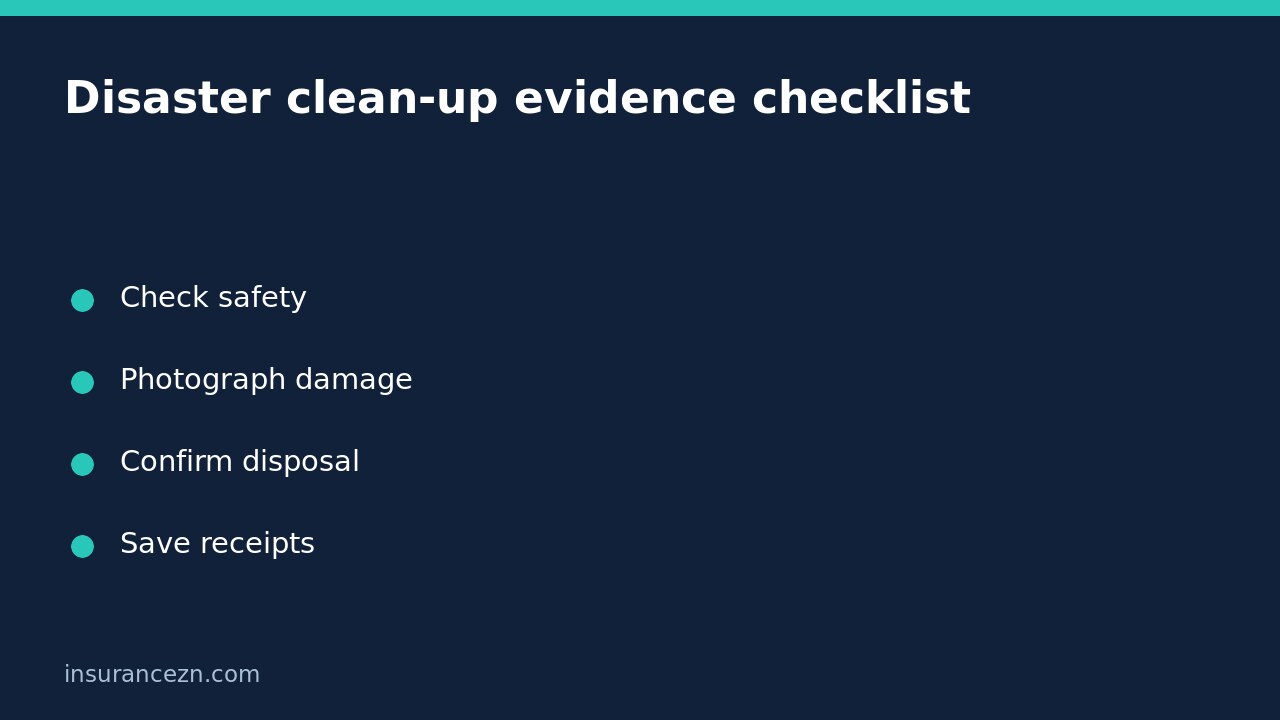

Before cleaning up after a storm, flood or bushfire, put safety first, contact your insurer about the proposed work and photograph the damage when it is safe. Keep a record of what must be removed, why it cannot stay and what the insurer says about inspection or disposal. You should not enter an unsafe building or keep dangerous waste just to protect an insurance claim.
This checklist is for Australian households organising evidence before clean-up, not instructions for removing hazardous materials. Emergency directions and qualified safety advice take priority over paperwork.
1. Separate urgent safety action from ordinary clean-up
A damaged home can contain electrical hazards, contaminated water, unstable surfaces or materials needing specialist handling. Do not switch equipment on to prove that it is damaged. Ask the appropriate emergency authority, utility or qualified professional about safe access and isolation where relevant.
Divide proposed work into three groups: immediate safety measures, temporary measures to prevent further damage, and non-urgent disposal or repairs. This helps explain the situation clearly when you contact the insurer. A wet sofa and a damaged switchboard are not the same kind of job, even if both appear on the contents list.
2. Ask what evidence the insurer needs before removal
Legal Aid NSW advises speaking to the insurer before clean-up and taking photographs before and after it. Its Insurance claims after a disaster booklet also recommends checking whether the policy covers professional debris removal. The linked edition is dated October 2023; this article uses its practical record-keeping guidance, not its historical deadlines as current legal advice.
Send a short message identifying your claim number, the affected rooms and the work proposed. Ask whether an assessor must inspect anything first, which photographs or documents are needed, whether particular items should be retained safely, and whether approval is required before engaging a contractor. Request written confirmation where possible.
If something must be removed urgently, explain the hazard, who advised removal and why waiting is unsafe. Record attempted contact as well as any reply. Do not assume this automatically establishes coverage or permission for every expense.
3. Build a room-by-room evidence folder
Where access is safe, take overview photographs first, followed by closer images showing the damage and identifying details. Photograph a model label only if reaching it is safe. Avoid moving hazardous objects just to get a better picture. Preserve the original image files and make a separate backup.
- Give each affected item a simple reference, such as Kitchen-01.
- Record its description, location and observed damage without guessing a technical cause.
- Link the reference to photographs and any available purchase or ownership records.
- Record the disposal date, method, contractor and any insurer instruction.
- Mark unknown details as unknown instead of inventing a purchase date or value.
Keep this proportionate. Ask what information is actually necessary for your claim, particularly if the insurer is considering a total-loss settlement. Do not assume every household must reconstruct every lost possession before any claim can progress.
4. Use a permission and cost log
Imagine a storm has damaged carpet and household furniture. Your log might say: “Bedroom carpet photographed; insurer asked whether inspection is required; removal quote requested; no approval received yet.” This is an organisational example, not a promised claims outcome.
When a response arrives, add the date, staff member, reference number, exact approved work and any spending restriction. A note saying “clean-up discussed” is less useful than a written instruction identifying the rooms and tasks. Keep contractor quotes, invoices, waste receipts and before-and-after pictures together. Separate emergency make-safe work from permanent restoration so costs can be considered clearly.
The same evidence-indexing principle appears in our car accident claim evidence register, although home disaster claims require their own policy and safety checks.
Quick questions before anything leaves the property
Must I keep damaged items indefinitely? Do not assume so. Ask what must be available for inspection and how to document items that cannot safely remain.
Does a disposal approval mean the replacement is covered? Not necessarily. Ask separately about the claimed item, policy limits, excess and any relevant exclusion.
What should I send after clean-up? Provide the requested evidence, an indexed list of removed items, supporting invoices and a concise explanation of urgent action. Keep your own copies and ask what remains outstanding.
This is general information for Australian readers, not personal financial advice or legal advice. Cover, evidence requirements and reimbursement depend on your policy, Product Disclosure Statement (PDS), limits, exclusions and the circumstances. Seek individual advice if a claim or safety issue is disputed.