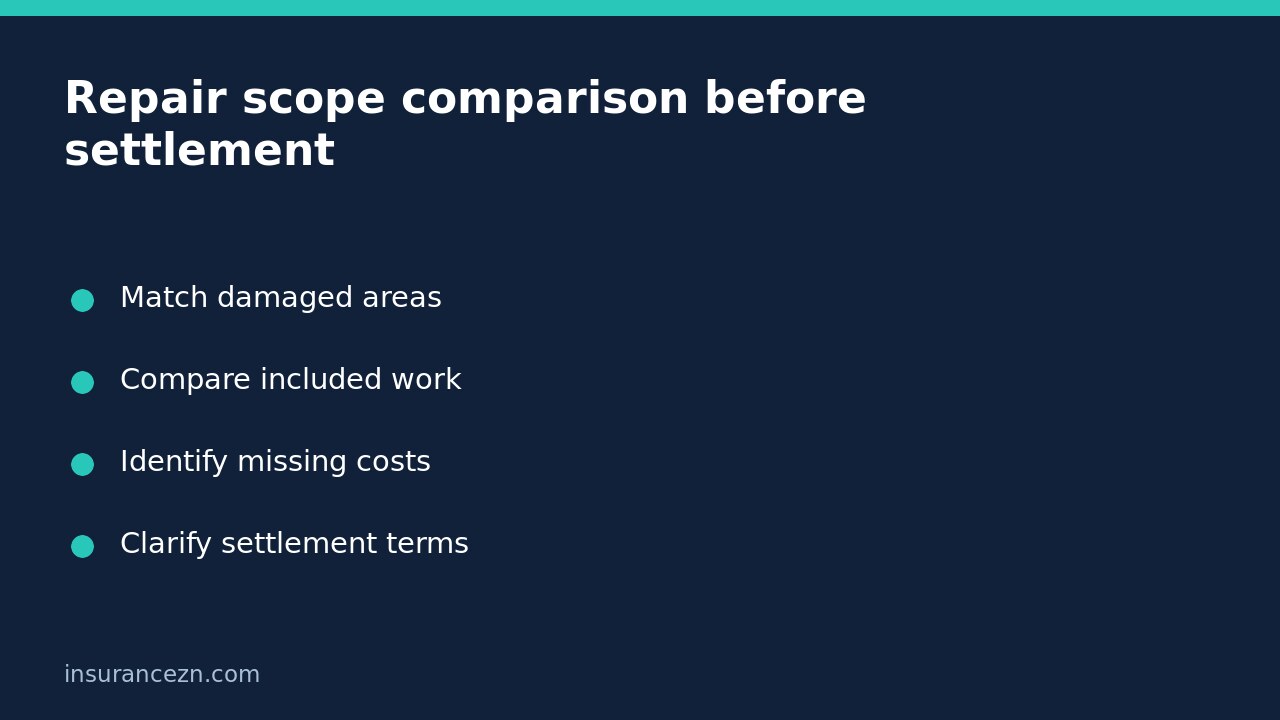

Do not compare a home insurance cash settlement with a builder quote using only the total at the bottom. First check whether both prices cover the same rooms, damage, materials and supporting work. A cheaper figure may describe a smaller job rather than a realistic way to complete the repairs you need.
For Australian homeowners, the practical task is to identify exactly what the insurer proposes to settle, compare it with an independent repair scope and resolve important gaps before accepting. A higher quote does not automatically prove the insurer must pay more, but a clearly documented mismatch gives you something concrete to question.
Why unlike repair scopes create misleading comparisons
A scope of works describes the tasks being priced. One document might include removing damaged wall linings, drying, replacement and painting, while another mentions replacement only. A price comparison is incomplete until you know whether preparation and finishing are included elsewhere or have been left out.
Other differences can concern quantities, material specifications, access, debris removal or work needed before repairs can start. Do not assume an omitted line means deliberate underpayment. Ask for clarification: the cost may be included under another heading, treated as a separate benefit or disputed on coverage grounds.
Build a simple line-by-line comparison
Use one row for each damaged area or repair task. Give every row five fields: the observed damage, the insurer scope reference, the independent quote reference, the difference and the question awaiting an answer. Keep photographs and report references alongside the relevant row rather than sending an unexplained bundle of attachments.
- Location and quantity: Do the documents identify the same rooms and extent of work?
- Preparation: Who removes damaged material and makes the area ready?
- Replacement: Are materials and proposed repair methods described clearly?
- Completion: Is finishing, testing or cleaning included where relevant?
- Price basis: Do totals include the same taxes, allowances and exclusions?
Do not diagnose hidden structural damage yourself. If technical opinions differ, identify the disagreement and ask what expert evidence supports each approach. A qualified independent professional may be needed to assess repair adequacy.
A worked example without invented claim outcomes
Suppose the insurer scope lists replacement plasterboard in a storm-damaged bedroom. Your builder quote also lists removal, drying checks and repainting. Mark each difference as a question, not an established entitlement: “Is removal included in another line? What drying assessment supports reinstatement? Which surfaces are included in the painting allowance?”
Next ask the builder to explain why the additional work is necessary and whether it relates to the insured damage. Send that explanation with the comparison. This is more useful than saying only that the offer is too low. Keep pre-existing maintenance, elective upgrades and unrelated work separate so they do not obscure the claimed repair costs.
Check uncertainty and settlement responsibilities
Legal Aid NSW recommends checking independent builder quotes and their scopes before accepting a disaster cash settlement. Its October 2023 booklet also discusses contingency costs and the responsibilities involved in arranging repairs yourself. Use this older publication for practical questions; confirm current legal rights and any applicable deadlines separately.
Ask each builder what is provisional, what has not been inspected and what would trigger a variation. A contingency allowance is not proof that an insurer owes that amount. It is a prompt to understand uncertainty before taking on a repair contract.
Also request the settlement calculation and written terms. Clarify whether the offer settles all or part of the claim, how any temporary accommodation is treated, what happens if further damage emerges and whether the damaged property can remain insured. Do not assume accepting cash preserves every repair-related right or that an insurer will supervise your chosen builder.
Final checklist before responding to the offer
- Obtain the relevant reports, scope and calculation.
- Compare independent quotes on a like-for-like basis where possible.
- Ask for written answers to material omissions or differences.
- Understand who manages repairs and bears variation risk.
- Get individual advice before signing unclear settlement terms.
Should I accept now and argue about missing work later? Do not rely on that approach. Settlement can affect your ability to seek further payment; obtain advice about the particular wording first. Our insurance claim cash settlement checklist provides a broader set of questions to organise alongside the scope comparison.
This is general information for Australian readers, not personal financial advice or legal advice. Your policy, Product Disclosure Statement (PDS), exclusions, limits and settlement agreement determine the applicable cover and obligations. NSW legal assistance material is not a statement of identical procedures in every state or territory.