
A provider being recognised by your health insurer does not mean every class they offer is covered. Before paying for antenatal or postnatal classes in Australia, check both the exact course and the person or organisation delivering it against your own extras policy. A booking confirmation is not a benefit confirmation.
This is general information for Australian readers, not personal financial advice. Benefits depend on your policy, applicable PDS or fund rules, exclusions, waiting periods and insurer assessment. This checklist does not recommend a particular course, provider or policy.
What does recognised provider mean for this booking?
The Australian Government consumer information site PrivateHealth.gov.au explains general treatments, including antenatal and postnatal classes. It states that not all general treatment policies cover these classes and that, where they do, the provider must be registered with the insurer for benefits to be paid.
The practical distinction is between being qualified to deliver a service and meeting a particular fund’s benefit conditions. Do not assume that professional qualifications, a hospital venue, a Medicare provider number or recognition by another fund establishes eligibility with your insurer. Ask which identifier your fund actually needs to verify this booking.
Collect course details before asking about cover
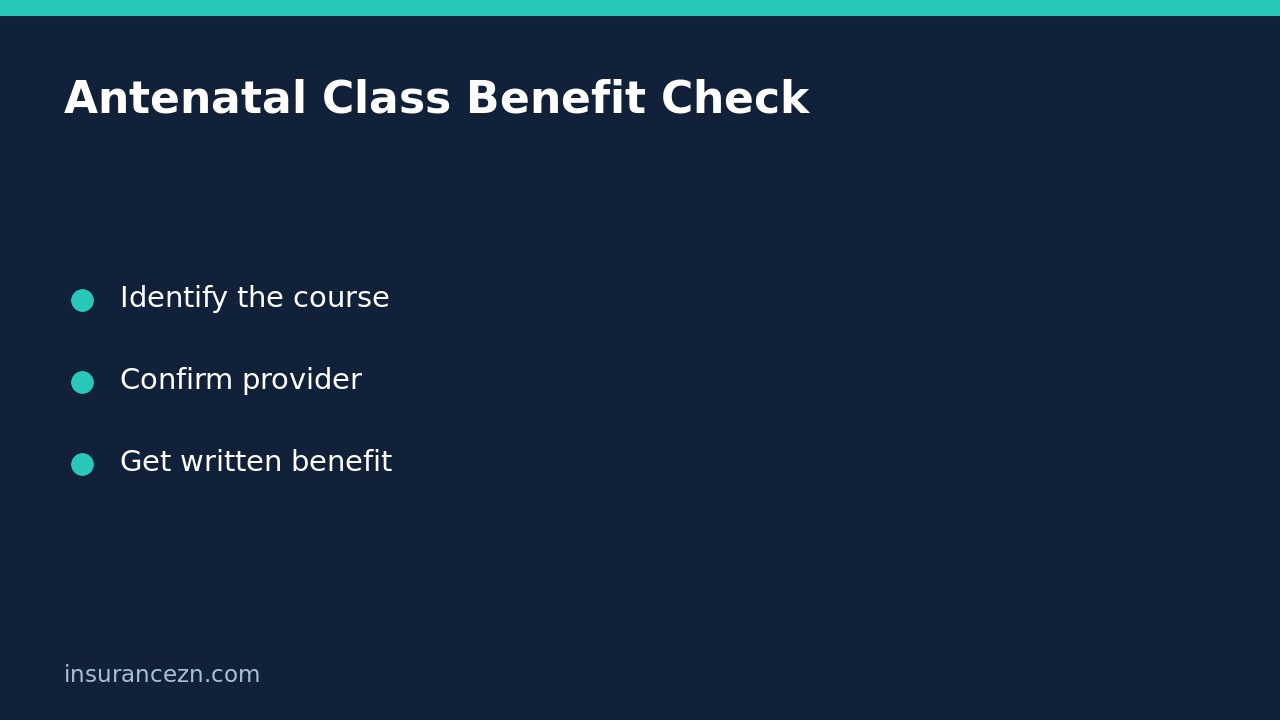
Request a written description from the organiser. Give the insurer enough detail to distinguish a pregnancy education course from a different service, such as an individual consultation or a general wellbeing workshop. Avoid asking only whether you have pregnancy cover: hospital maternity benefits and extras class benefits are different enquiries.
- Record the advertised course name and the topics included.
- Identify the billing organisation and the actual practitioner or facilitator.
- Request any provider identifier used for health-fund claims.
- Specify the delivery location, online or in-person format, and attendance dates.
- Ask whether the price includes a partner, materials, multiple sessions or other services.
- Request a sample itemised invoice or a description of the receipt supplied after attendance.
If the organiser cannot provide an identifier, ask the insurer how it verifies eligibility instead. Do not invent a service code or ask for a receipt to describe something different from what was supplied.
Ask the insurer two separate questions
First ask: is this named provider recognised for this service on the proposed dates? Then ask: does my current policy pay a benefit for this exact course, delivered in this format? A yes to the first question does not answer the second.
Follow with questions about completed waiting periods, the eligible member, any attendance evidence, available limits and the estimated benefit. Ask whether the quoted limit is shared with other services. Clarify whether one course fee covering two people produces one eligible expense or is treated differently under the fund rules. These are checks to make, not universal restrictions applying to every fund.
Keep a written response identifying your product, the course and the expected benefit. If the insurer gives only a broad explanation, ask which details remain unconfirmed. An estimate may still depend on the final invoice and claim assessment; record that limitation rather than treating the estimate as unconditional approval.
A practical booking example
Suppose a couple wants a weekend birth-preparation course advertised as eligible for health-fund rebates. The organiser supplies the company name, but the fund asks for the individual facilitator’s details. Instead of paying on the strength of the advertisement, the couple obtains those details and sends the actual course outline to the fund.
The useful outcome is a clear answer about that booking, not an argument over whether the advertisement was generally true. If recognition or benefits remain unclear, ask about refundable booking terms or alternative eligible courses. Do not assume you can recover a non-refundable fee if the claim is declined. Choose education and care with your treating team; insurance eligibility is not a clinical quality assessment.
Final checklist and common questions
Does hospital pregnancy cover pay for the class? Not automatically. Ask specifically about the extras or other benefit section that would pay this expense, rather than inferring cover from a hospital treatment category.
Is the policy summary enough? A summary can identify a possible benefit, but may not explain provider recognition or every course condition. Our guide to checking unclear services in a policy statement explains why full details matter.
What should I save? Keep the course description, provider details, insurer response, cancellation terms, payment receipt and any attendance evidence. Before paying, check that the booked provider and format match the information the insurer reviewed. If anything changes, confirm eligibility again rather than relying on an answer about a different booking.