
If a fire, storm or flood has destroyed your insurance papers, contact the insurer and ask for the policy details and documents relevant to the date of the damage. Do not assume the policy booklet currently advertised online is the wording that applies to your claim. A small, organised policy pack helps you ask precise questions without delaying your first notification while you search for every document.
This is general information for Australian readers, not personal financial advice or legal advice. Cover depends on your policy, Product Disclosure Statement (PDS), schedule, endorsements, limits, exclusions and claim circumstances.
Start with identification, not a perfect file
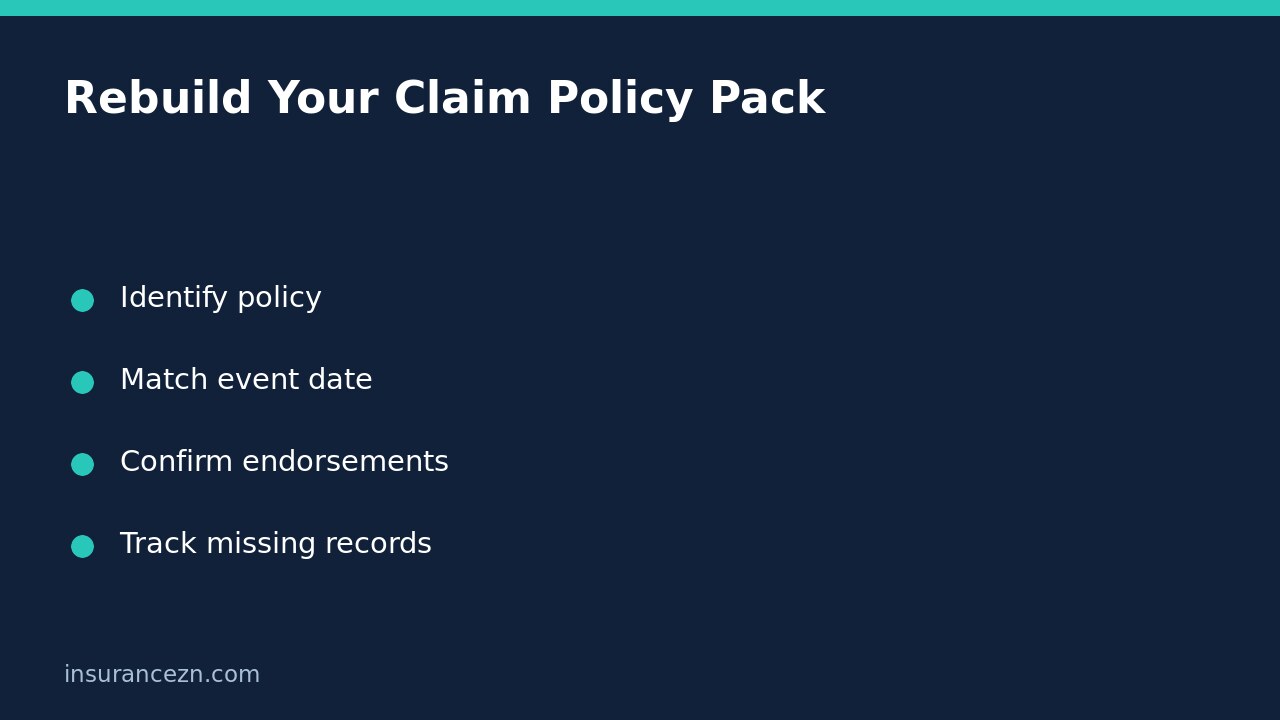
Record the insured address, policyholder names, approximate event date and any policy or claim number you already have. Explain if records were lost in the disaster. Use the insurer’s verified contact channel and ask how to establish your identity safely if normal documents are unavailable. Do not email identity documents to an unverified address supplied in an unexpected message.
Legal Aid NSW’s Insurance claims after a disaster explains that your insurer can supply your policy and policy details. Its October 2023 edition supports that practical starting point; this checklist does not rely on its historical service contacts or assert that its older deadlines remain current.
Request the records that explain this particular contract
Ask the insurer which documents together describe your cover at the time of the event. A useful request list is:
- The schedule or certificate showing the insured property, policy period and sums insured.
- The applicable PDS or policy wording, identified by edition or document code.
- Any supplementary wording, endorsements or special conditions relevant to that period.
- Records of changes made during the period, such as an amended occupancy description or changed contents sum.
- Any cancellation, renewal or payment-status notice that the insurer says affects the claim.
These are practical document requests, not a promise that every requested record must exist or that every document has the same legal effect. Ask the insurer to explain a missing item rather than trying to construct contractual priority yourself.
Match dates and identities before interpreting exclusions
Create a simple register with columns for document name, policy number, insured address, effective period, edition and unresolved question. Compare the event date with the stated policy period. If the damage developed over time or the event date is uncertain, describe what you observed accurately and ask how the insurer will assess the timing; do not invent a single convenient date.
For example, a household might receive a current renewal schedule while claiming for storm damage that happened before renewal. Keep both schedules, label the periods clearly and request confirmation of which wording and endorsements the assessor is using. A newer document is not automatically evidence of the earlier cover.
Check unit numbers, outbuildings and whether the document relates to building, contents or another product. A correct street address alone does not establish that every damaged item or structure is insured.
Turn gaps into specific written questions
Instead of asking only whether you are covered, point to the mismatch: the schedule refers to an endorsement that was not supplied, the booklet edition differs from the one named in correspondence, or the address is incomplete. Ask the insurer to identify the relevant document and explain its effect on the claim.
A suggested message is: Please supply the documents you consider applicable to claim [number] for damage reported on [date], including the relevant schedule, policy wording and endorsements. Please identify their effective dates and explain any missing or conflicting references. This request is for information and does not indicate acceptance of a settlement.
Save the reply and attachments together, retaining the original filenames. Record telephone discussions with the date and contact name, then ask for important clarifications in writing. Request a secure upload method if documents contain personal information.
Keep policy records separate from damage evidence
Your contract pack explains the proposed cover; photographs, reports and invoices help establish what happened and what it may cost. Neither replaces the other. Once you have the policy pack, use the claim report request checklist to organise the assessment material separately. Avoid repeatedly sending a large mixed attachment bundle when the insurer has requested one specific missing record.
Quick questions before you close the folder
Can I lodge before I recover everything? Notify the insurer and explain what is missing; ask what information is needed next rather than waiting for a perfect archive.
Does receiving the booklet confirm payment? No. It provides wording to review, not an accepted claim or guaranteed benefit.
What if the insurer relies on a document I cannot locate? Ask for that document and its relevance in writing. If the issue remains unresolved, consider independent advice before accepting a decision or settlement. A document request does not itself extend a legal or contractual deadline.