
A builder mentioned in an insurance assessment is not necessarily working under an insurer-managed repair contract. If you accept cash and hire the builder yourself, responsibility for organising the work and addressing problems may change. Before agreeing to the settlement or signing a building contract, establish who is engaging the builder, what the insurer is settling and who will respond if repairs are defective.
This is general information for Australian readers, not personal financial advice or legal advice. Your policy, PDS, settlement wording and building contract determine the position in your circumstances. State and territory building requirements differ; obtain independent advice about a proposed contract or release.
The mistake: treating an introduction as a repair guarantee
An assessor may obtain a quote from a builder. That does not, by itself, tell you who will sign the eventual contract, authorise variations or accept responsibility for defects. The same business could supply an assessment quote and later offer a separate private contract to the homeowner.
Legal Aid NSW’s Insurance claims after a disaster, October 2023 edition, distinguishes insurer-arranged repairs from repairs you organise after cash settlement. It advises checking builder licensing and insurance and obtaining independent legal advice about the contract. This article uses that stable practical distinction, not the publication’s older deadlines or historical service contacts.
First establish what the settlement would end
Ask whether the offer settles the whole claim, a particular repair component or something narrower. Request written confirmation of any continuing involvement by the insurer. Avoid assuming the insurer will supervise a privately arranged project because an earlier assessor remains copied into emails.
Read the release alongside the settlement letter and repair scope. Identify the areas being settled and ask how later-discovered damage is treated. A phrase such as approved builder does not answer whether your insurer will be responsible for that builder’s future performance under a contract you sign.
Do not rely on a verbal reassurance that contradicts the paperwork. Ask for clarification before acceptance and seek independent legal advice if the settlement boundary remains uncertain. Asking a question does not automatically extend an offer deadline.
Make a responsibility map before signing
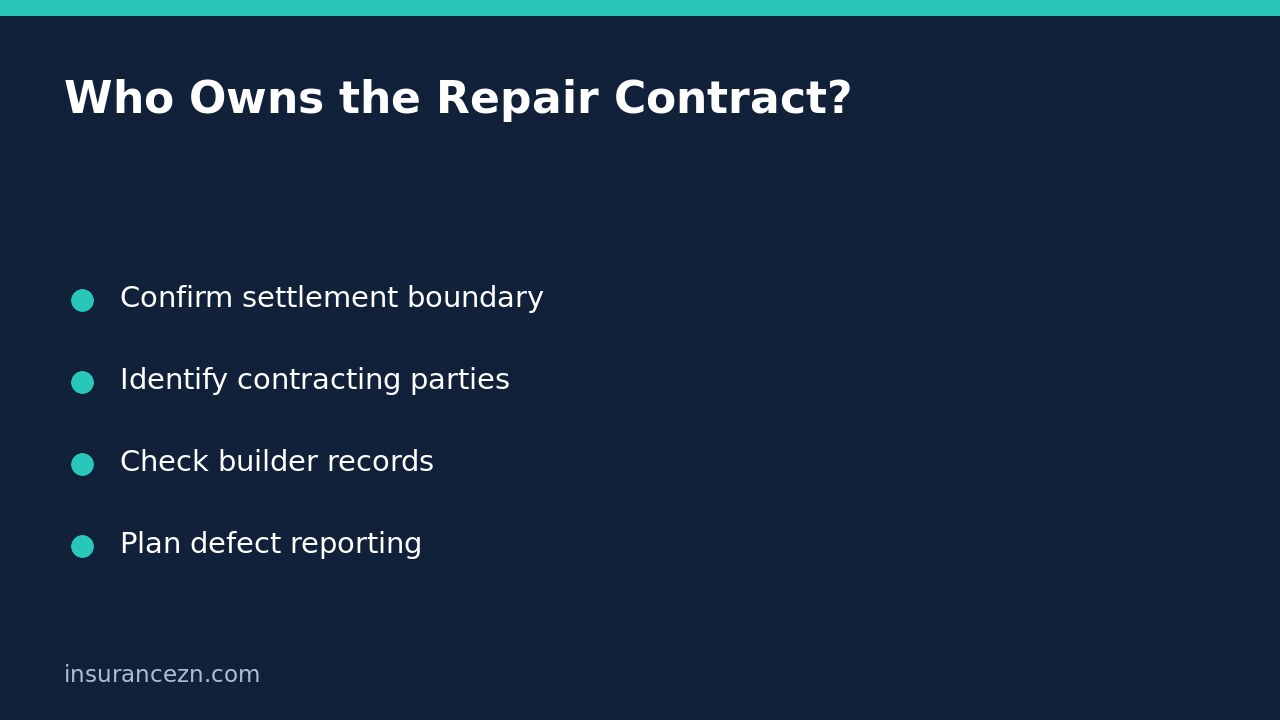
Write down the actual parties and decision-makers for the proposed arrangement:
- Contract: Who signs with the building business, and what is its full legal name?
- Scope: Which dated drawing, specification and quote form part of the agreement?
- Payments: Who receives deposits and progress payments, and who checks the stated milestones?
- Variations: Who can authorise additional work and agree to additional costs?
- Defects: To whom should you report incomplete or unsatisfactory work, and what process applies?
For example, imagine the insurer pays an agreed amount and the homeowner signs a separate contract with the quoting builder. If a doorway is left unfinished, the homeowner needs the private contract’s reporting and rectification process; merely forwarding a photograph to the original assessor may not start that process. This fictional example illustrates an administrative risk, not a prediction of legal liability.
Check the builder, not just the quotation
Ask for the building business’s legal identity, licence details and evidence of relevant insurance. Verify these through the appropriate regulator or issuer where possible, checking that names and work categories match the proposed job. Ask what insurance or warranty arrangements are required for that type and value of work in your jurisdiction; do not assume one national rule covers every project.
An insurance certificate is not a guarantee that every loss is covered or that you personally can claim under it. Clarify what it relates to and ask a qualified adviser about gaps. Also check that subcontracting, access arrangements and any owner responsibilities are addressed in the contract.
Keep variations and defects traceable
Keep the signed contract, scope version, photographs, invoices, payment records and written change approvals together. If new damage appears, record it safely and ask who must assess and authorise the next step. Do not instruct extra permanent work on the assumption that the insurer will reimburse it later.
Distinguish a request for investigation from authorising repairs. Ask the builder to state proposed work, price and timing clearly before you approve a variation. If there is an immediate safety concern, follow emergency advice rather than entering an unsafe area to collect evidence.
Scope completeness remains important, but it is a separate question from contractual responsibility. The repair-quote scope comparison checklist helps you compare what is being priced before you decide who will undertake it.
Short FAQ before you accept cash
Does an insurer referral make repairs insurer-managed? Do not assume so. Ask who is appointing and contracting with the builder, and get the arrangement confirmed.
Does a private contract remove every possible right against the insurer? That cannot be decided from the label alone. The settlement, policy and circumstances need review; seek advice rather than assuming either full protection or no rights.
What if nobody will clarify responsibility? Preserve the documents and obtain independent advice before signing or authorising permanent work. A clear responsibility map is more useful than an informal promise that everyone will sort it out later.