
An example benefit on a Private Health Information Statement (PHIS) is not a promise that your next extras appointment will attract that payment. It helps compare products, but a useful personal budget needs the actual service details and confirmation from your fund. Before subtracting an advertised benefit from a provider quote, check that the example and your intended claim describe the same thing.
This is general information for Australian readers, not personal financial advice. Benefits depend on your policy, applicable PDS or fund rules, exclusions, waiting periods and available limits. A benefit estimate is not a guarantee of claim payment.
Read the example as a comparison, not an approval
The Australian Government’s PHIS guide explains that general-treatment statements show covered services, waiting periods, benefit limits and example benefits. It also warns readers not to rely on the dollar amounts for premiums or benefits: these are provided for comparison, and actual benefits depend on the policy and treatment circumstances.
That distinction matters when the statement uses a broad label such as physiotherapy or dental. A product summary cannot establish that your particular appointment, provider and proposed service qualify. Nor does the presence of a benefit establish that your membership has completed any relevant waiting period.
Turn the provider quote into a precise enquiry
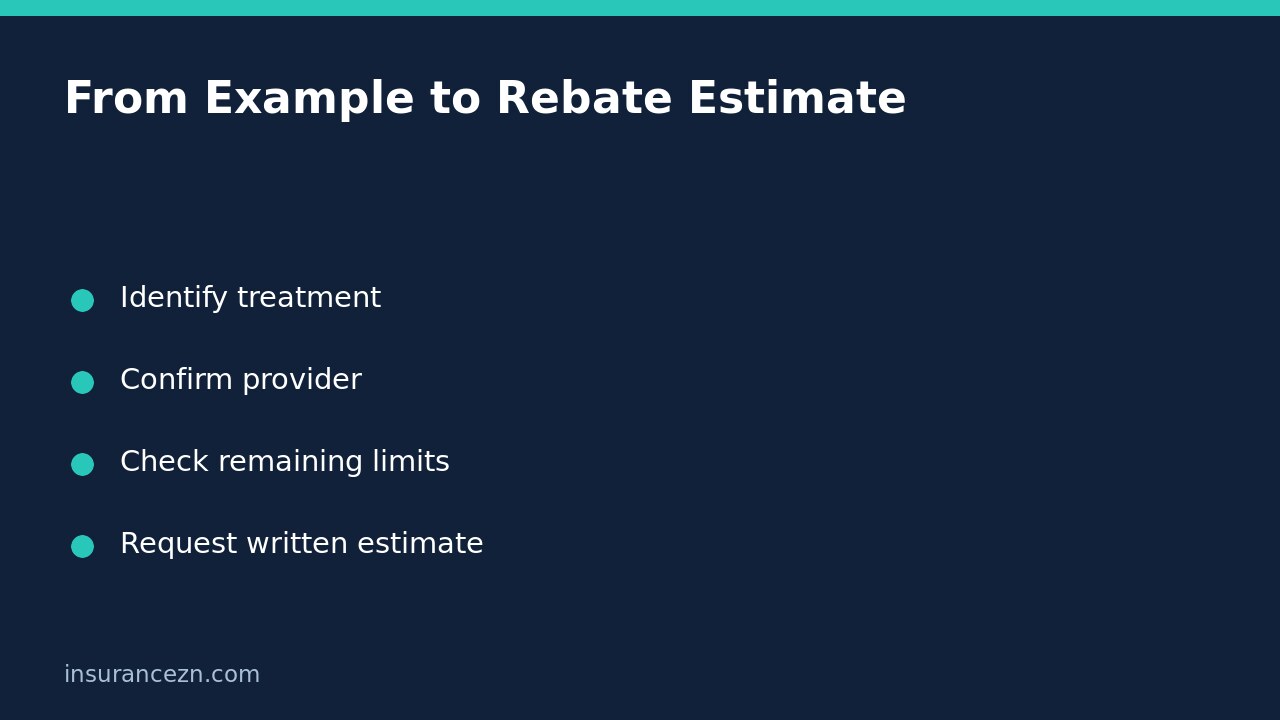
Ask the provider for an itemised written quote before requesting a rebate estimate. Include the proposed service description, relevant claiming item codes where available, provider identity, location, expected treatment date and charge. If several appointments are planned, identify them separately rather than presenting one unexplained package price.
For example, imagine that you plan an initial physiotherapy consultation followed by review visits. An example for one consultation does not establish the benefit for every appointment in that course. Ask the fund to assess the actual consultation types. If the provider cannot give an exact code yet, explain that limitation and ask what information is needed for a more reliable estimate.
Do not change or postpone clinically necessary care simply to fit an insurance calculation. Your clinician should advise on treatment and timing; the fund should explain the insurance position.
Check the membership conditions behind the number
Send the quote through the fund’s approved secure channel and request answers to these practical questions:
- Is this exact service eligible under my current product and membership?
- Is the named provider recognised for this service?
- Have the relevant waiting periods been completed for the proposed date?
- What benefit calculation applies to each quoted item?
- What individual, shared or overall limits could reduce that benefit?
- How much of the relevant allowance remains after earlier claims?
- Which assumptions could change the estimate when the claim is processed?
These are checks for your particular fund, not a claim that every policy has identical restrictions. Ask the fund to identify the applicable wording where its terminology differs from the statement. The government guide explicitly notes that terms on a PHIS may differ from the insurer’s own language.
Use a quote-to-benefit worksheet
Create one row per proposed service with columns for provider charge, fund-estimated benefit, conditions still unresolved and expected personal payment. Mark an unanswered benefit as unknown, not zero or the example amount. Keep an estimate reference and the date of the enquiry beside each row.
If the fund gives a benefit range rather than a definite figure, ask what would determine the final amount. A remaining annual limit is a ceiling, not money automatically payable for that appointment. Likewise, a provider’s statement that health funds offer rebates is not confirmation for your product.
Save the source quote and the response together. If the appointment changes, the provider changes or another claim uses the allowance first, update the worksheet rather than relying on the old estimate. This makes later bill checking much easier without suggesting that your records override the policy.
Quick questions before you book
Can I use the example benefit if the fund has not replied? Treat it as a comparison reference only. If you must decide before receiving confirmation, recognise that the personal cost remains uncertain.
Does a listed service mean the full invoice is covered? No. Eligibility, the benefit formula, available limits and provider fees are separate issues.
What if the PHIS has an unexplained service line? Our guide to the PHIS Other Services wording explains how to request the missing detail. Use the full product documents and treatment-specific confirmation together, rather than turning a short summary into an assumed payment entitlement.