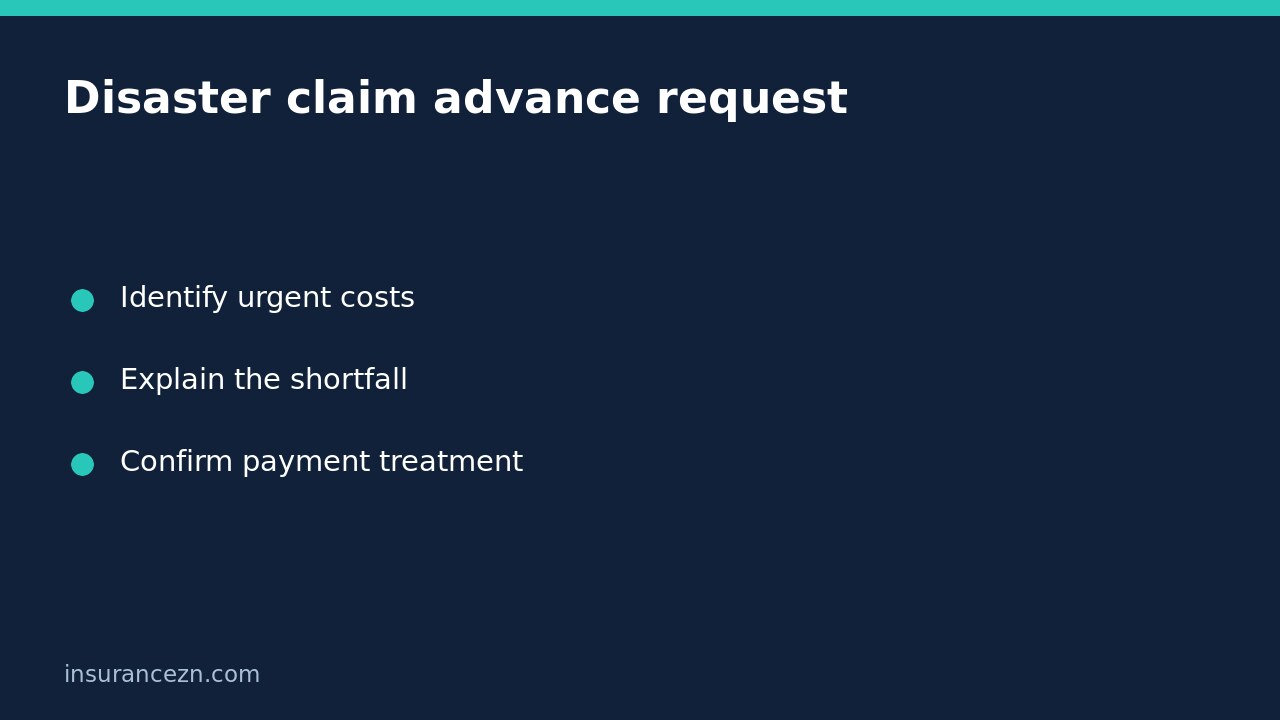

If a disaster has left you unable to meet immediate essential costs, ask your home insurer whether it can provide emergency money or an advance while your claim is being assessed. Explain the urgent need, identify the claim and request written confirmation of the amount, payment arrangements and how it will affect the final settlement. Asking does not establish that the request has been approved.
This is general information for Australian readers, not personal financial advice or legal advice. Your policy, Product Disclosure Statement (PDS), claim circumstances and insurer requirements determine available benefits. An emergency payment does not necessarily confirm acceptance of every part of a claim.
Separate an immediate cash need from the whole loss
Your first message should explain what needs paying now rather than attempting to price every damaged item. Keep the request practical: essential clothing, immediate living needs or another clearly described expense arising from the disaster. Ask which costs the insurer can consider under your actual cover; do not assume every household expense is insured.
Legal Aid NSW’s disaster-claims publication discusses asking for emergency money when experiencing financial hardship and explains that such payments can be deducted from the final claim payment. Its October 2023 edition is useful practical background, not a substitute for checking current procedures or your particular entitlement. This checklist deliberately does not promise a payment deadline.
Build a short expense and shortfall list
- Record your policy number, claim number, contact details and preferred safe contact method.
- Describe why the disaster has created an immediate financial difficulty.
- List each essential expense, when it must be paid and any available supporting document.
- Explain the amount you are requesting and any uncertainty in that amount.
- Identify payments already received for the same expense so the request does not double-count them.
For example, a household might need essential clothing before receiving its contents assessment. Its list could identify the household members affected, what was lost, the immediate purchases needed and any receipts already available. That is an illustrative request structure, not confirmation that these costs will be covered or reimbursed.
Do not fabricate receipts or label an estimate as money already spent. Where records were destroyed, say so and ask what alternative information the insurer will accept. Use the insurer’s verified secure channel for documents containing account or identity details.
Ask how the payment will be recorded
Before relying on the money, ask whether the proposed amount is an advance against a particular claim component, a separate benefit or another arrangement. Request a clear explanation of what will later be deducted, and from which payment. Keep any conditions attached to accepting the money.
Ask whether the insurer will pay you or a supplier directly and how bank details will be verified. Independently confirm unexpected requests to change payment instructions using an established insurer contact. A request received email is not confirmation that the transfer has been authorised or completed.
Use a focused request and track the answer
A suggested message is: ‘I am experiencing financial hardship following the insured event. My claim reference is [reference]. I need help with the attached immediate essential expenses. Please assess whether an emergency payment or advance is available and confirm the amount, any outstanding information, expected payment arrangements and treatment in the final settlement.’
Save the message, attachments and response together. Record the case handler and the next agreed update. If the answer is unclear, distinguish the missing decision from the missing payment: has the insurer assessed the request, approved an amount, requested further evidence or actually sent funds? Ask for the relevant next step rather than assuming silence means refusal.
Final checks and common questions
Is this the same as help paying an excess? No. An urgent-money request concerns funds for immediate needs. An excess arrangement concerns what you owe under the claim. If both apply, explain them separately; see our disaster evidence checklist for safe record collection alongside the claim.
Does receiving an advance settle everything? Do not assume so either way. Read the payment letter and any agreement. Ask exactly which parts remain open, and obtain independent advice before signing wording you do not understand.
What should be checked at settlement? Reconcile the actual advance received with the settlement calculation so it is not overlooked or deducted twice. Keep the original approval and bank record even after the immediate crisis passes.
Source
Legal Aid NSW: Insurance claims after a disaster, October 2023, especially the emergency-money discussion. Historical service contacts and timeframes in this publication have not been adopted as current advice here.