
Before paying for an overseas scooter rental, ask your travel insurer to assess the actual activity you intend to do. A policy covering your destination does not automatically cover riding a motorcycle or moped there. A rental operator accepting your payment is also not confirmation that your travel insurance will respond.
This is general information for Australian readers, not personal financial advice. Cover depends on the actual policy, Product Disclosure Statement (PDS), exclusions, endorsements and circumstances. Obtain product-specific written confirmation; this checklist does not establish legal permission to ride or personal riding competence.
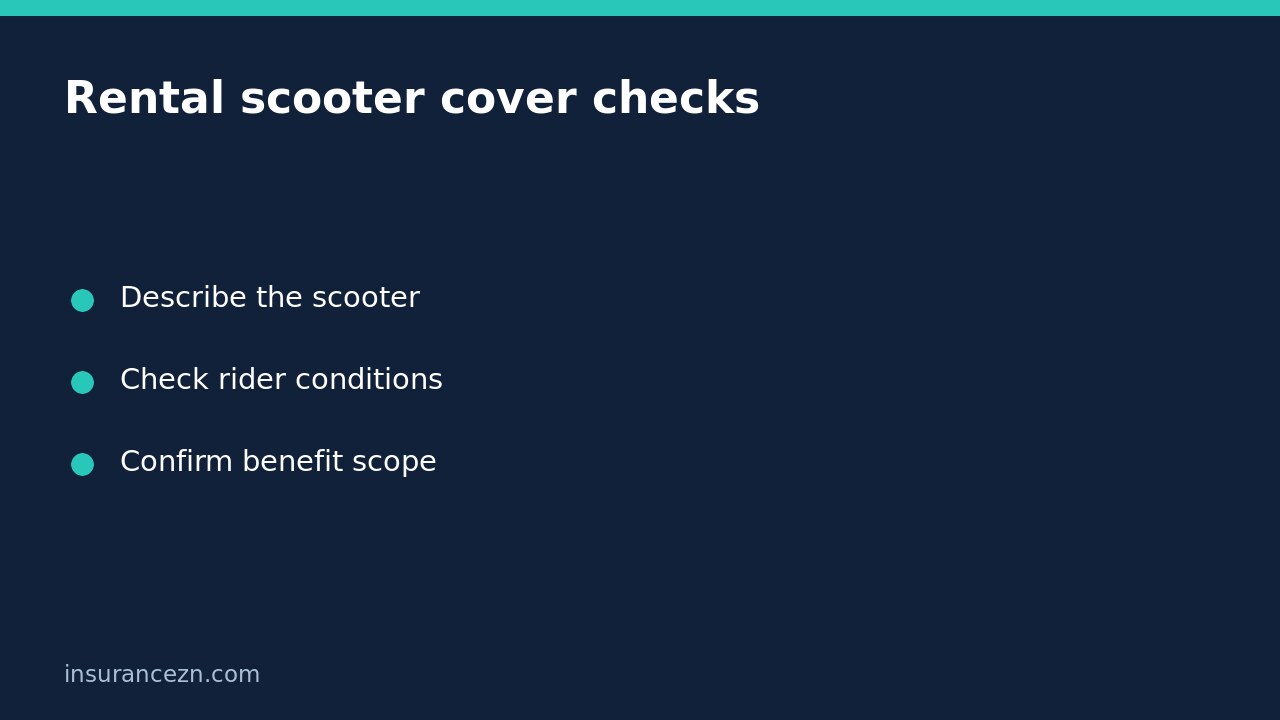
Describe the proposed rental precisely
Do not ask only whether scooters are covered. Give the insurer the country, intended dates, whether you will drive or ride as a passenger, and the vehicle details available from the operator. Include the model and engine capacity if known. If the operator cannot identify the vehicle until collection, ask what details must be checked before accepting it.
Describe the planned use honestly: local road transport, an organised tour or another activity. Ask which policy definition applies rather than relying on the tour operator’s description. Smartraveller warns that motorcycle riding may require additional cover and that activity definitions and exclusions matter.
Keep the enquiry separate from authorisation to change your policy. Request the available option, price, conditions and effective dates first. An automated acknowledgement means your message arrived, not that the activity has been accepted.
Check rider requirements without guessing local law
Ask the insurer what licence, permit, age, experience and protective-equipment conditions apply to the proposed activity. These are questions for the specific contract, not a universal list of eligibility rules. Check the destination’s current licensing and road requirements through appropriate official authorities separately. A rental business handing over keys does not resolve either question.
Smartraveller identifies breaking local law, including not wearing a helmet on a moped, as a situation where cover will usually not apply. It also warns about alcohol and drug exclusions. Do not invent a safe blood-alcohol threshold from a general overview or assume that being below a local driving limit meets every insurance condition.
If an insurer’s answer refers to a clause, save the actual clause and its document version. Ask how it applies to your stated rider and vehicle details. Do not treat an unanswered question as approval.
Separate your injuries from damage to the rental
Use a short benefit worksheet with a separate line for overseas medical treatment, assistance or evacuation, damage to the rented scooter, and liability for injury or property damage involving others. Ask which, if any, policy section addresses each line and which exclusions or limits apply. Do not assume that an accepted activity means all four risks are insured.
A rental excess benefit described for cars may not apply to a scooter. Ask about the actual definition of eligible rental vehicles rather than transferring a car-hire assumption. Likewise, the rental operator’s insurance and your travel insurance are different arrangements. Obtain the rental terms and clarify who would seek payment from you after an incident.
Record applicable excesses, exclusions and any assistance-contact requirements. Written clarification is useful evidence of the response, but it does not remove other policy conditions or guarantee a claim outcome.
Worked example: a beach-day rental
Imagine an Australian traveller whose itinerary originally involved taxis. At the destination, an operator offers a scooter for a coastal day trip. The traveller sends the insurer the proposed vehicle details, intended road use and rider information before committing. The insurer replies asking for further details rather than accepting the activity.
The practical next step is to answer those questions or use another transport option, not to interpret the reply as provisional cover. If an amendment is offered, check the accepted activity, named travellers, effective date, additional premium and remaining requirements. Do not assume an amendment covers an earlier rental or incident.
For a separate destination check, use our travel insurance transit-country checklist. Covering every country and covering the proposed riding activity are independent checks.
Before paying: final questions
- Does the response describe the actual vehicle and whether I am driving or a passenger?
- Have I separately checked local legal requirements and my ability to ride safely?
- Which benefits are confirmed, and which rental or liability risks remain unresolved?
- Is any required amendment processed with an effective date, rather than merely requested?
- Can I access the policy and assistance details offline?
Does a helmet guarantee cover? No. It does not settle activity eligibility, licensing, exclusions or the circumstances of a claim. Insurance confirmation is not a safety assessment. If the rental changes, reconfirm the details before riding.
Source
Smartraveller: Travel insurance explains activity exclusions, motorcycle-related additional cover and examples of circumstances that can prevent cover. The vehicle-specific enquiry workflow above is practical guidance, not a universal insurer procedure.