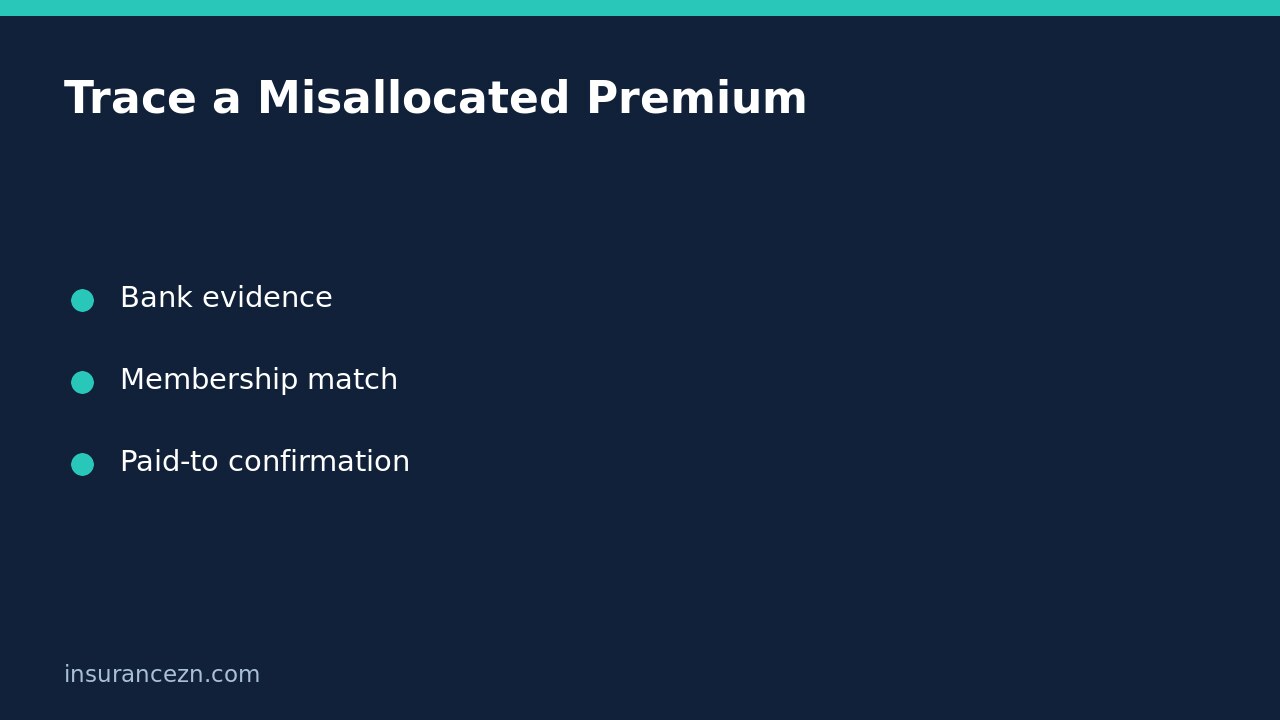

If you paid a health insurance premium using an old or incorrect membership reference, contact the insurer through its verified payment-enquiry channel. Ask it to trace the transaction and confirm which membership received the money. A completed bank transfer does not, by itself, establish that your intended health policy is paid up.
This is general information for Australian readers, not personal financial advice. Your policy, applicable Product Disclosure Statement (PDS), fund rules and actual membership record determine your cover. The checking steps below are an administrative framework, not a promise that a fund can transfer, backdate or refund a particular payment.
Separate bank completion from membership credit
A bank record answers one question: what transaction left your account? The fund’s premium ledger answers another: what amount was received and applied to your membership? A reference mismatch can require investigation; it should not be treated as proof that someone else’s policy was credited, or that your own payment disappeared.
The government consumer website PrivateHealth.gov.au explains premium-payment responsibilities, recommends checking statements for correct debits, and warns that arrears can affect insurance. Its overview does not prescribe a universal wrong-reference correction process. Obtain that process directly from your fund rather than assuming a bank receipt resolves membership status.
Build a small, secure tracing pack
Collect the records needed to locate the payment, without emailing an entire unredacted bank statement. Use the insurer’s secure channel and ask which identifiers it needs. Keep the original transaction record unchanged.
- Your intended membership number and the member name the insurer is authorised to discuss.
- The payment amount, transaction date and bank transaction identifier.
- The actual recipient details and reference entered, copied from the bank record rather than memory.
- The expected premium amount and the insurer’s latest notice or account statement.
- Any bank confirmation distinguishing a completed payment from a pending or reversed transaction.
If recipient account details also look wrong, contact your bank promptly through a trusted channel. That is a different problem from a correct insurer receiving money with an incorrect reference. Do not assume the insurer can retrieve funds sent to an unrelated account.
Ask for a trace, not an assumed transfer
A useful enquiry is: My bank shows this payment as completed, but my membership does not show the expected credit. I entered the attached reference rather than my current membership number. Please confirm whether you received the transaction, where it was allocated, and the authorised steps to correct it.
Ask for a case reference and any outstanding evidence requirements. If another person’s membership may be involved, provide only information you are authorised to share. The insurer may need identity checks and may be unable to disclose another member’s records. Do not submit a change instruction on that person’s behalf without authority.
Keep three outcomes separate: the fund acknowledged your enquiry, it located the transaction, and it processed the correct allocation. A message saying that a transfer has been requested establishes neither the final premium balance nor the treatment status of your membership.
Reconcile the corrected record before paying again
For example, imagine a member uses a reference saved for an older membership. The bank receipt exists, while the current portal still shows the previous paid-to date. This fictional example does not establish whether the money is pending, unallocated or credited elsewhere. The practical task is to have the fund investigate those possibilities.
Before making another payment, ask whether an additional amount is actually due, whether the first payment is being reallocated or refunded, and how a second payment would be treated. Do not simply withhold an amount the fund says remains payable. If treatment or an arrears deadline is close, tell the insurer immediately and request clear instructions for the unresolved period.
After correction, obtain the amount credited, intended membership, allocation date, revised paid-to date and remaining balance. Compare the confirmation with the updated ledger and bank records. A processed premium correction still does not guarantee benefits for a particular treatment: waiting periods, inclusions and other conditions remain separate.
Keep refunds and future payments separate
If the fund chooses a refund rather than reallocation, track its actual receipt and establish what must be paid to the correct membership. For a different situation involving policy cancellation, see our guide to reconciling an advance premium refund after cancellation. A cancellation refund is not evidence that a wrong-reference payment was corrected.
Final checklist
Can I rely on the transfer screenshot? Use it as tracing evidence, not confirmation of insurance status.
Should I change my saved payee? Confirm the fund’s current payment instructions first, then check both recipient details and membership reference before the next payment.
When is this finished? When the fund confirms the processed allocation and current membership balance, any refund or further payment is reconciled, and unresolved cover questions have been answered in writing.