
Do not treat a cheaper life insurance quote as replacement cover already in force. Before cancelling an existing Australian policy, establish whether the proposed insurer has accepted your application, which terms it accepted and when the particular benefits actually commence. A submitted application, a payment instruction and an insurance contract in force are different records.
This is general information for Australian readers, not personal financial advice. The applicable policy, Product Disclosure Statement (PDS), exclusions and individual acceptance terms determine cover. Consider licensed financial advice before replacing insurance, particularly where health, ownership or superannuation arrangements have changed.
Why a replacement is more than a price comparison
In its insurance FAQs, TAL warns customers considering replacement that policy terms may differ, new health and lifestyle questions may be required, qualifying periods may start again and accrued benefits may be lost. Its general guidance is not to cancel existing insurance until the new policy is in place, to avoid a gap.
That is a provider’s explanation of replacement risks, not a guarantee that another insurer will offer equivalent terms. A new policy can have the same headline benefit amount while having different definitions, exclusions, options or premium arrangements. Compare the contracts you would actually hold, not simply the descriptions on two quote screens.
Make a benefit-by-benefit comparison before deciding
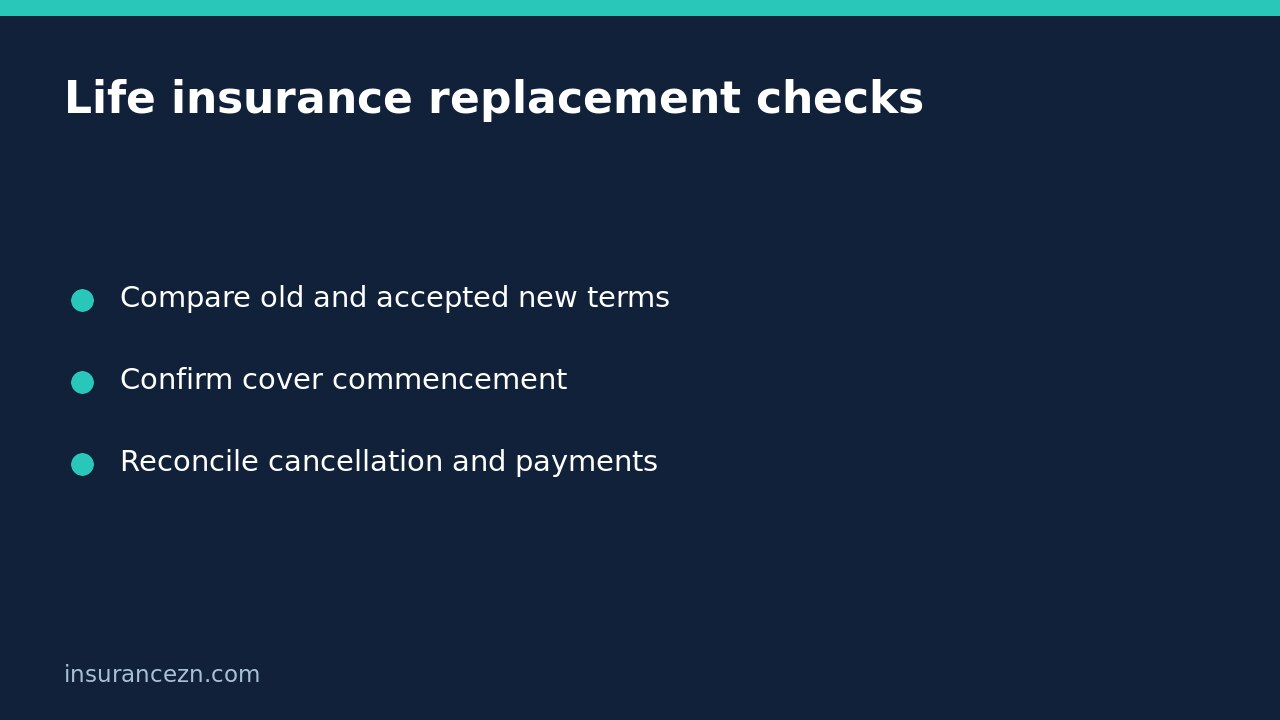
Collect the current policy schedule, relevant PDS and amendments. Beside them, put the proposed policy documents and any individual underwriting offer. If the latter is not available yet, mark the comparison as incomplete rather than filling the gaps with assumptions.
- Benefits: identify life, total and permanent disability, trauma or income protection cover separately, where applicable.
- Definitions: check the conditions that must be met for each payment, not just the maximum amount.
- Restrictions: record any individual exclusions, qualifying periods and limitations in the accepted offer.
- Premiums: compare the actual payable amounts and frequency for the same period, noting options and any introductory discounts.
- Ownership: establish who owns each policy and whether a superannuation trustee is involved.
Do not assume a beneficiary instruction on the old policy transfers to the replacement. Ask the new insurer or trustee which instructions it requires and retain its processed confirmation. Our beneficiary-update confirmation checklist explains why sending a form is not the same as checking the recorded result.
Confirm acceptance and commencement separately
Ask for written confirmation identifying the policy number, insured person, benefits accepted, insured amounts and any special terms. Then check the commencement date and any outstanding requirements. If different benefits have different conditions or dates, record them separately. Do not infer acceptance from an automated acknowledgement or a debit alone.
For example, imagine a person receives a competitive quote while an application still awaits medical information. Their existing cover continues under its own contract; the quote does not establish that replacement benefits have begun. The useful next step is to clarify the outstanding requirements and accepted cover, not to cancel the old policy because an application reference exists. This is a hypothetical administration example, not a recommendation to retain or replace a particular product.
If an application is deferred or only partly accepted, stop treating the proposed package as a completed replacement. Identify what is still pending and what, if anything, has commenced. Never assume that an offer for one benefit confirms acceptance of every benefit requested.
Only then reconcile the cancellation instruction
Once you understand the replacement position and have made your decision, ask the existing insurer or relevant policy owner about its cancellation process and effective date. Obtain confirmation of what will end, when it ends and how remaining premiums or any adjustment will be handled. For cover through super, confirm the fund’s process rather than assuming a direct-insurer instruction is sufficient.
Keep scheduled debits separate from cover status. Stopping a bank instruction is not a reliable substitute for obtaining a processed cancellation record. Equally, a cancelled policy may leave a premium adjustment to resolve. Retain both insurers’ correspondence so you can reconcile dates and payments without guessing.
Final questions before closing the file
- Is the new quote enough? No. Obtain the accepted terms and commencement evidence for the benefits concerned.
- Does the same insured amount mean equivalent cover? No. Definitions, options, exclusions and ownership still need comparison.
- Can old qualifying periods simply carry across? Do not assume so. Ask how the proposed contract treats them and obtain the answer in writing.
- What records should remain together? Keep the old schedule, accepted replacement documents, commencement confirmation and processed cancellation and payment records.
The objective is a documented transition, not just a successful application submission. Resolve unclear dates or terms before relying on the replacement as protection for your household.