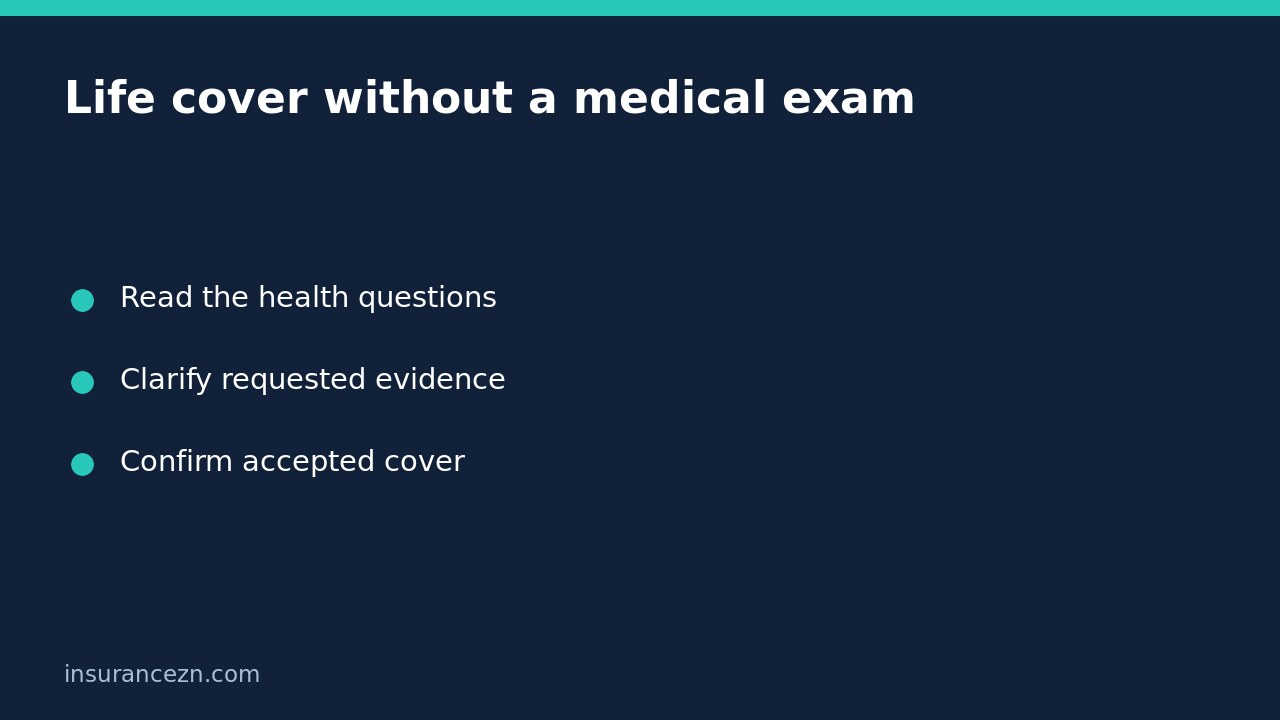

Being told that a life insurance application does not need a medical exam does not, by itself, mean the insurer has accepted the requested cover. Separate three questions: whether an appointment or test is required, what information the insurer is assessing, and whether the exact benefit has commenced on agreed terms.
This is general information for Australian readers, not personal financial advice. The relevant Product Disclosure Statement (PDS), policy wording, schedule and individual written terms determine cover. Consider appropriately licensed advice before replacing or cancelling an existing policy.
No examination is not the same as no underwriting
In its life insurance FAQs, TAL describes underwriting as assessing whether to accept a customer and what conditions or pricing apply, using the applicant’s medical and lifestyle information. Its explanation identifies possible outcomes including standard premiums, higher premiums, exclusions or denial of cover. The same page says a medical test is sometimes required and that applicants will be told if one is needed.
These are TAL’s explanations, not a promise about another insurer or every application. They demonstrate why the absence of a physical examination does not settle the underwriting question. A marketing statement about an easy application should not replace the actual health questions and acceptance documents for the product you are considering.
Identify what the message actually confirms
Save the email, screen or letter that mentions the medical exam. Check whether it is general advertising, a preliminary application message or an individual decision about your evidence requirements. Then ask which benefit, insured amount and application reference it concerns.
A hypothetical applicant requests death cover and a separate disability benefit. A message saying that no examination is currently needed may not say whether both benefits have been assessed, whether further questions remain, or when either benefit starts. The useful response is to clarify those points, not to assume every component is approved.
- Which application and benefits does this statement apply to?
- Is an examination unnecessary for this application, or has the evidence decision not yet been made?
- Are any health questions, records or other requirements outstanding?
- Has a final underwriting decision been issued?
- Where are the accepted amount, premium and commencement terms recorded?
Answer the actual questions without guessing
Work through the application’s wording rather than assuming that no test means no health information matters. Read any time periods and definitions carefully. If you cannot remember an appointment date or do not understand a question, ask how to obtain or provide the necessary information before finalising the answer. Do not invent a diagnosis or omit information because you expect it would not affect an examination.
Keep a copy of the answers submitted and any clarification the insurer provides. If you discover an error, contact the insurer using the existing application reference and identify the original answer and evidence-supported correction. Request confirmation that the application record was amended. An acknowledgement that a message arrived is not proof that the underwriter has considered the correction.
Clarify evidence arrangements before booking anything
If the insurer subsequently requests a medical assessment, ask exactly what is needed, how it is arranged, who is responsible for the cost and how results are transmitted. Do not arrange extra tests solely on the assumption that they will speed up acceptance or be reimbursed. Follow clinical advice about your health independently of insurance administration.
Use the insurer’s verified secure channel for sensitive documents. Record the document name, submission date and application reference, without circulating medical information unnecessarily. Check whether the evidence was allocated to the correct application and whether anything remains outstanding. Providing a report is an evidence step, not acceptance of the requested benefit.
Read the outcome before relying on the cover
Once a decision arrives, compare it with what you requested: benefit type, insured amount, premium, any loadings or exclusions and the commencement terms. Ask whether acceptance, payment or another requirement remains before the cover takes effect. Keep existing insurance decisions separate from a pending application. If assessment is postponed, see what to clarify when a life insurance application is deferred.
Quick questions before you close the file
Does no medical exam mean guaranteed payment of a future claim? No. Evidence requirements for an application do not establish entitlement under a later claim.
Can I cancel my old policy after receiving a quote? A quote is not confirmation that replacement cover has commenced. Check accepted replacement terms and obtain appropriate advice before changing existing protection.
What should I keep? Retain the completed application, clarifications, evidence receipts, final decision and current schedule together. That creates a useful record without confusing an easy application process with an unconditional insurance promise.