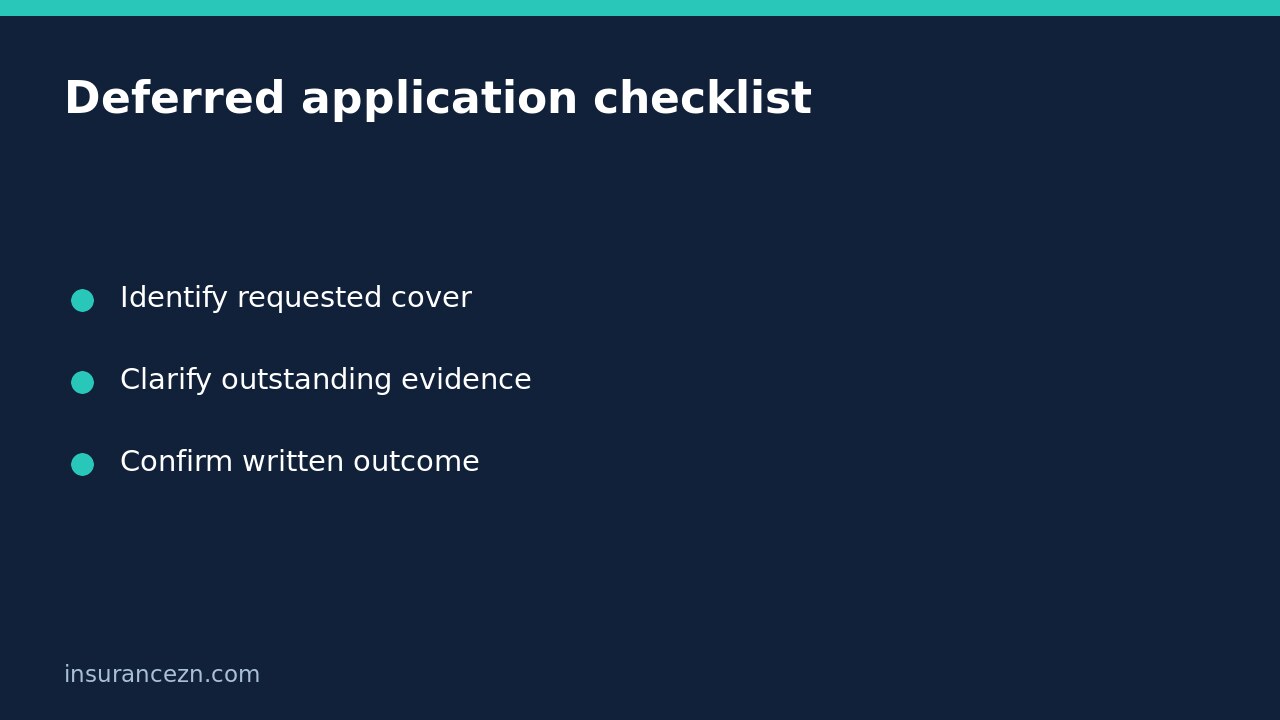

If a life insurance application is deferred, do not count the requested cover as active simply because the insurer received your forms. Ask what the decision applies to, what information or event is outstanding, and how you will be told about any later outcome. If you already have insurance, establish its current position separately from the application.
This is general information for Australian readers, not personal financial advice. Your policy, Product Disclosure Statement (PDS), insurance handbook and individual written terms determine your cover. Seek appropriately licensed advice before making decisions about replacing or cancelling insurance.
Understand where deferral fits in underwriting
Underwriting is the insurer’s assessment of an application, not a promise that the requested benefits will be provided. Aware Super’s underwriting explanation says its insurer considers the type and level of cover requested, personal medical history, lifestyle information and occupation. Possible outcomes include standard premium rates, a premium loading, exclusions, deferral or denial.
This is a provider’s explanation of its insurance arrangements, not a universal decision timetable for every Australian insurer. It supports an important distinction: ‘application received’, ‘assessment deferred’ and ‘cover accepted on stated terms’ are different things. Ask your own provider to explain the actual meaning of its letter rather than assuming that a deferral is either approval or permanent refusal.
Identify exactly which benefit is pending
An application may concern new death cover, an increase to an existing insured amount, total and permanent disablement cover, income protection, or several components together. Write down each requested change and ask which ones the deferral affects.
For example, imagine a member who already holds death cover and applies for a higher amount plus income protection. A message saying ‘your application is deferred’ leaves several questions unanswered. Has the whole request been deferred, or just one component? What existing amount is currently recorded? Are any separate applications still being assessed? This is an administrative example, not a prediction that existing cover will necessarily continue unchanged.
Keep your current schedule and the application reference together. Do not use an application amount displayed in an online form as a substitute for written confirmation of active benefits.
Ask for an actionable evidence list
Request a specific explanation of the outstanding requirements. Do not guess that another medical appointment, a particular waiting period or a change in job will resolve the matter. Ask the insurer which information it needs and who must provide it.
- What reason is recorded for deferring this application?
- Is further evidence requested now, or should I contact you after a specified event?
- Which documents, reports or questions remain outstanding?
- How should sensitive medical information be submitted securely?
- Does the current application remain open, or will a fresh application be required?
- Is there a stated review date or response deadline in my case?
Keep the reply with your application records. If you upload evidence, retain the receipt and ask whether it was attached to the correct application. A successful upload does not establish that an underwriter has reviewed or accepted the material.
Separate review from the start of cover
If the insurer later offers cover, read the amount, premium, exclusions, loadings and commencement terms before relying on it. Ask whether any acceptance step, outstanding requirement or payment arrangement remains. A notification that the file is being reviewed is not the same as a final decision.
Where insurance is held through super, ask the fund which documents apply to your membership and who can confirm the insurer’s decision. Aware Super, for example, states that its webpage is only a guide and the precise policy terms prevail. Do not transfer its product rules to a different fund or retail policy.
If you are considering changing existing benefits while you wait, read why restoring reduced life cover may require new health questions. Do not cancel an existing arrangement on the assumption that a deferred replacement will eventually be approved.
Short FAQ and follow-up checklist
Does supplying the missing report guarantee acceptance? No. It supplies evidence for assessment; the written outcome still matters.
Does deferral mean a future claim will be paid? No. An application decision is separate from assessment of a claim under applicable policy terms.
What should my follow-up contain? Include the application reference, the affected benefits, a list of evidence already supplied, and the questions still unanswered. Ask for a clear status and the next action required from each party. Keep dates factual rather than inventing a universal deadline for every insurer.