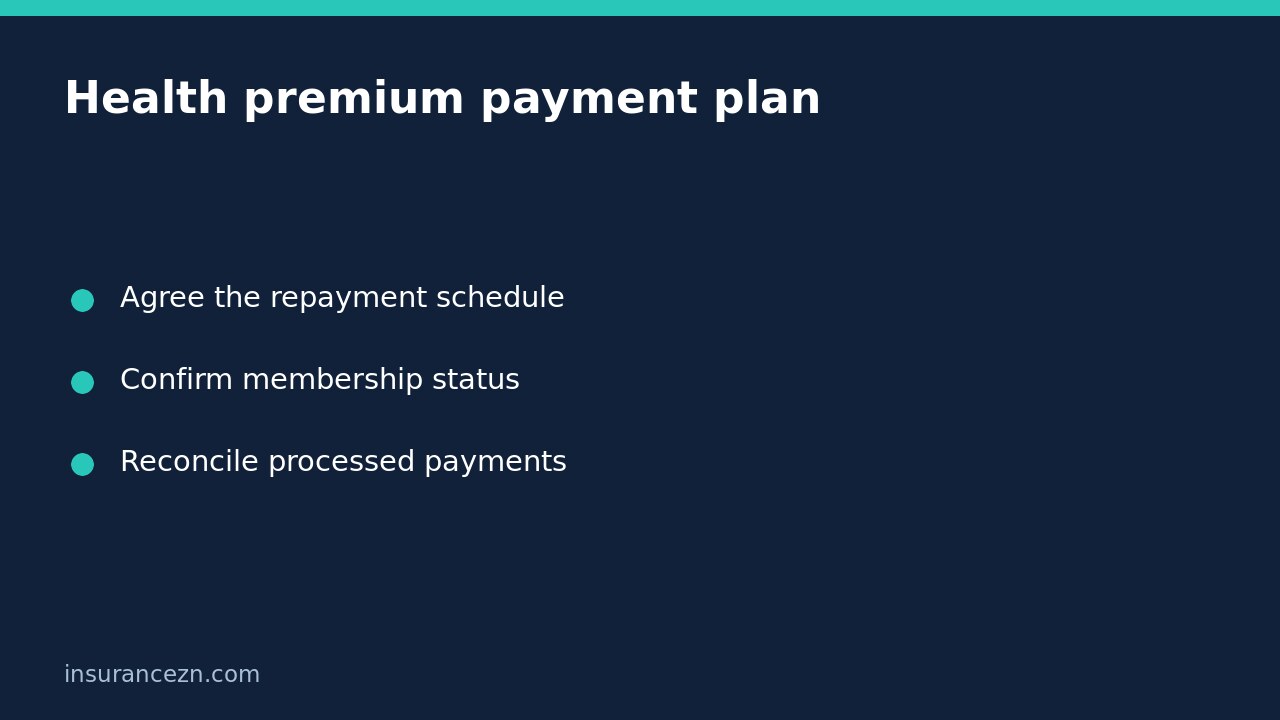

If a temporary money problem makes your Australian health insurance premium unaffordable, contact your fund before simply reducing or stopping payments. Ask whether it will agree to a payment plan and what that arrangement means for your membership. A request, a helpful conversation and a processed agreement are three different things. None independently proves that a particular treatment will attract benefits.
This is general information for Australian readers, not personal financial advice. Your fund’s rules, policy documents and any applicable PDS determine the relevant conditions. Confirm your own circumstances directly with the fund before relying on an arrangement.
Start with the premium ledger, not a proposed smaller debit
The government comparison website’s Managing your policy guidance recommends speaking to your insurer about a payment plan if a temporary problem makes payments difficult. It also warns that falling behind can affect insurance and that resuming payments can involve waiting periods. This supports asking early; it does not establish an automatic right to a particular repayment timetable.
Collect your membership number, recent premium notice, bank transactions and any arrears correspondence. Ask the fund for the current balance, the period already paid for and the next amount due. If the bank shows a payment that the fund does not, request tracing and allocation before treating it as unpaid or sending a replacement. A bank transaction and a correctly credited membership ledger are different records.
Ask for an agreement that answers specific questions
Explain the temporary difficulty and propose an amount and frequency you can realistically maintain. Do not promise an amount merely to end the conversation. Ask the fund to spell out the following points in writing:
- Which overdue amount, if any, the arrangement covers, and whether ordinary premiums continue separately.
- The amount and date of every planned payment, including the first changed debit.
- Whether the plan is agreed, still awaiting approval or waiting for information from you.
- Your membership status during the arrangement and what happens if a payment is missed.
- Whether the arrangement changes cover, waiting periods, discounts or payment-method conditions.
- Who to contact if the schedule becomes unaffordable again.
Keep an untouched copy of the agreement and a dated note of any explanation. If the written schedule differs from the telephone discussion, resolve the difference before assuming the more favourable version applies.
Keep repayment, suspension and reduced cover separate
A payment plan concerns how an amount will be paid. Suspension is a different arrangement: the government guidance says funds may grant it at their discretion and claims cannot be made during a suspension period. Reducing cover is different again and may change benefits, exclusions or out-of-pocket costs. Do not let an ambiguous description such as ‘premium relief’ conceal which option is actually proposed.
For example, imagine a member asks to pay an outstanding balance gradually while continuing ordinary premiums. The fund instead sends documents describing a suspension. That is not merely another label for the requested plan. Ask which arrangement was accepted, its dates, and the consequences before treating it as settled. This is a hypothetical administration example, not a statement of any fund’s product rules.
If a proposed lower premium depends on raising an excess, compare the separate admission cash requirement using our higher hospital excess comparison checklist. A cheaper monthly commitment can shift costs to a later admission rather than remove them.
Verify the first payment and any upcoming treatment separately
After the first agreed payment, check the bank amount and the fund’s processed credit. Ask for the updated balance, paid-to date and next scheduled debit. Report a mismatch with the transaction date and reference; do not assume an automatic acknowledgement means the ledger has been corrected. Avoid paying twice while an uncertain transaction is being reconciled.
If treatment is approaching, request a separate service-specific benefit check covering the procedure, provider, hospital, treatment date and applicable waiting periods. A current membership record or accepted repayment schedule does not establish that all charges are covered. Do not delay urgent medical attention for an administrative check.
Quick questions before you close the file
Can I just pay less than the invoice? Do not assume a smaller voluntary payment creates an agreed plan. Obtain the fund’s response and check how the payment is recorded.
Does a lodged hardship request protect my cover? A submitted request is not a processed agreement. Ask what applies while the request is pending and retain any deadlines in existing notices.
When is the task finished? When the accepted terms are clear, the first payment is allocated correctly, and the next amount and membership status are reconciled. Future treatment benefits remain a separate question.