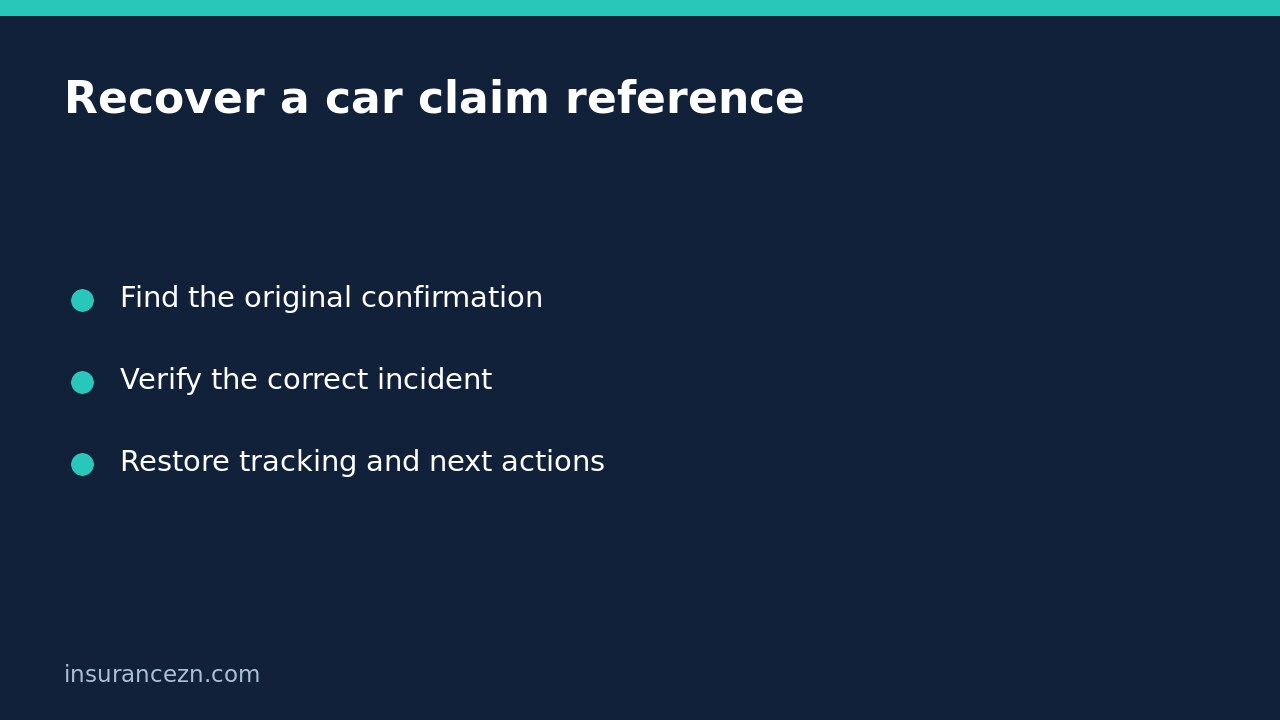

If you already lodged a car insurance claim but have lost its number, the task is to recover the existing record, not submit the accident again. Start with the insurer’s official account, original confirmation messages and verified claims contact channel. Ask the insurer to confirm the correct incident and restore the reference you need for follow-up.
Losing a reference is not evidence that a claim was rejected, deleted or never submitted. It is also different from knowing whether an interrupted online form actually reached the insurer. This checklist is for recovering an existing claim that you previously had reason to believe was lodged.
Search for the original confirmation, not just any number
Look through email, text messages and downloaded documents around the lodgement date. Search the insurer’s name and words such as ‘claim’, ‘confirmation’ and the vehicle registration. Check archived and junk folders as well as your main inbox. If someone authorised to assist you lodged the claim, ask whether they retained the original confirmation.
Keep policy numbers, claim numbers, repairer job numbers and payment references separate. A workshop’s booking identifier may help it find an appointment but may not identify the insurer’s claim. Do not overwrite one reference with another in your notes just because both relate to the accident.
As a provider-specific example, Suncorp’s comprehensive car claims instructions say it provides a claim number and claim confirmation by email after lodgement. Its tracking instructions describe using the supplied claim number to manage the claim online. Other products and insurers may provide different retrieval methods.
Prepare a short incident-matching note
Before contacting the insurer, collect the policyholder’s name, policy number if available, vehicle registration, approximate incident date and approximate lodgement date. Include the contact details originally used. Record uncertain details as uncertain rather than inventing a date to satisfy a screen.
A practical request is: ‘I previously lodged a claim for this vehicle and incident, but I cannot locate the reference. Please help me identify the existing record, confirm the incident it belongs to and explain how I can access future updates.’
The insurer may require identity checks or authority before discussing the record. Follow its verified process. Do not email identity documents to an address supplied in an unexpected message, disclose passwords or give another person unrestricted access to your online account merely to locate a number.
Verify the returned record before sending more documents
When the insurer retrieves a reference, confirm that it matches the vehicle, incident date and relevant event. This matters if you have made more than one claim, changed vehicles or received several workshop messages. Ask what any other references identify rather than assuming they are duplicates.
For example, imagine you find an old windscreen email while trying to follow up a recent collision. Both mention the same registration. Uploading collision photographs to the windscreen record would not establish that the correct claims team received them. Verify the incident first, then use the channel the insurer confirms for the collision claim.
Save the recovered reference in a durable note with the insurer’s name and a brief incident description. Avoid storing unnecessary sensitive information in a shared phone note. Ask for the confirmation to be resent if that service is available; do not assume every insurer offers the same account functions.
Restore the next action as well as access
Finding a claim number is only an administrative recovery. Ask which stage the claim has reached, whether documents or appointments remain outstanding and what you need to do next. Confirm the contact channel if you have been missing updates. Do not assume that recovering access changes any contractual obligations or deadlines.
Suncorp’s cited instructions distinguish tracking, uploading documents, managing assessments and viewing authorised repairer details. Those functions should not be collapsed into one promise of approval. A recovered record or visible booking does not establish cover acceptance, authority for all proposed repairs, hire-car eligibility or payment approval.
If an inaccurate registration is stopping the match, use our car claim registration correction checklist. An evidence-backed correction to the existing record is a separate task from starting a new claim.
Quick questions
Should I lodge again to get a new number? Not simply because the original number is missing. Ask the insurer to search and reconcile the existing record first. If it cannot locate a lodged claim, request explicit instructions on the next step.
Does recovering the reference mean assessment is complete? No. Ask for the current decision or outstanding requirements separately.
What if the vehicle needs urgent assistance? Prioritise safety and use the insurer’s verified urgent assistance pathway. Do not delay necessary emergency help while searching old emails.
This is general information for Australian readers, not personal financial advice. Your policy and Product Disclosure Statement (PDS), including cover conditions, exclusions and notification duties, govern your claim. The insurer’s cited workflow is an example, not a guarantee that every provider offers identical services.