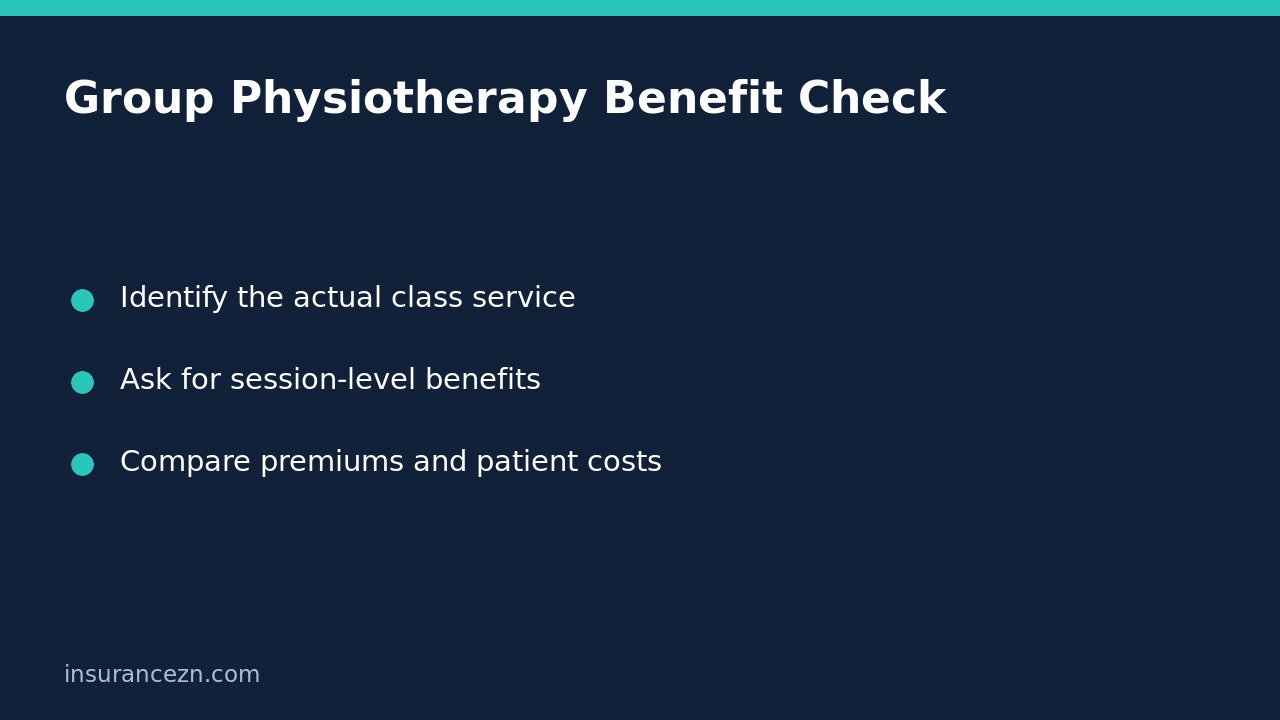

When comparing extras cover for group physiotherapy, ask for a benefit estimate for the actual class rather than copying the rebate for an individual consultation. A clinic offering physiotherapy does not establish that every group session, exercise programme or package it sells is eligible under your policy. Start with the service description, then compare your likely patient costs across the planned sessions.
This is general information for Australian readers, not personal financial advice. Benefits depend on the policy, applicable PDS or fund rules, waiting periods, exclusions, provider requirements and remaining limits. A benefit estimate is not a guaranteed claim payment.
Establish what the clinic is actually billing
Ask the clinic for a written description of the proposed service. Is it an individual assessment followed by supervised group treatment, a general exercise class, or another service? Record the treating practitioner’s details, clinic location, session duration and any item descriptions or claiming codes. Do not infer eligibility from a class name containing rehabilitation, clinical or physiotherapy.
Keep the initial assessment separate from subsequent classes. If the clinic requires an assessment before joining, include its charge in the comparison even if you are interested mainly in ongoing sessions. Ask which costs remain payable if you attend fewer sessions than planned, and obtain the clinic’s own cancellation and package terms without assuming the insurer controls them.
Ask each fund about the exact group service
The Australian Government’s explanation of private health insurance lists physiotherapy among possible general-treatment services. It also explains that limits can apply per service, per year or over a lifetime, and that some services may not be covered. That overview does not promise benefits for a particular group class.
Send the clinic’s description to each shortlisted fund. Ask whether the exact group service is eligible, whether the practitioner and practice meet its requirements, and what estimated benefit applies to each session. Ask separately about the assessment. If the fund cannot identify the service from the quote, request the additional information it needs rather than substituting an unrelated consultation code.
- Which policy provision and service category would apply?
- Is the group-session estimate different from an individual consultation estimate?
- Do waiting periods or frequency conditions affect the proposed appointments?
- Which personal or shared limits would those benefits use?
- What evidence and service dates would the fund need for a claim?
Compare the appointment plan, not the headline maximum
Create a worksheet with one line for the assessment and one for each planned class. Use columns for the clinic charge, the fund’s estimated benefit, your estimated balance and the relevant limit. Repeat the worksheet for the alternative policy using the same appointments and prices. An unused annual ceiling is not automatically the amount payable for the course.
For a hypothetical plan containing one assessment and six classes, obtain the assessment estimate and the six class estimates separately. If only the assessment has a confirmed benefit, leave the class benefits unconfirmed rather than treating them as equal to the assessment rebate. Ask the fund to explain how remaining limits affect later sessions and any other treatment you expect to claim.
Then compare the actual extras premiums over the same period. Include any lost discount on retained cover when the comparison changes a combined package. Higher possible benefits are not automatically better value if the additional premium exceeds the useful improvement for your own appointment plan. Do not assume that changing products restores used allowances.
Keep treatment suitability separate from insurance eligibility
Your clinician should advise whether the proposed sessions suit your needs. Insurance administration cannot establish clinical suitability, and an insurer recognising a practitioner does not establish payment for every activity the practitioner offers. Resolve unclear service descriptions with the clinic and fund without changing the recorded service simply to fit a benefit category.
For an example of using an actual provider quote rather than a headline allowance, see comparing dietitian extras against the appointment quote. The same discipline helps here, but a dietitian benefit is not evidence of a physiotherapy entitlement.
Before you book: a short checklist
Keep the dated clinic quote, the policy version and the fund’s written response together. Confirm that the estimate refers to group sessions, your actual membership and the intended practitioner. Recheck if the service, provider, appointment sequence or policy changes.
Does an individual physiotherapy rebate apply to a group class? Do not assume so; obtain an estimate for the exact group service. Does a paid package prove a benefit entitlement? No. Clinic payment and insurer assessment are separate. After treatment, compare the itemised invoice with the claim assessment before treating the estimated saving as achieved.